

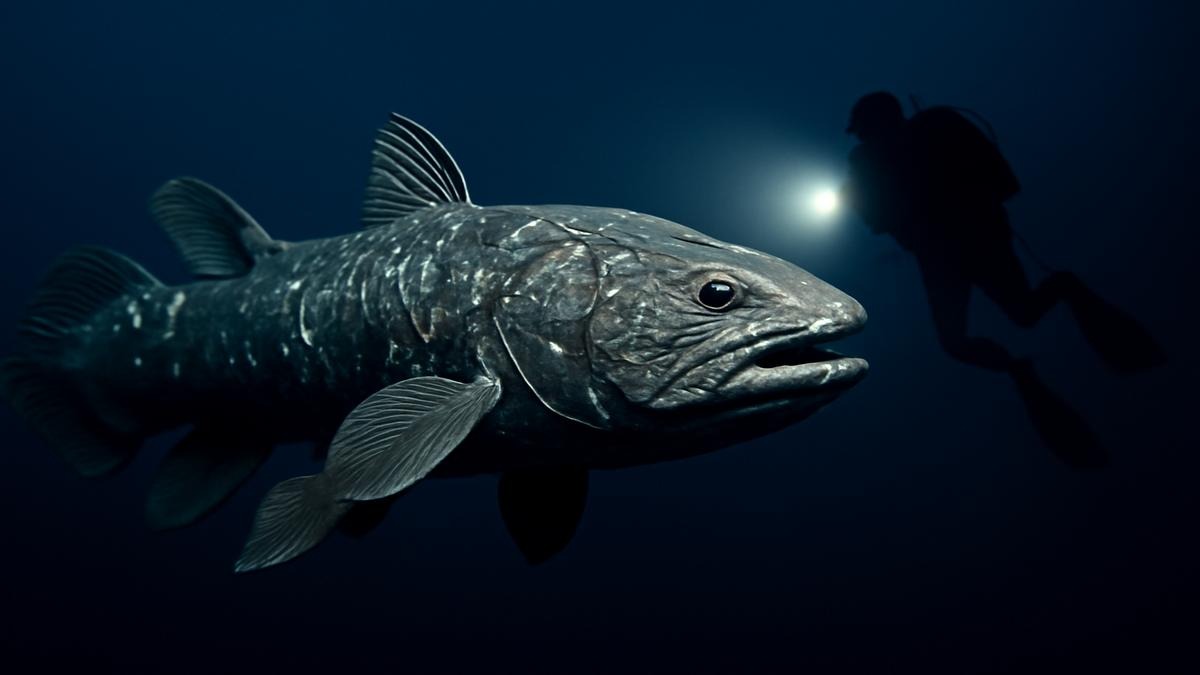
French divers have captured the first-ever live images of the coelacanth, a rare “living fossil” fish thought extinct for millions of years, in the depths of Indonesia’s Maluku Islands. The discovery offers a rare glimpse into one of the ocean’s most mysterious species, bridging past and present in marine science.
Discovery In The Depths
Divers Alexis Chappuis and Julien Leblond descended nearly 145 meters off the Maluku archipelago using advanced rebreather systems. After years of research and mapping underwater cliffs, they finally encountered the coelacanth, a species that has survived virtually unchanged for 400 million years.
Significance Of The Find
The coelacanth is considered an iconic species in evolutionary biology, often described as a “living fossil.” Its discovery in Indonesian waters not only confirms its presence but also provides scientists with invaluable data on deep-sea ecosystems and species resilience.
Global Scientific Impact
This breakthrough highlights the importance of deep-sea exploration and conservation. The images will aid researchers in studying the coelacanth’s behavior, habitat, and evolutionary significance, while raising awareness about protecting fragile marine environments.
Key Highlights
-
French divers capture first live images of coelacanth
-
Discovery made at 145 meters depth in Maluku Islands
-
Species thought extinct for millions of years
-
Known as a “living fossil” surviving 400 million years
-
Breakthrough for marine biology and conservation efforts
Conclusion
The coelacanth’s reappearance underscores the mysteries of the ocean and the resilience of life. This discovery not only enriches evolutionary science but also inspires global efforts to safeguard deep-sea biodiversity.
Sources: Lifeboat News, WNC Group, Cultys Erwa