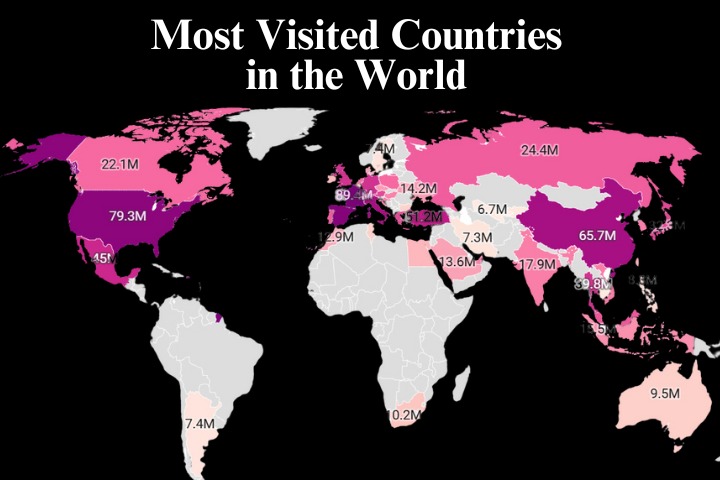








Global tourism revenues surged past USD 2.1 trillion in 2025, with the United States, Spain, and France leading in absolute earnings. Smaller nations like Maldives and Aruba rely most heavily on tourism for GDP. The figures highlight both opportunity and vulnerability in the world’s travel-driven economies.
Tourism Industry Context
Tourism contributes over 10% to global GDP, making it one of the largest industries worldwide. The sector’s rebound after the pandemic has been robust, driven by pent-up demand, improved connectivity, and renewed interest in leisure and cultural travel. Large economies dominate in revenue, but smaller nations depend on tourism as their lifeline.
Key Highlights
-
United States tops the list, earning more than USD 210 billion annually from international tourism
-
Spain and France each generate over USD 70 billion, supported by heritage, gastronomy, and coastal tourism
-
China and Italy round out the top five, with strong domestic and international visitor flows
-
Maldives, Aruba, and Fiji see tourism contribute between 25% and 70% of GDP, underscoring reliance on visitor spending
-
UN Tourism data shows international arrivals grew 5% in January–September 2025, with receipts surpassing pre-pandemic levels by 14%
-
WTTC reports tourism’s global economic contribution reached USD 11.7 trillion in 2025, supporting 371 million jobs worldwide
Impact And Reflection
The figures reveal two distinct realities: large economies benefit from tourism as a supplementary revenue stream, while smaller nations are highly vulnerable to external shocks. Climate change, pandemics, and geopolitical instability pose risks to tourism-dependent countries. However, eco-tourism, diversification, and digital innovation are helping nations balance growth with resilience.
For India, which ranks among the fastest-growing tourism markets, the opportunity lies in leveraging cultural diversity, heritage sites, and expanding infrastructure to capture a larger share of global receipts. As travel continues to evolve, countries that blend sustainability with innovation will be best positioned to thrive in the competitive tourism landscape.
Sources: UN Tourism World Tourism Barometer, WTTC Economic Impact Research, The Hindu, Business Standard