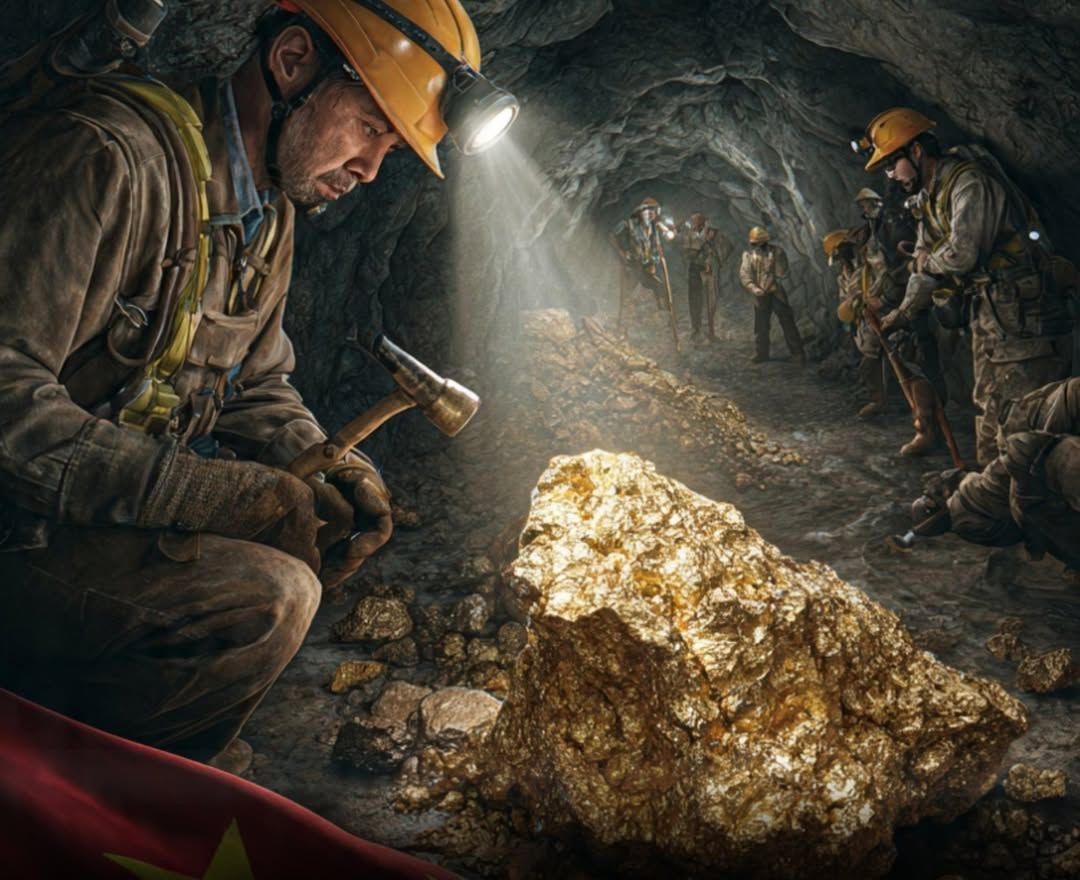






Geologists in China have identified what may be Earth’s largest high‑grade “supergiant” gold deposit at the Wangu field in Hunan Province, with conservative estimates around 1,000 metric tonnes (≈US$83 billion). The find spans over 40 gold-bearing veins deep underground, though experts urge caution pending full verification and feasibility analysis.
A major discovery at the Wangu gold field in Hunan Province has been described as a “supergiant high‑grade” deposit, with early estimates placing resources near 1,000 metric tonnes of gold—valued around US$83 billion at conservative assumptions. The field hosts more than 40 distinct gold veins roughly 2 kilometers below the surface.
Chinese geological authorities report extensive exploration—about 150,000 meters of drilling—and sample grades peaking at 138 g/t, vastly above typical high‑grade benchmarks. While the scale and grade appear exceptional, industry analysts note that confirmation, feasibility studies, and economic extraction plans are essential before treating estimates as proven reserves.
Initial coverage emphasizes that large, near‑surface high‑grade discoveries are rare today, adding significance to Wangu’s deep, vein‑hosted geometry. If verified, the deposit could reshape regional resource planning and China’s role in global gold supply, though timelines for development, permitting, and infrastructure remain uncertain.
What it could mean for markets
A deposit of this magnitude could eventually influence long‑term supply expectations and strategic investment in underground mining technology, processing capacity, and logistics in central China. Near‑term market impacts may be limited until resource classifications, mine plans, and cost curves are published and independently reviewed.
Key highlights and notable updates
Location: Wangu gold field, Pingjiang County, Hunan Province; deep vein system with over 40 identified veins
Scale (estimates): ~1,000 metric tonnes; approximate valuation near US$83 billion at conservative pricing
Exploration: ~150,000 meters drilled; highest sample grades reported at 138 g/t
Rarity: Potentially the largest high‑grade discovery on record if verified; large new high‑grade finds are increasingly rare
Caveats: Verification, resource classification (JORC/NI 43‑101), feasibility, and economic extraction remain pending
Conclusion
If confirmed, the Wangu “supergiant” could mark a generational discovery—both technically and economically. For investors and industry observers, the prudent stance is to watch for formal resource statements, feasibility outcomes, and a phased development plan before drawing conclusions about production timelines and market impact.
Sources: Indian Defence Review, Earth.com, Yahoo FinanceYahoo Finance