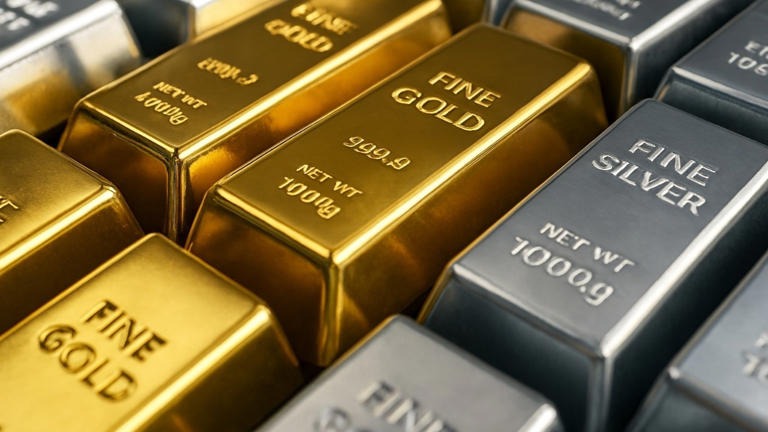

The gold-to-silver ratio has been declining as silver outperforms gold, driven by tightening supply and rising industrial demand. Analysts project silver could test higher levels in 2026, while gold faces consolidation. The shift signals structural changes in precious metals markets, reshaping investor strategies and portfolio allocations globally.
Precious metals markets are witnessing a notable trend: the gold-to-silver ratio is falling, reflecting silver’s stronger performance relative to gold. According to Citi and FXEmpire reports, silver surged in 2025, breaking long-term resistance and advancing toward the $100 level in 2026. Gold, meanwhile, is expected to consolidate after its record rally last year.
Analysts attribute silver’s momentum to industrial demand from renewable energy and electronics, alongside tightening physical supply. Gold remains a safe-haven asset but faces headwinds from monetary policy shifts and profit-taking after its sharp rise in 2025. The falling ratio highlights silver’s growing appeal as both an industrial and investment metal.
Key Highlights
-
Silver prices surged 174 percent in 2025, breaking past $50 resistance
-
Citi forecasts silver could rise beyond $40 per ounce, with potential to test $100 in 2026
-
Gold rallied 72 percent in 2025 but is expected to consolidate in 2026
-
Industrial demand and Fed liquidity expansion driving silver’s structural repricing
-
Falling gold-to-silver ratio signals stronger investor preference for silver relative to gold
Conclusion
The decline in the gold-to-silver ratio underscores a structural shift in precious metals markets. With silver gaining traction from industrial and investment demand, investors may recalibrate portfolios to balance gold’s stability with silver’s growth potential in 2026.
Sources: Financial Express, FXEmpire, Business Standard