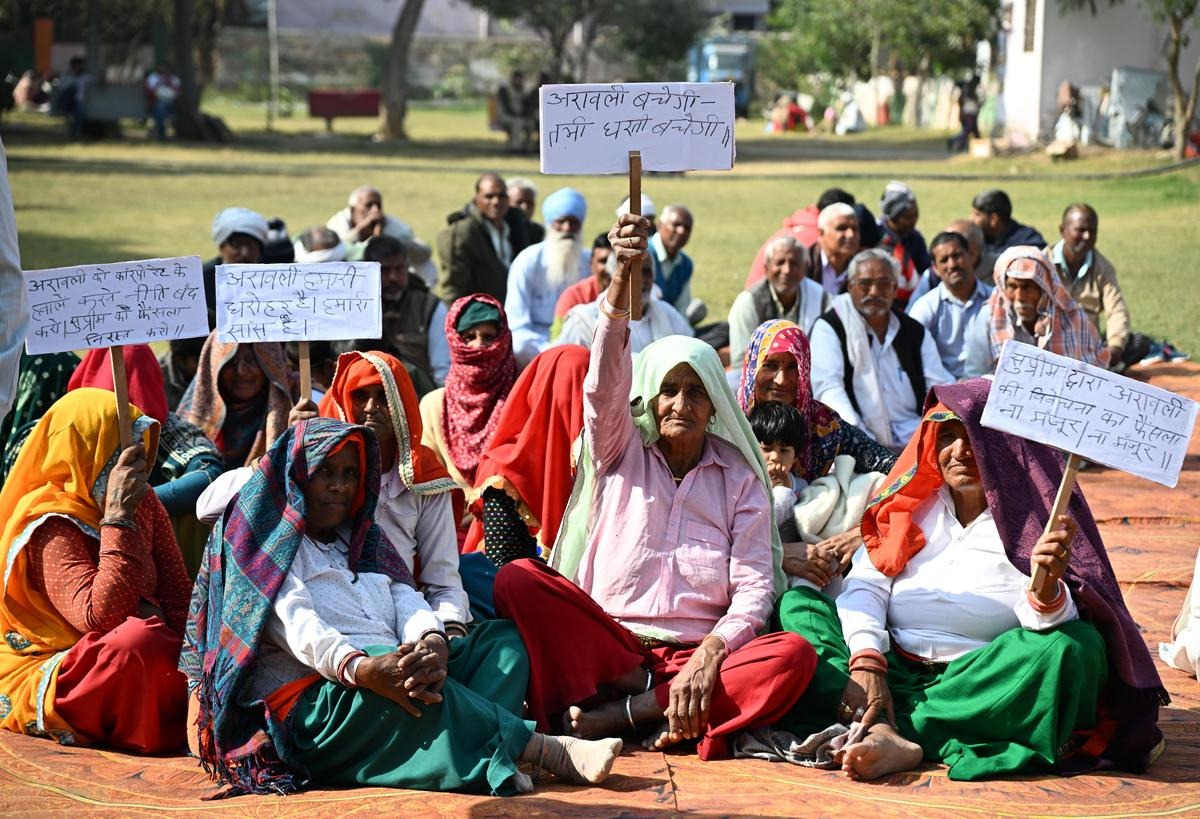

The ancient Aravalli range, over two billion years old, is under severe strain from mining, waste dumping, and encroachment. Recent Supreme Court deliberations on redefining the hills have heightened concerns, while local communities demand that decisions prioritize ecological preservation and livelihoods. Environmentalists warn of irreversible damage if unchecked activity continues.
The Aravalli hills, stretching across Rajasthan, Haryana, and Delhi, are facing unprecedented ecological stress. Heavy machinery and mining operations have scarred the landscape, threatening biodiversity and water recharge systems. The Supreme Court’s temporary acceptance of a new definition of the Aravallis, later kept in abeyance, has sparked protests and fears of diluted protections. Villagers in Kotputli and Nuh have staged demonstrations, urging authorities to involve communities in safeguarding the fragile ecosystem.
Key Highlights
-
Mining and waste dumping are eroding the ecological balance of the Aravalli range
-
Supreme Court kept the new definition of Aravallis in abeyance, pending review in January 2026
-
Local communities demand participatory decision-making to protect livelihoods and environment
-
Environmentalists warn of biodiversity loss and reduced groundwater recharge if exploitation continues
-
Protests in Rajasthan and Haryana highlight growing public concern over unchecked activity
Conclusion
The Aravalli hills stand at a critical juncture, caught between development pressures and ecological survival. With judicial review pending and communities raising their voices, the future of this ancient range depends on balancing economic interests with environmental stewardship.
Sources: The Hindu, CNBC TV18, News18