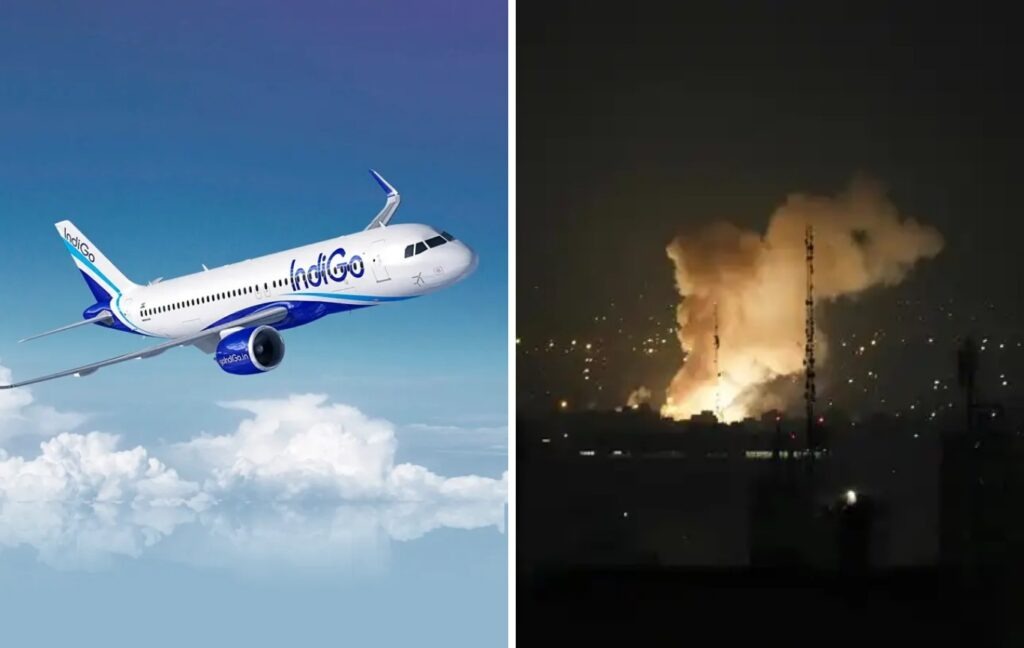






IndiGo confirmed that several of its international flights were impacted after Iran suddenly closed its airspace amid rising regional tensions. The closure, announced through a Notice to Air Missions (NOTAM), forced rerouting and delays, with airlines urging passengers to check updated schedules and advisories for travel adjustments.
India’s largest airline, IndiGo, reported disruptions to its international operations following Iran’s abrupt decision to shut its airspace on January 14, 2026. The closure, lasting for over two hours, was triggered by escalating tensions between Iran and the United States, alongside ongoing protests within Iran.
Flights overflying Iranian skies were rerouted, while some services faced cancellations where alternative paths were not feasible. Air India also issued advisories, warning passengers of possible delays due to longer flight times. Aviation authorities highlighted that the closure was temporary but underscored the risks posed by regional instability to global air traffic.
Key Highlights
-
IndiGo confirmed impact on several international flights
-
Iran closed airspace temporarily on January 14, citing security concerns
-
Flights rerouted, with some cancellations reported
-
Air India also issued advisories on delays and alternative routing
-
Closure announced via NOTAM, lasting over two hours
-
Global aviation authorities warned of risks from regional tensions
Impact And Reflection
The sudden closure highlights the vulnerability of international aviation to geopolitical developments. For Indian carriers, rerouting increases operational costs and travel times, while passengers face uncertainty. Industry experts stress the need for contingency planning and real-time communication to minimize disruption in volatile regions.
Final Takeaway
IndiGo’s disruptions due to Iran’s airspace closure underline the intersection of geopolitics and aviation, reminding travelers and airlines alike of the importance of flexibility and preparedness in global air travel.
Sources: Reuters, The Financial Express, The Guardian