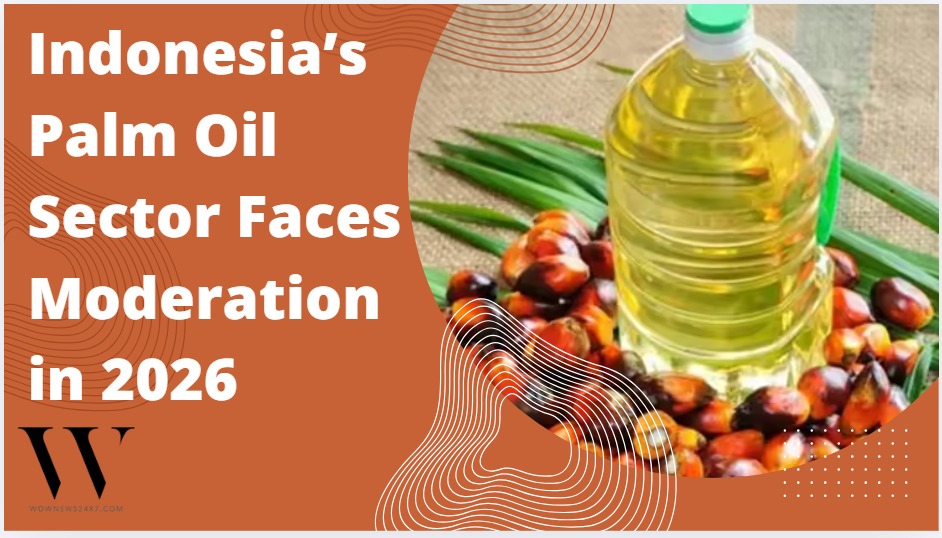

Indonesia’s crude palm oil (CPO) production is projected to rise 2–3% year-on-year in 2026, according to GAPKI. This comes after an 8% surge in 2025, when exports also grew 8.7%. The moderation reflects weather patterns, sustainability pressures, and global demand shifts impacting the world’s largest palm oil producer.
Production Trends
GAPKI (Indonesian Palm Oil Association) forecasts 2026 CPO output growth at 2–3%, a slowdown compared to the 8% jump in 2025.
Exports in 2025
Palm oil exports grew 8.7% year-on-year in 2025, supported by strong demand from India, China, and the European Union.
Drivers of Moderation
-
Weather variability and El Niño effects are expected to limit yield growth.
-
Sustainability regulations in key export markets are tightening, impacting expansion.
-
Domestic biodiesel demand continues to absorb a significant share of production.
Market Implications
Slower growth in 2026 may stabilize global palm oil prices, which surged in 2025. Analysts suggest Indonesia’s focus will shift toward efficiency, sustainability, and value-added exports.
Strategic Outlook
Indonesia remains the world’s largest palm oil producer, but balancing environmental concerns with economic growth will be critical in 2026.
Outlook
After a robust 2025, Indonesia’s palm oil sector faces a more measured 2026. With production growth slowing, the industry is expected to prioritize sustainability and market diversification, ensuring long-term resilience amid global scrutiny.
Sources: Reuters, GAPKI, Economic Times, Business Standard