
India enters 2026 with strong fundamentals, easing inflation, and resilient demand. Policymakers and analysts stress the need to sustain momentum through fiscal support, private investment, and reforms. With GDP projected around 6.5-6.7 percent, India remains one of the fastest-growing economies, though global risks and domestic transitions demand careful navigation.
Economic Outlook For 2026
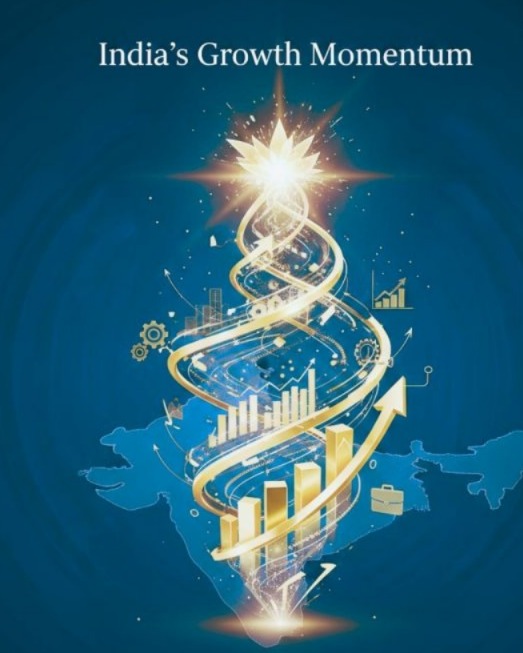
India’s economic journey into 2026 is being described as a year of hope, with growth momentum built in 2025 expected to carry forward. Reports from the Mastercard Economics Institute, EY, and OECD highlight that India’s fundamentals remain robust, supported by demographics, digitisation, and policy measures. GDP growth is projected to moderate slightly from 7.8 percent in 2025 to around 6.6-6.7 percent in 2026, while inflation is expected to stabilize near 4 percent.
Policy Priorities And Budget Expectations
The Union Budget 2026 is anticipated to reinforce demand through targeted fiscal measures, complementing the Reserve Bank of India’s growth-oriented stance. Analysts emphasize that sustaining private investment and strengthening domestic consumption will be critical to offset global uncertainties such as trade barriers and supply chain disruptions.
Key Highlights
-
India’s GDP projected at 6.6-6.7 percent in FY26, among the fastest globally
-
Inflation expected to stabilize around 4 percent, easing from 2025 levels
-
Union Budget 2026 to focus on demand push and complement RBI’s monetary stance
-
Structural drivers include digitisation, demographics, and infrastructure reforms
-
Private investment and resilient domestic demand seen as key to sustaining growth
-
Global risks like tariffs and compliance costs could test India’s resilience
Sectoral Outlook
Industry-specific outlooks also remain positive. The automobile sector, for instance, expects 6-8 percent growth in 2026, aided by policy support and rising consumer demand, though compliance costs loom with upcoming emission norms. Banking liquidity, valuations, and earnings recovery further strengthen the macroeconomic setup, positioning India for selective outperformance in sectors like consumption and smallcaps.
Conclusion
As India steps into 2026, the challenge lies in balancing optimism with caution. Sustaining growth momentum will require not just supportive policies but also structural reforms that deepen resilience. The year is seen as pivotal in consolidating India’s position as a global growth leader while preparing for long-term transitions.
Sources: Deccan Chronicle, Daily Excelsior, Telegraph India, CNBC TV18, Business Standard, Economic Times