









Follow WOWNEWS 24x7 on:

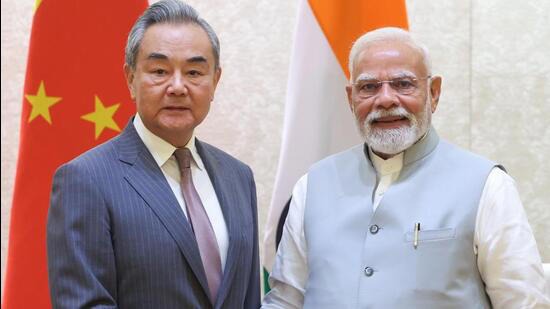
As geopolitical tensions ripple across continents, a significant diplomatic thaw is unfolding between Asia’s two giants. Chinese Foreign Minister Wang Yi’s high-profile visit to New Delhi culminated in a series of strategic agreements with Indian Prime Minister Narendra Modi, signaling a renewed commitment to peace, dialogue, and cooperation. Simultaneously, the United States has acknowledged the stability of its current trade dynamics with China, adding another layer to the evolving trilateral equation.
Here’s a comprehensive breakdown of the developments:
1. Border stability and new consensus
- Wang Yi and Prime Minister Modi reached a fresh consensus on managing the long-standing border dispute
- The agreement emphasizes normalization of control and maintaining peace and tranquility along the Line of Actual Control
- Both sides acknowledged that while differences persist, they must be managed constructively to prevent disruption of broader bilateral ties
- This marks a pivotal shift from the post-Galwan standoff era, where military tensions had frozen diplomatic channels
2. Strategic value of cooperation amid global flux
- Wang Yi underscored the rising strategic importance of China-India cooperation in the current international climate
- With global supply chains under strain and regional alliances shifting, Beijing and New Delhi appear keen to recalibrate their relationship
- Modi echoed this sentiment, noting that stable and predictable ties between the two nations would significantly contribute to regional and global peace
3. Revival of dialogue mechanisms across sectors
- After what officials described as comprehensive and in-depth communication, both sides agreed to restart suspended dialogue mechanisms
- These include diplomatic, economic, cultural, and border-specific channels that had been dormant since the 2020 clashes
- The 24th round of Special Representatives’ talks, co-chaired by NSA Ajit Doval and Wang Yi, laid the groundwork for this revival
- Direct flights between India and China are set to resume, and trade facilitation measures are being explored to boost economic engagement
4. Modi’s upcoming visit to China for SCO Summit
- Prime Minister Modi confirmed his participation in the Shanghai Cooperation Organisation Summit in Tianjin from August 31 to September 1
- This will be his first visit to China in seven years and follows last year’s informal meeting with President Xi Jinping in Kazan
- The summit is expected to further cement the diplomatic momentum and offer a platform for deeper regional cooperation
5. US-China trade status: a quiet confidence
- In a parallel development, US Treasury Secretary Scott Bessent told Fox News that the status quo on China is working very well
- He confirmed that Washington has had very good talks with Beijing during the ongoing 90-day pause in tariff implementation
- Bessent’s remarks suggest a temporary stabilization in US-China trade relations, even as tensions with India over Russian oil imports and tariffs remain unresolved
- The US has refrained from imposing similar penalties on China, citing differences in trade behavior and long-term purchasing patterns
6. Implications and outlook
- The India-China rapprochement comes at a time when New Delhi’s ties with Washington are under strain, potentially nudging India toward a more balanced foreign policy
- Analysts caution that while the optics are promising, deep-rooted issues—such as China’s ties with Pakistan and unresolved border demarcations—remain
- Nonetheless, the resumption of dialogue and Modi’s upcoming visit signal a willingness to engage, recalibrate, and possibly redefine the contours of Asian diplomacy
Sources: Xinhua, Reuters, Fox News, The Week, Firstpost, Mathrubhumi, CNBC-TV18, Al Jazeera, MSN, US News, Bloomberg, The Hindu, IndiaTV News, The Economic Times









Follow WOWNEWS 24x7 on:


Copyright 2024 WOWNEWS 24x7. All rights reserved. The WOWNEWS 24x7 is not responsible for the content of external sites. Read about our approach to external linking.
Powered By Just Imagine
