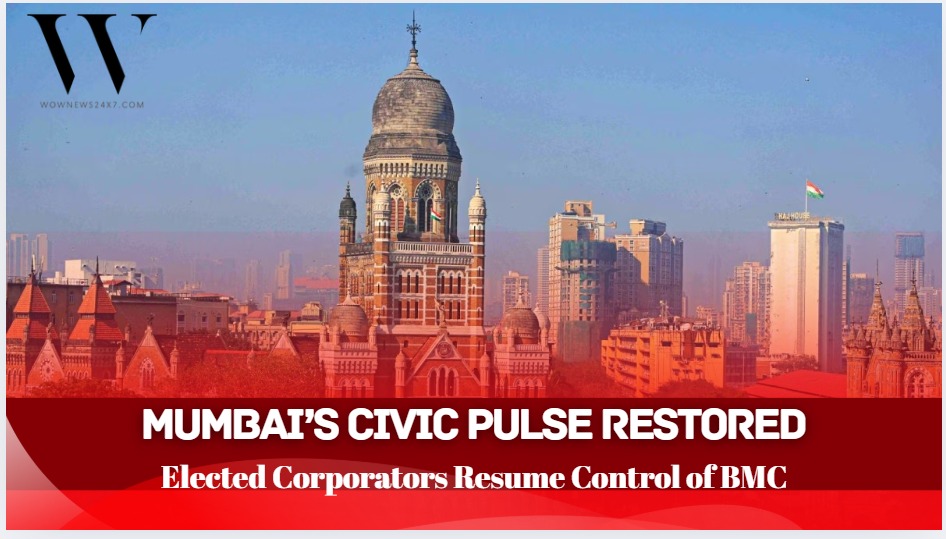







After nearly three years under an administrator, Mumbai’s civic body—the Brihanmumbai Municipal Corporation (BMC)—is set to welcome back elected corporators following the January 2026 polls. Their return will restore democratic accountability, revive ward-level representation, and significantly influence budget allocations, policy decisions, and citizen engagement in India’s richest municipal corporation.
Mumbai’s civic governance is on the cusp of transformation as corporators return to the Brihanmumbai Municipal Corporation (BMC) after a prolonged hiatus. Since March 2022, the BMC, the country’s wealthiest civic body with an annual budget exceeding ₹50,000 crore—has been run by an administrator, marking only the second such instance in its 140-year history.
Key Highlights of the Change
Restoring Representation: The absence of corporators left citizens without a direct link to civic decision-making. Their return ensures ward-level voices are heard again, bridging the gap between residents and the administration.
Budget Oversight: With elections scheduled for January 15, 2026, corporators will regain control over budget approvals and allocations, influencing spending on infrastructure, sanitation, health, and education.
Policy Direction: Corporators will shape urban planning, housing, and transport policies, areas that have been managed solely by bureaucrats during the administrator-led phase.
Checks and Balances: Their presence reinstates democratic accountability, ensuring that civic officials are answerable to elected representatives rather than operating with unchecked authority.
Citizen Engagement: Local issues, from potholes to water supply will once again be addressed through ward committees, giving residents a structured platform to raise concerns.
Why It Matters
Democratic Deficit Addressed: The administrator-led model, though efficient in some respects, sidelined grassroots participation. The corporators’ return rebalances governance by embedding public accountability.
Political Stakes: With over 227 corporator seats up for grabs, the elections will determine which party controls Mumbai’s civic purse, influencing both local development and broader political narratives.
Urban Challenges: Mumbai faces pressing issues—flood management, waste disposal, housing shortages—that demand inclusive policymaking. Corporators’ involvement is expected to bring diverse perspectives and community-driven solutions.
Broader Context
The return of corporators is not just about local governance—it reflects the importance of elected representation in urban India’s rapidly expanding cities. As Mumbai prepares for its next civic chapter, the balance between bureaucratic efficiency and democratic accountability will define how effectively the BMC serves its 1.25 crore residents.
Sources: Mid-Day (mid-day.com in Bing), Times of India