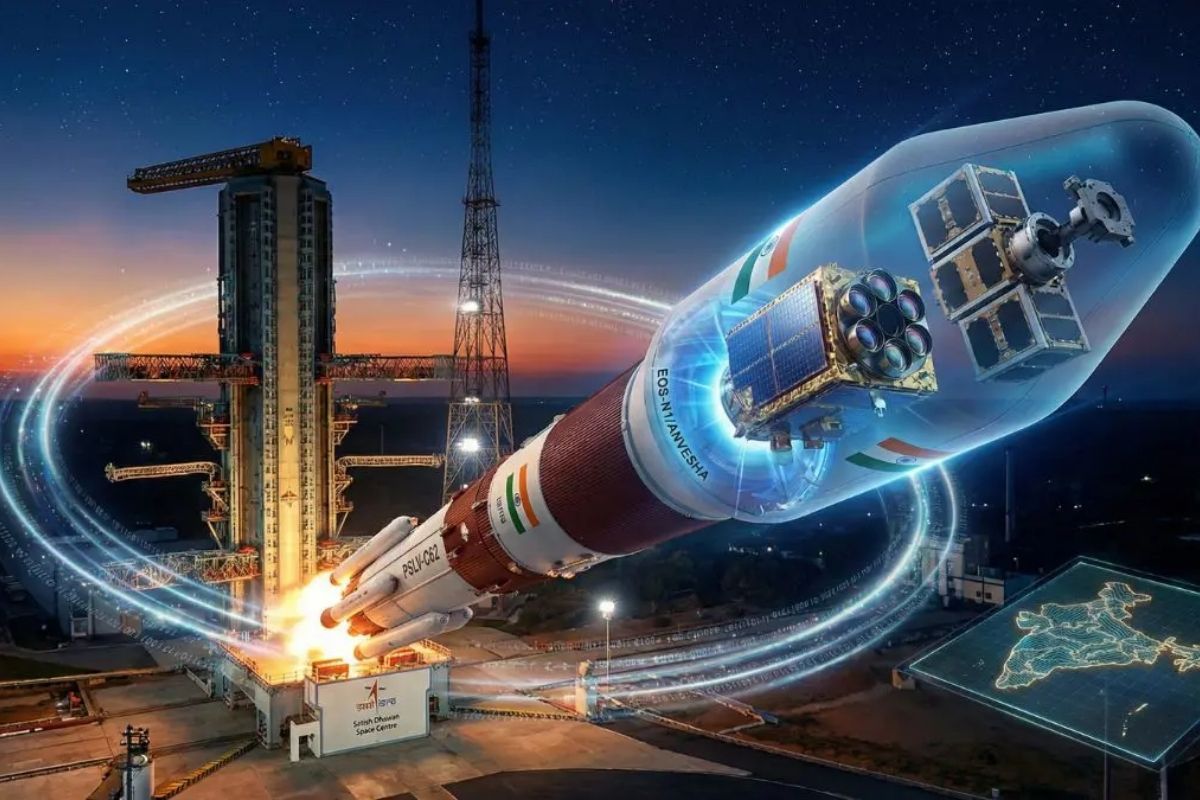









India’s PSLV-C62 rocket, carrying 16 satellites including one developed in Maranhão, Brazil, suffered a third-stage anomaly during its January 12, 2026 launch from Sriharikota. The malfunction caused the payloads, including Brazil’s Earth observation satellite, to disappear in space. ISRO has launched an investigation into the rare back-to-back PSLV failures.
India’s trusted Polar Satellite Launch Vehicle (PSLV) faced another setback as its C62 mission failed mid-flight, leading to the loss of 16 satellites, including a Brazilian payload developed in Maranhão. According to WION, Hindustan Times, Firstpost, India Today, and Free Press Journal, the rocket lifted off successfully but encountered a critical third-stage malfunction, preventing satellites from reaching orbit.
This marks the second consecutive PSLV failure after May 2025’s C61 anomaly, raising concerns about reliability of India’s workhorse rocket. The lost payloads included India’s EOS-N1 (Anvesha) Earth observation satellite and several international collaborations, highlighting the global impact of the mission’s failure.
Notable Updates and Major Takeaways
Launch date: January 12, 2026, from Sriharikota.
Payloads lost: 16 satellites, including EOS-N1 and a Brazilian satellite from Maranhão.
Failure cause: Third-stage anomaly during PSLV-C62 flight.
Repeat issue: Second consecutive PSLV failure after May 2025.
Global impact: Loss affects India’s strategic missions and Brazil’s space collaboration.
ISRO response: Detailed investigation underway; ISRO chief Dr. V. Narayanan confirmed anomaly.
Conclusion
The PSLV-C62 failure underscores the challenges of space exploration, even for seasoned rockets. With strategic and international payloads lost, ISRO faces pressure to restore confidence in PSLV missions while Brazil mourns the disappearance of its Maranhão-developed satellite.
Sources: WION, Hindustan Times (hindustantimes.com in Bing), Firstpost, India Today