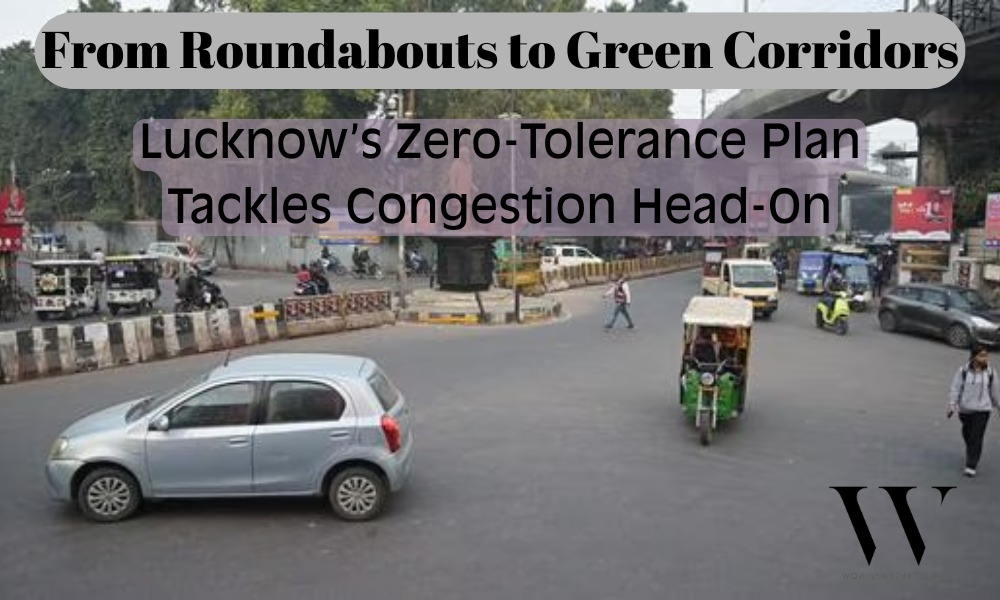
Lucknow has unveiled a zero-tolerance traffic plan to decongest intersections, banning parking within 50 metres and restricting autos and buses from passenger stops at crossings. Multi-agency monitoring will target hotspots like Nishatganj and Kukrail Road. The initiative supports Lucknow’s smart city vision and aims to improve safety and urban mobility.
Lucknow has taken a decisive step toward tackling its chronic traffic woes. On January 11, 2026, the city administration, in collaboration with the traffic police and municipal authorities, unveiled a zero-tolerance traffic plan aimed at decongesting major intersections and improving urban mobility.
Strict Enforcement at Intersections
At the heart of the plan is strict enforcement of no-parking zones within a 50-metre radius of key junctions. Vehicles found violating the rule will face immediate penalties. Additionally, passenger pick-up and drop-off by autos, e-rickshaws, tempos, and buses has been banned at crossings to prevent bottlenecks.
Multi-Agency Roadmap
The initiative is part of a comprehensive roadmap involving the Lucknow Development Authority (LDA), traffic police, and municipal bodies. Together, they will monitor compliance, redesign problematic intersections, and ensure smoother traffic flow. The plan also aligns with the state’s Green Corridor Project, which aims to modernize Lucknow’s road infrastructure.
Addressing Congestion Hotspots
Traffic police have already flagged intersections such as Hanuman Setu, Nishatganj, and Kukrail Road as potential congestion hotspots due to faulty designs and broad roundabouts. These areas will be prioritized under the new enforcement strategy to prevent gridlocks once the Green Corridor stretches open.
Towards a Smarter City
Officials emphasize that the zero-tolerance plan is not just about enforcement but about changing commuter behavior. By discouraging illegal parking and unsafe passenger practices, the city hopes to create a safer, more efficient traffic system. The initiative is also seen as a step toward Lucknow’s smart city vision, blending infrastructure upgrades with strict regulation.
Key Highlights
-
Zero-tolerance enforcement: Strict ban on parking within 50 metres of intersections.
-
Passenger restrictions: Autos, e-rickshaws, tempos, and buses prohibited from pick-up/drop-off at crossings.
-
Multi-agency plan: Coordination between police, Lucknow Development Authority (LDA), and municipal bodies.
-
Targeted intersections: Focus on high-traffic junctions flagged for congestion risks.
-
Urban mobility goal: Reduce jams, improve safety, and support smart city initiatives.
Conclusion
Lucknow’s zero-tolerance traffic plan represents a bold attempt to reclaim order on its busy roads. With bans on parking and passenger stops at intersections, coupled with multi-agency monitoring, the city is aiming for smoother traffic, safer commutes, and a modern urban experience.
Sources: Times of India, Hindustan TimesHindustan Times, Indian Masterminds