






Maruti Suzuki has launched its first electric vehicle, the e-Vitara (eVX), introducing a unique Battery-as-a-Service (BaaS) rental model. The scheme lowers upfront costs by separating battery ownership from the car, allowing buyers to pay per kilometer or via subscription. This innovation aims to accelerate EV adoption in India.
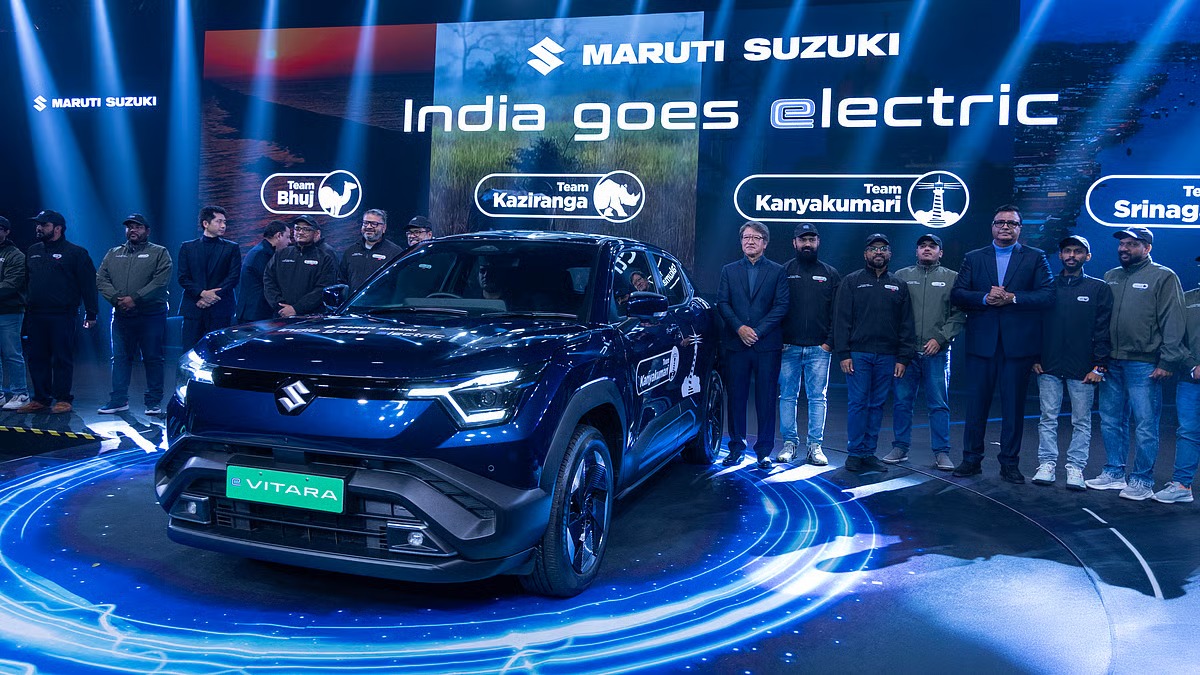
Maruti Suzuki, India’s largest carmaker, has officially entered the electric vehicle market with the launch of its first EV, the e-Vitara (eVX). The company has introduced a groundbreaking Battery-as-a-Service (BaaS) rental scheme, designed to make EVs more affordable and accessible to Indian consumers.
Under the BaaS model, buyers purchase the vehicle without the battery, significantly reducing the upfront cost. The battery is then rented either on a per-kilometer basis or through a fixed monthly subscription. Since batteries account for nearly 40–50% of an EV’s total cost, this approach addresses one of the biggest barriers to EV adoption-high purchase prices and concerns over battery degradation.
Maruti Suzuki has also announced localized battery production in India, aiming to reduce dependency on imports and strengthen the domestic EV ecosystem. The company is setting up 1,500 EV-ready workshops and over 2,000 charging points across the country to support the rollout. Additionally, an assured buyback program has been introduced to tackle resale value concerns, further boosting consumer confidence.
Key highlights from the announcement include
-
Launch of Maruti Suzuki’s first EV, the e-Vitara (eVX)
-
Introduction of Battery-as-a-Service (BaaS) rental scheme
-
Upfront cost reduced by separating battery ownership from vehicle purchase
-
Localized battery production planned to strengthen domestic EV ecosystem
-
1,500 EV-ready workshops and 2,000+ charging points to support rollout
-
Assured buyback program to address resale value concerns
Industry experts note that Maruti Suzuki’s entry into the EV market with innovative schemes like BaaS could reshape India’s automotive landscape. By lowering costs and addressing consumer concerns, the company is positioning itself to drive mass adoption of electric mobility in the country.
Sources: MotorBrief, EV Drive, EV India