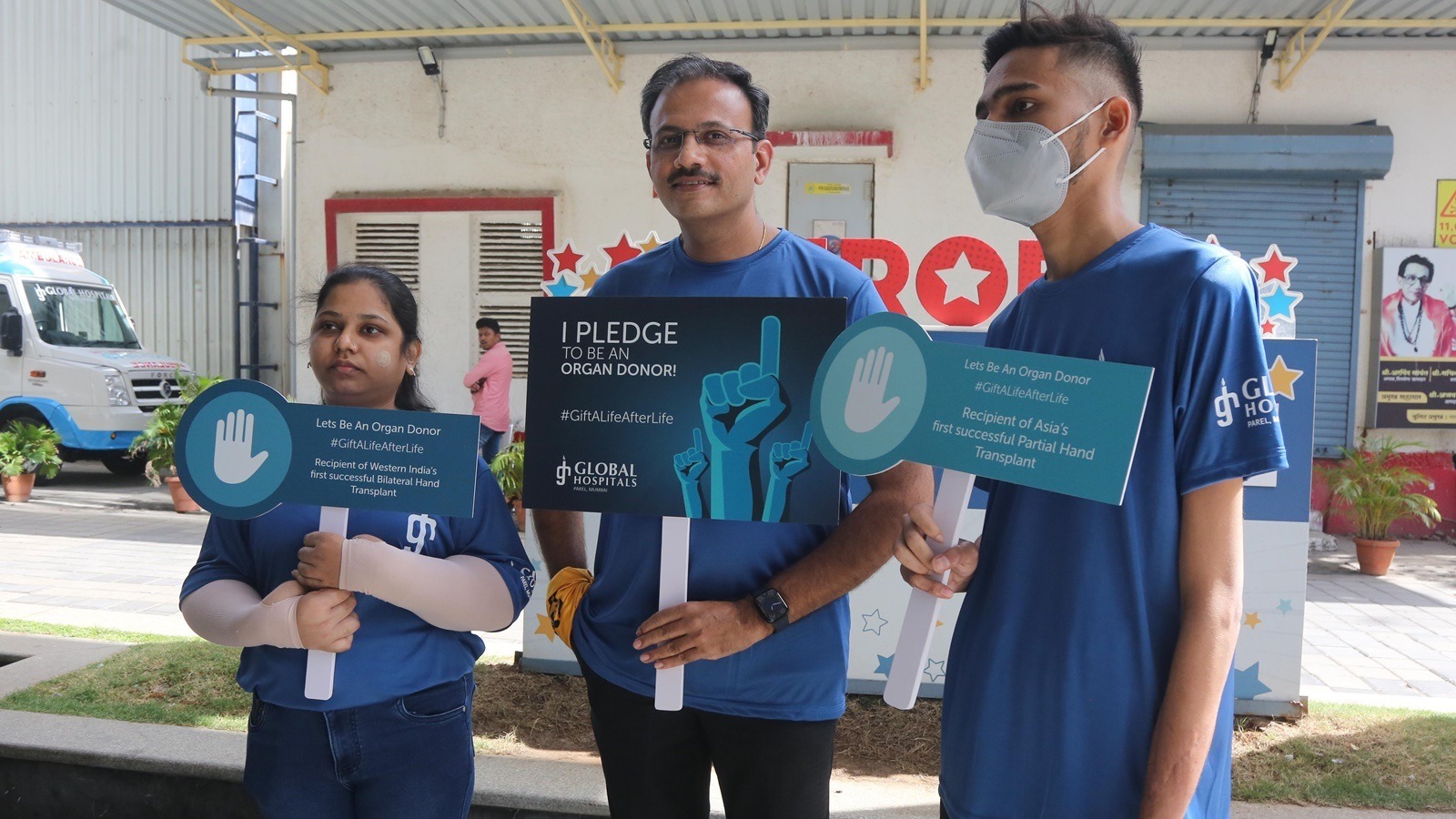

In a remarkable display of compassion, three families in Mumbai and Navi Mumbai consented to organ donation within 24 hours, saving and transforming the lives of more than two dozen patients. Kidneys, livers, corneas, and tissues were transplanted, highlighting both the courage of grieving families and the growing importance of organ donation.
Mumbai and Navi Mumbai recently witnessed an extraordinary day of humanity when three brain-dead patients’ families consented to organ donation, enabling multiple life-saving transplants across the region. The donations, coordinated by the Zonal Transplant Coordination Committee (ZTCC), took place at S L Raheja Hospital (Mahim), Fortis Hiranandani Hospital (Navi Mumbai), and Hira Mongi Navneet Hospital (Mulund).
Families’ Courage Amid Grief
Despite the immense pain of losing loved ones, the families made the courageous decision to donate organs and tissues. Their selflessness ensured that critically ill patients received a new lease on life. Doctors emphasized that such decisions not only save lives but also inspire wider awareness about the importance of organ donation.
Key Highlights
Multiple Donations in 24 Hours: Three cadaver donations provided kidneys, livers, corneas, skin, and tissues.
Lives Saved: Over two dozen patients benefited, including those awaiting liver and kidney transplants, while many regained eyesight through cornea transplants.
Growing Momentum: Mumbai has already recorded 10 deceased organ donations in 2026, resulting in 20 successful transplants.
Awareness Efforts: NGOs and hospitals continue to campaign for organ donation, aiming to reduce India’s long waiting list of patients.
Community Impact: Each donation serves as a reminder of how one family’s decision can ripple across society, offering hope to many.
Why It Matters
India faces a significant gap between demand and supply of organs, with thousands waiting for transplants. The events in Mumbai and Navi Mumbai underscore the life-saving potential of organ donation and highlight the need for greater awareness and acceptance. Experts note that while awareness is rising, myths and cultural hesitations still prevent many families from consenting.
Looking Ahead
With continued advocacy, medical coordination, and public awareness campaigns, organ donation in India is poised to grow. The Mumbai example demonstrates how compassion can overcome grief, turning tragedy into hope. As more families step forward, the possibility of reducing India’s transplant waiting list becomes increasingly achievable.
Sources: Hindustan Times, The Week, Economic Times, Associated Press