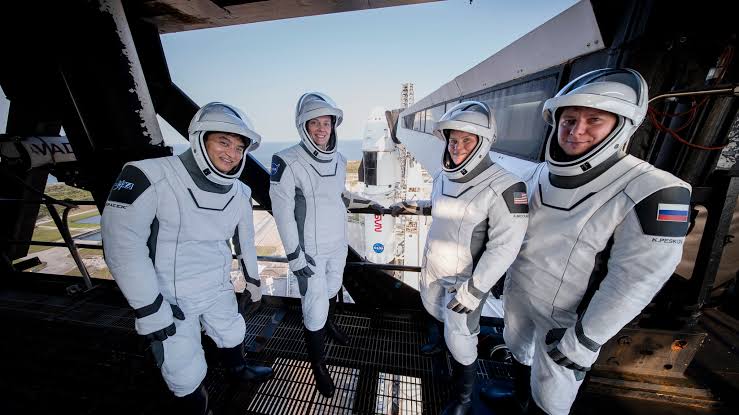
NASA is gearing up for the SpaceX Crew-12 mission, scheduled to launch on February 15, 2026, from Cape Canaveral. The mission will carry four astronauts from NASA, ESA, and Roscosmos to the International Space Station (ISS) for a long-duration science expedition as part of Expedition 74.
NASA, in collaboration with SpaceX, is finalizing preparations for the upcoming Crew-12 mission under the Commercial Crew Program. The mission will launch aboard a Falcon 9 rocket carrying the Crew Dragon spacecraft from Cape Canaveral Space Force Station. Crew-12 represents another milestone in international space cooperation, bringing together astronauts from three major space agencies for a long-duration stay at the ISS.
Key highlights from the announcement include
-
Crew-12 scheduled to launch no earlier than February 15, 2026, from Cape Canaveral.
-
Crew members include NASA astronauts Jessica Meir (commander) and Jack Hathaway (pilot), ESA astronaut Sophie Adenot, and Roscosmos cosmonaut Andrey Fedyaev as mission specialists.
-
The mission will dock with the ISS Harmony module and join Expedition 74.
-
Crew-12 will focus on scientific research in life sciences, materials science, and technology demonstrations.
-
The mission underscores NASA’s commitment to international collaboration in space exploration.
-
Crew Dragon spacecraft continues to play a pivotal role in transporting astronauts safely to and from the ISS.
The Crew-12 mission highlights the growing importance of multinational cooperation in space exploration. With astronauts from NASA, ESA, and Roscosmos working together, the mission will advance scientific research while strengthening diplomatic ties through shared objectives in space. The inclusion of diverse experiments will contribute to advancements in medicine, materials, and sustainable technologies, benefiting both space missions and life on Earth.
NASA officials emphasized that Crew-12 is part of the broader vision to maintain continuous human presence aboard the ISS while preparing for future missions to the Moon and Mars. The mission also demonstrates the reliability of SpaceX’s Crew Dragon spacecraft, which has become a cornerstone of NASA’s Commercial Crew Program.
Sources: NASA, Space Coast Daily, Wikipedia