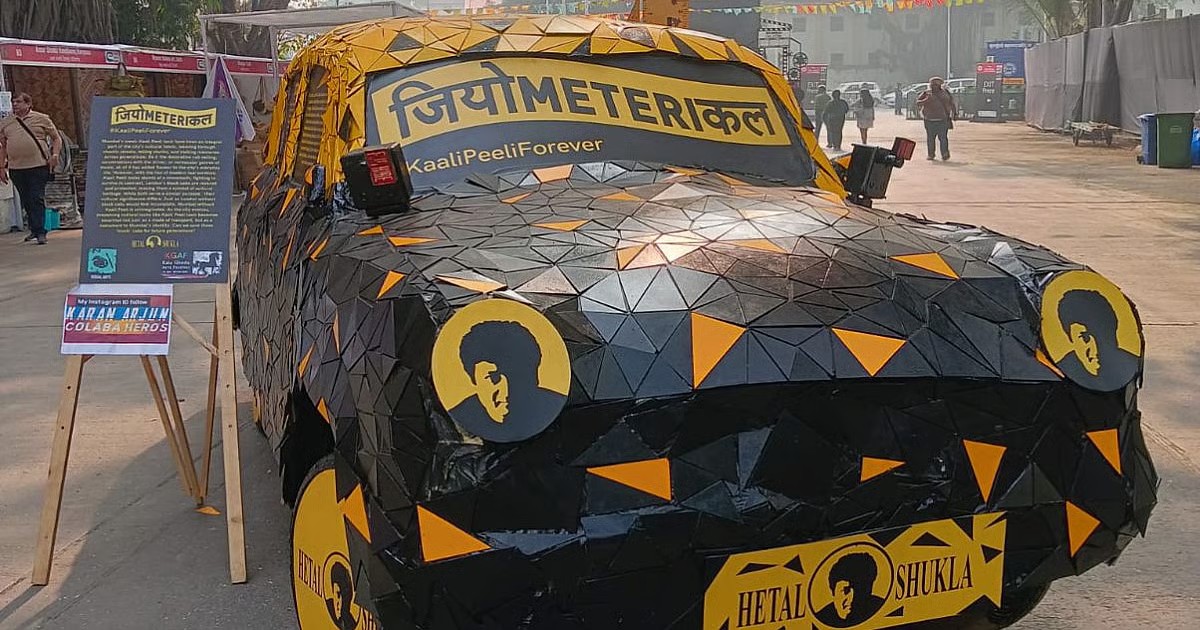
The Kala Ghoda Arts Festival 2026 in Mumbai paid tribute to the city’s beloved Kaali-Peeli taxis, once a hallmark of urban life and Bollywood culture. These vintage Premier Padmini cars, phased out in 2023, were showcased as an installation, symbolizing nostalgia, heritage, and Mumbai’s evolving identity.
Mumbai’s Kala Ghoda Arts Festival 2026, now in its 26th edition, turned into a cultural celebration that blended art, heritage, and memory. Among the many installations, one stood out prominently – the tribute to the Kaali-Peeli taxi. For decades, these black-and-yellow Premier Padmini taxis defined the city’s streets, ferrying millions of Mumbaikars and featuring in countless films. Their official decommissioning in October 2023 marked the end of an era, but the festival ensured their legacy lives on.
Key Highlights:
-
The Kaali-Peeli taxis were once the lifeline of Mumbai, serving office-goers, late-night travelers, and tourists alike
-
They became cultural icons, immortalized in Bollywood movies and popular art, representing the city’s vibrancy and resilience
-
The Kala Ghoda Festival 2026 showcased a dedicated installation, evoking nostalgia and emotional connection among visitors
-
The festival itself spanned nine days, featuring visual arts, music, dance, theatre, literature, and heritage walks, making it one of India’s most celebrated cultural events
-
The tribute to Kaali-Peeli taxis highlighted the importance of preserving urban heritage even as the city modernizes with new transport systems
-
Artists and curators emphasized that the installation was not just about vehicles, but about the collective memory of Mumbai’s people and their everyday journeys
-
The event drew large crowds, with many sharing personal stories of rides in Kaali-Peelis, reinforcing the taxis’ role as symbols of community and belonging
The Kala Ghoda Arts Festival 2026 has once again proven to be more than an art showcase – it is a living archive of Mumbai’s identity. By honouring the Kaali-Peeli taxi, the festival bridged the past and present, reminding citizens that heritage is not only about monuments but also about everyday icons that shape collective memory.
Sources: Free Press Journal, Boldsky