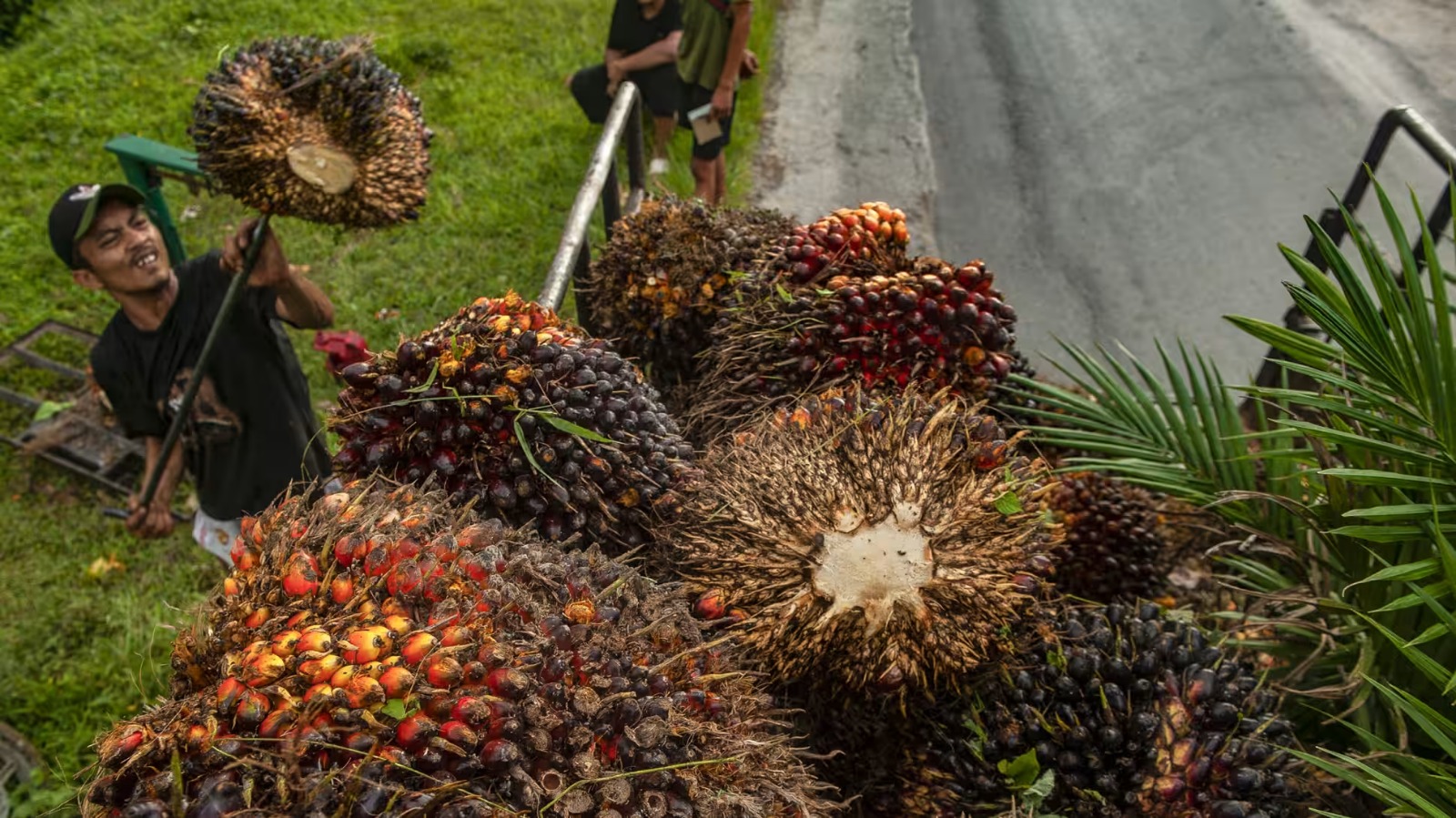









Global palm oil markets in 2026 are set for mixed trends. Indonesia’s output is forecast at a record 51.2 million metric tons (MT), up 0.39% year-on-year, while Malaysia’s production is expected to fall 2.61% to 19.75 million MT. Prices are projected to average 4,125 ringgit/MT, down 2.55% annually.
The palm oil industry faces a divergent production outlook in 2026, with Indonesia and Malaysia the world’s top producers moving in opposite directions. According to market forecasts, Indonesia’s palm oil output will reach a record 51.2 million MT, supported by expanded plantations and improved yields. In contrast, Malaysia’s production is expected to decline to 19.75 million MT, reflecting labor shortages and slower replanting efforts.
Meanwhile, palm oil prices are projected to average 4,125 ringgit per metric ton, marking a 2.55% year-on-year decline. Analysts attribute this to higher Indonesian supply, softer global demand, and competition from alternative vegetable oils.
Key Highlights:
-
Indonesia: Output forecast at 51.2 million MT, up 0.39% Y/Y.
-
Malaysia: Output forecast at 19.75 million MT, down 2.61% Y/Y.
-
Prices: Average forecast of 4,125 ringgit/MT, down 2.55% Y/Y.
Drivers:
-
Indonesia’s yield improvements and plantation expansion.
-
Malaysia’s labor and replanting challenges.
-
Global demand moderation and competition from soybean oil.
This outlook underscores the shifting dynamics of the palm oil market, where Indonesia’s growth may offset Malaysia’s decline, but overall price pressures reflect a cautious demand environment.
Sources: Reuters, Bloomberg Commodities, Malaysian Palm Oil Board (MPOB)