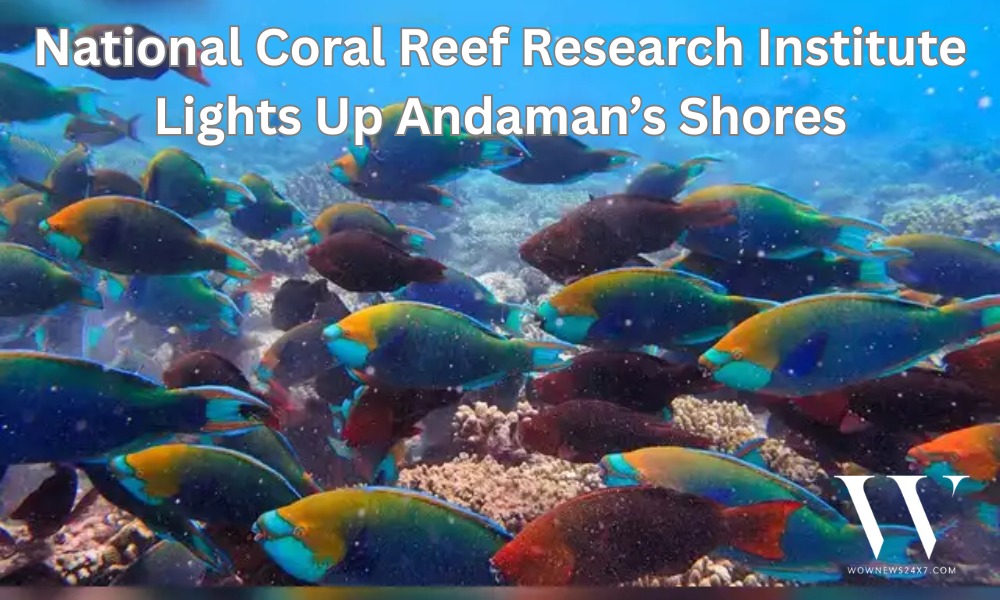



India is set to establish its first dedicated National Coral Reef Research Institute (NCRRI) at Chidiyatapu, South Andaman, with a budget of ₹120 crore. The centre will spearhead research, conservation, and management of coral reefs, crucial for coastal protection and marine biodiversity amidst climate change challenges.
The Indian government, through the Ministry of Environment, Forest and Climate Change, will soon launch the National Coral Reef Research Institute in the Andaman and Nicobar Islands, marking a historic milestone in marine conservation. Located at Chidiyatapu in South Andaman, this ₹120-crore facility will serve as the country’s nodal and monitoring body for coral reef research.
Coral reefs play a vital role in buffering coastal regions from storms, protecting lives, properties, and coastal ecosystems by acting as natural wave cushions. The institute will provide scientific data, develop conservation strategies, and oversee ecosystem management across India’s coastal areas. It aims to strengthen India’s regional leadership in coral ecosystem conservation and sustainable development.
The Zoological Survey of India (ZSI) and other agencies are adopting innovative tools like QR-code-based digital access to species information to engage the public and researchers alike. Experts highlight the reefs’ vulnerability to rising sea levels and warming oceans, urging integrated efforts combining biodiversity conservation with sustainable agriculture and climate resilience.
Sources: Indian Express, Indian Government Ministry of Environment, Zoological Survey of India