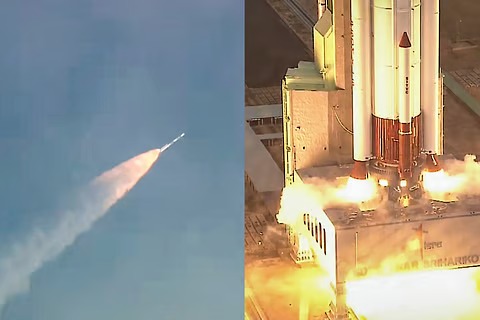


India’s space program faced a rare setback as the PSLV-C62 mission, launched from the Satish Dhawan Space Centre, encountered a critical anomaly during its third stage. While liftoff was flawless, disturbances in roll rate during the third stage caused deviation from the planned trajectory, preventing successful deployment of satellites.
Key highlights from the announcement include
-
PSLV-C62 lifted off at 10:18 am IST on January 12, 2026, carrying EOS-N1 and 15 co-passenger satellites.
-
The mission encountered a third-stage anomaly, leading to deviation in flight path and loss of payloads.
-
Telemetry data confirmed disturbances in roll rates during the third stage, preventing orbital insertion.
-
ISRO Chairman V. Narayanan confirmed the anomaly and announced a detailed investigation.
-
This marks the second consecutive setback for PSLV after the PSLV-C61 failure in May 2025.
-
The EOS-N1 Earth observation satellite and DRDO’s strategic Anvesha hyperspectral satellite were among the lost payloads.
-
Despite flawless performance in the first and second stages, the anomaly disrupted mission success.
-
Industry experts note the setback is rare for PSLV, which has historically been India’s most reliable workhorse launcher.
The failure of PSLV-C62 underscores the challenges of space exploration, even for proven launch vehicles. ISRO has assured that corrective measures will be taken, with a comprehensive review underway to prevent recurrence. While the setback is significant, experts emphasize that India’s space program has a strong track record and will continue to advance with resilience.
As India looks ahead to upcoming missions in 2026, including Gaganyaan preparations and Chandrayaan follow-ups, the PSLV-C62 anomaly serves as a reminder of the complexities of spaceflight. ISRO’s swift response and transparency highlight its commitment to learning from challenges and strengthening future missions.
Sources: The Quint, New Indian Express, Business Today, India Today, Business Standard, Economic Times