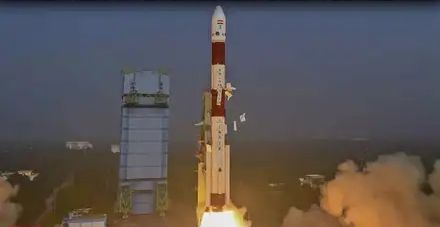

ISRO’s PSLV‑C62 mission, launched on January 12, 2026, failed to place its satellites into orbit after encountering a third‑stage anomaly. The mission carried the EOS‑N1 (Anvesha) satellite and 15 co‑passenger payloads. ISRO has initiated a detailed investigation, while global partners and analysts await clarity on the cause.
India’s first space launch of 2026 faced an unexpected setback when PSLV‑C62 deviated from its intended trajectory due to a critical anomaly in the rocket’s third stage. The mission lifted off from Sriharikota carrying the EOS‑N1 (Anvesha) hyperspectral Earth‑observation satellite along with 15 smaller payloads.
ISRO Chairman V. Narayanan confirmed that while the initial phases of the flight were nominal, the PS3 stage experienced a performance disturbance, including a drop in chamber pressure, which prevented the vehicle from achieving orbital velocity. As a result, all onboard satellites were lost.
International partners, including Thailand’s GISTDA, which had a co‑passenger satellite onboard, acknowledged the anomaly and are awaiting ISRO’s findings. A Failure Analysis Committee has been activated to determine the root cause and recommend corrective measures.
Key Highlights / Major Takeaways
Launch date: January 12, 2026
Primary payload: EOS‑N1 (Anvesha), a DRDO hyperspectral surveillance satellite
Cause of failure: Third‑stage anomaly involving thrust and stability issues
Outcome: Loss of all 16 satellites onboard
Next steps: Detailed investigation by ISRO’s Failure Analysis Committee
Impact: Setback for defence surveillance, commercial clients, and private‑sector payloads
Conclusion
The PSLV‑C62 setback marks a rare interruption in ISRO’s strong reliability record. As investigations progress, the mission’s failure is expected to shape upcoming launch protocols and reinforce the need for enhanced stage‑level diagnostics.
Sources: The Hindu, India TV News, Times of India, Mathrubhumi English, Business Standard