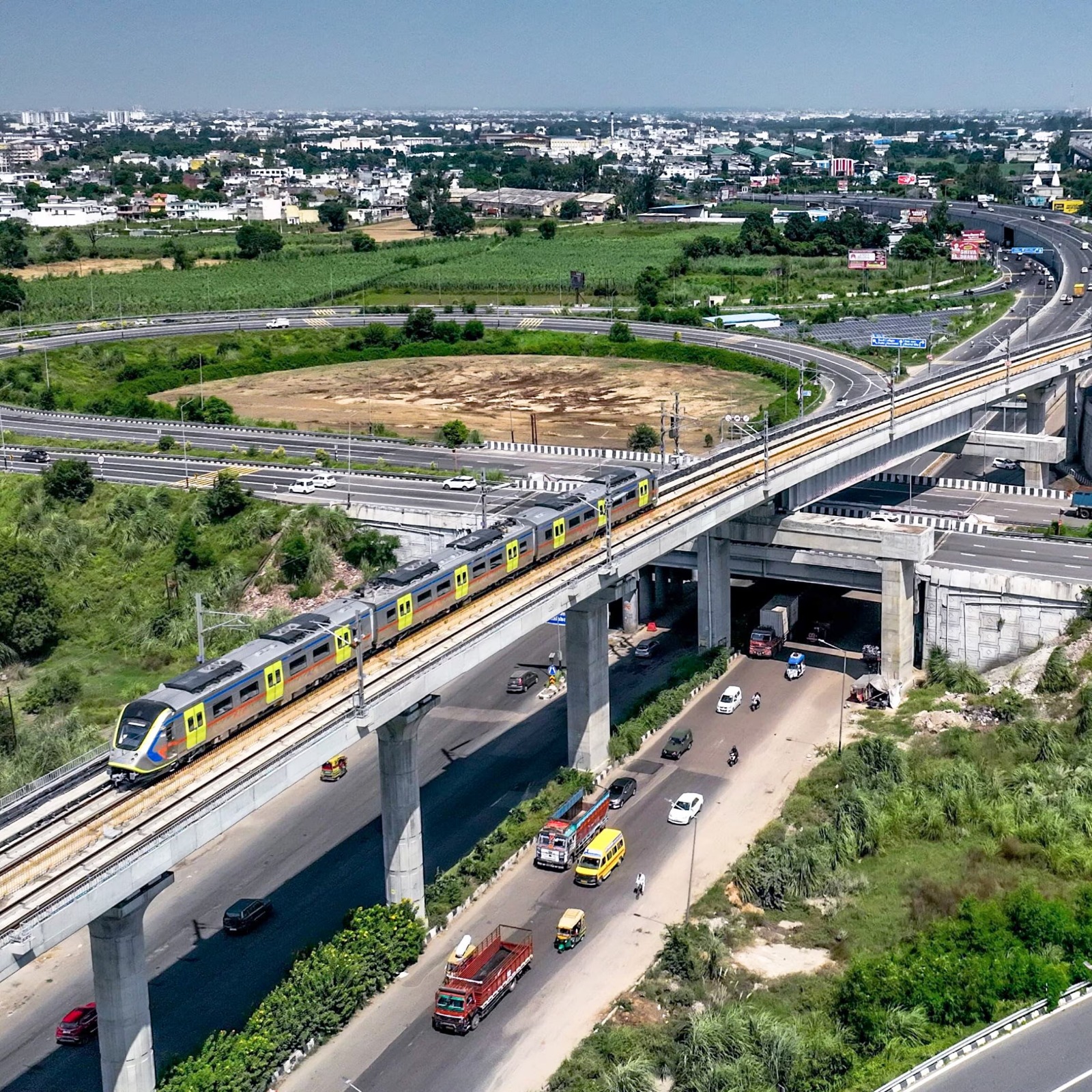





With the inauguration of the final sections of the Delhi-Ghaziabad-Meerut Namo Bharat rapid rail transit system (RRTS), Sarai Kale Khan has transformed into Delhi’s largest multimodal transport hub. The integration of RRTS, Delhi Metro, Indian Railways, interstate buses, and road networks is set to revolutionize connectivity across NCR.
Prime Minister Narendra Modi recently inaugurated the last stretches of the Delhi-Ghaziabad-Meerut RRTS corridor, making the entire line fully operational. This milestone has elevated Sarai Kale Khan into the capital’s biggest transport hub, seamlessly connecting multiple modes of travel.
The hub now integrates the Delhi Metro, RRTS, Indian Railways, the interstate bus terminal, and the Ring Road, offering unmatched connectivity for commuters. This development is expected to significantly reduce travel times, ease congestion, and enhance passenger convenience across Delhi-NCR.
Union Housing and Urban Affairs Minister Manohar Lal Khattar highlighted that Delhi’s combined Metro and RRTS network has now surpassed New York’s in scale, underscoring India’s rapid progress in modern transit infrastructure. Plans for three additional RRTS corridors are already in motion, promising even greater regional integration in the coming years.
Key Highlights
-
RRTS corridor fully operational between Delhi, Ghaziabad, and Meerut
-
Sarai Kale Khan becomes Delhi’s largest multimodal transport hub
-
Integration of Metro, RRTS, railways, buses, and Ring Road
-
Delhi’s transit network surpasses New York in scale
-
Three new RRTS corridors planned for NCR connectivity
Sources: Hindustan Times, Economic Times, NCRTC Updates