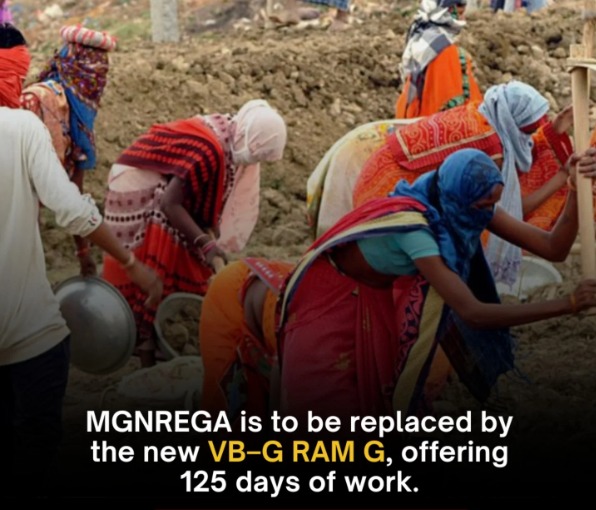







The VB-G RAM G Bill replaces MGNREGA, raising guaranteed employment from 100 to 125 days per year. It introduces tech-based monitoring, focuses on durable infrastructure, and allocates ₹95,000 crore. Critics argue the removal of Gandhi’s name and rushed passage undermine accountability, while the government insists it modernises rural employment support.
India’s Parliament has cleared the Viksit Bharat–Guarantee for Rozgar and Ajeevika Mission (Gramin) Bill, 2025, which will replace the two-decade-old Mahatma Gandhi National Rural Employment Guarantee Act (MGNREGA). The new scheme promises 125 days of guaranteed rural employment annually, sparking debate over its scope, safeguards, and political symbolism.
Introduced by Rural Development Minister Shivraj Singh Chouhan, the VB-G RAM G Bill aims to expand rural work opportunities and align employment with infrastructure creation. Unlike MGNREGA’s open-ended funding, the new scheme is supply-constrained, with tighter monitoring and thematic projects. Opposition parties, led by Congress, protested the bill’s passage, calling it an “insult” to Mahatma Gandhi and warning of reduced transparency. Supporters argue the reform is necessary to adapt to changing rural needs and India’s development goals.
Policy highlights
• Guarantees 125 days of wage employment per rural household annually
• Allocates ₹95,000 crore for implementation across states
• Introduces tech-based monitoring and thematic rural works
• Repeals MGNREGA (2005) and Civil Liability for Nuclear Damage Act (2010)
• Opposition protests removal of Gandhi’s name and lack of committee scrutiny
National impact
The shift signals a major overhaul of India’s rural welfare framework, balancing employment guarantees with infrastructure-driven growth, but faces political and social resistance.
Sources: Deccan Herald, Onmanorama, NewsX, Economic Times, India Today