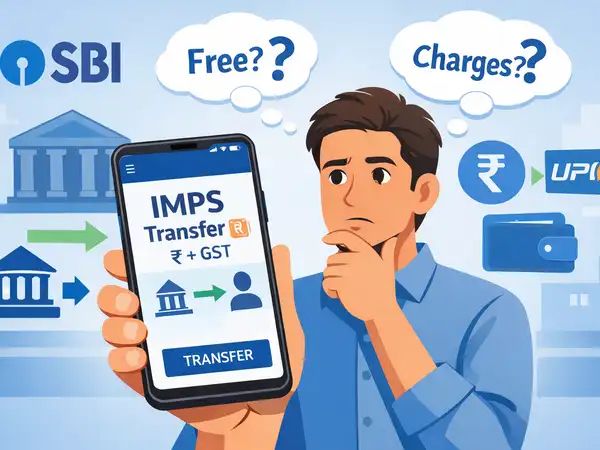







State Bank of India has revised its ATM withdrawal fees and introduced new IMPS charges for higher‑value digital transfers. While small IMPS transactions remain free, customers using other‑bank ATMs or sending larger sums online will face additional costs. The changes, effective February 15, 2026, aim to recalibrate service pricing amid rising operational expenses.
India’s largest lender, the State Bank of India (SBI), has announced a fresh round of revisions to its customer transaction charges, affecting both ATM withdrawals and Immediate Payment Service (IMPS) transfers. The move follows an earlier hike in ATM fees and now extends to digital transfers, signalling a broader recalibration of service costs.
According to SBI’s updated guidelines, IMPS transfers up to ₹25,000 via internet banking, mobile banking, or YONO will continue to remain free. However, transfers above this threshold will now attract tier‑based charges. The bank has also increased fees for customers using other‑bank ATMs, particularly after exhausting their free monthly withdrawal limits.
SBI stated that the changes are intended to balance operational costs while encouraging efficient digital usage. Customers with certain special account categories will remain exempt from some charges.
Key Highlights
Effective date: New IMPS charges begin February 15, 2026.
Free transactions: IMPS transfers up to ₹25,000 remain free on digital channels.
New IMPS slabs: Higher‑value transfers now carry fees depending on the amount.
ATM fee hike: Increased charges for withdrawals from other‑bank ATMs after free limits.
Exemptions: Select account types continue to enjoy fee waivers.
Customer impact: Heavy users of interbank ATMs and high‑value IMPS transfers will see higher costs.
Conclusion
SBI’s revised fee structure marks a significant shift in how customers will manage digital payments and ATM usage. With higher charges for certain transactions, users may need to adjust their banking habits to avoid additional costs.
Sources: Financial Express, Business StandardBusiness Standard, NewsBytes, Times NowTimes Now