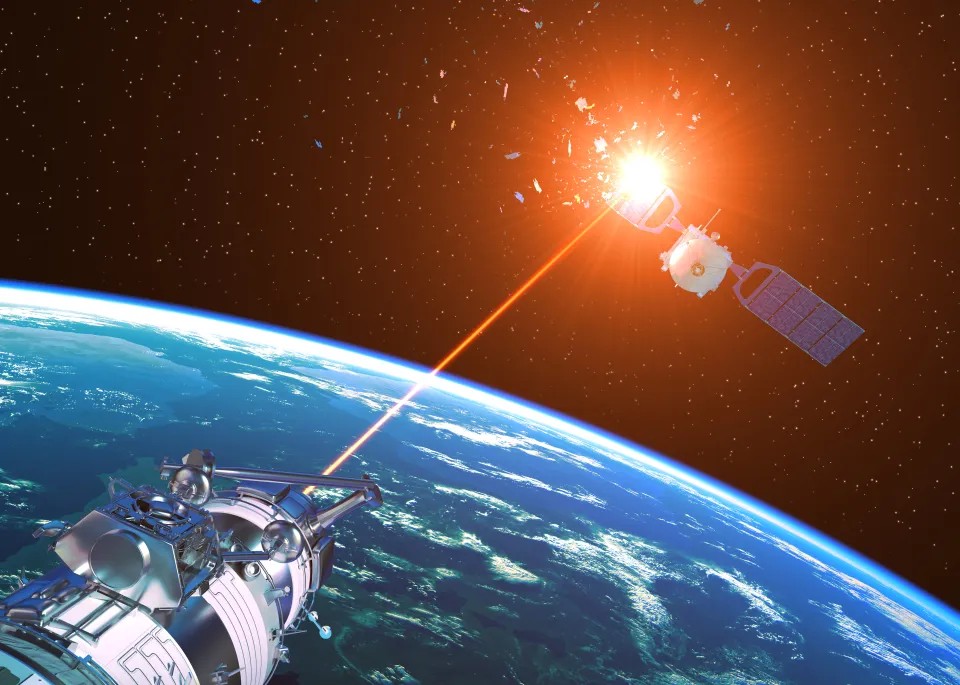

China’s Northwest Institute of Nuclear Technology has developed the TPG1000Cs, a compact high-power microwave weapon capable of generating up to 20 gigawatts of energy for one minute. Dubbed the “Starlink killer,” the device is designed to disrupt satellite constellations, signaling a new phase in space warfare and global defense competition.
China’s latest defense innovation has sparked intense debate in global security circles. The TPG1000Cs, unveiled by researchers at the Northwest Institute of Nuclear Technology in Xi’an, represents a significant leap in microwave weaponry. Unlike bulky laboratory systems, this compact device is engineered for potential deployment in real-world scenarios, targeting satellite networks that Beijing views as strategic threats.
Key Highlights
-
China’s TPG1000Cs can deliver up to 20 gigawatts of power for one minute, enough to disrupt satellite electronics and communication systems.
-
The weapon is compact and portable, marking a shift from large laboratory-based microwave systems to deployable military hardware.
-
Chinese officials have repeatedly warned that Starlink poses national security risks, citing its potential military applications.
-
Microwave weapons are seen as preferable to missiles, as they disable satellites without creating dangerous space debris.
-
The development underscores China’s growing focus on directed-energy weapons as part of its broader military modernization strategy.
-
Global defense analysts warn that such technology could escalate tensions in space, where the U.S., Russia, and China are already competing for dominance.
This announcement highlights the evolving nature of space warfare, where disabling communication and surveillance satellites could become as critical as traditional battlefield strategies. The TPG1000Cs positions China at the forefront of microwave weapon research, raising urgent questions about the future of satellite security and international arms control in orbit.
Sources: Times of India, Orbital Today, Chinese media reports