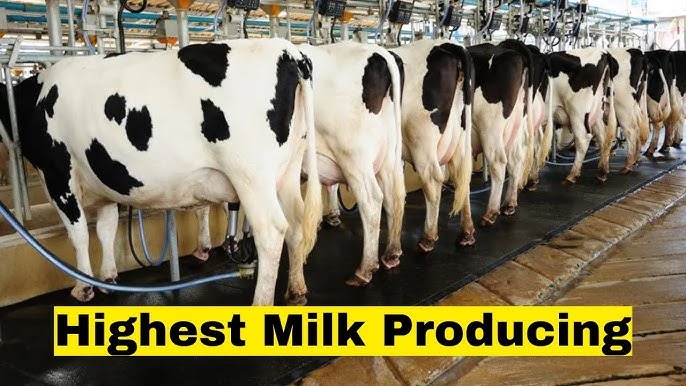





India has officially registered two high-yield synthetic cattle breeds, Karan Fries and Vrindavani, capable of producing over 3,000 kg of milk in a 10-month lactation cycle. This move, announced by Agriculture Minister Shivraj Singh Chouhan, aims to boost dairy productivity and strengthen India’s position as the world’s largest milk producer.
In a significant step for India’s dairy sector, the government has registered two synthetic cattle breeds designed to deliver higher milk yields. The breeds, Karan Fries and Vrindavani, were developed through decades of scientific research and stabilized breeding programs. Karan Fries was created by the National Dairy Research Institute (NDRI) in Karnal, while Vrindavani was developed by the ICAR-Indian Veterinary Research Institute (IVRI) in Bareilly.
These breeds combine the resilience of indigenous cattle with the productivity of exotic varieties such as Holstein-Friesian, Brown Swiss, and Jersey. With yields surpassing 3,000 kg per lactation, they outperform traditional indigenous breeds, which typically produce between 1,000 and 2,000 kg.
Key Highlights
-
Karan Fries developed by NDRI, Karnal
-
Vrindavani developed by IVRI, Bareilly
-
Milk yield exceeds 3,000 kg per 10-month lactation cycle
-
Indigenous breeds usually yield 1,000-2,000 kg
-
India’s total registered livestock and poultry breeds now stand at 246
-
Certificates presented by Agriculture Minister Shivraj Singh Chouhan
Impact And Reflection
The registration of these breeds is expected to enhance dairy productivity, reduce dependence on imports, and support rural livelihoods. By blending indigenous resilience with exotic productivity, India is positioning itself to meet rising domestic demand while reinforcing its global leadership in milk production.
Final Takeaway
Karan Fries and Vrindavani represent a milestone in India’s dairy innovation, promising higher yields and sustainable growth for the sector. Their registration underscores the role of science and breeding in shaping the future of agriculture and food security.
Sources: The Economic Times, News18, Outlook Business