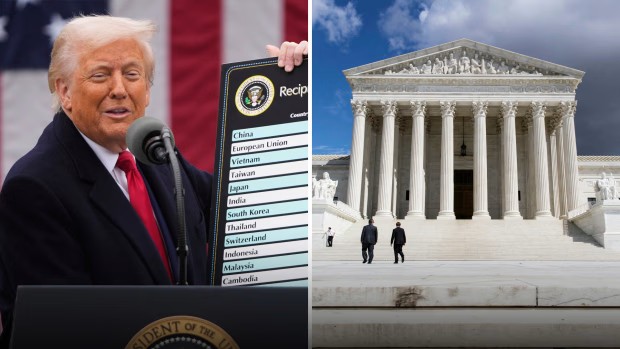




The US Supreme Court has struck down President Donald Trump’s sweeping global tariffs, ruling that his use of emergency powers to impose levies was unconstitutional. The 6-3 decision curtails presidential authority under the International Emergency Economic Powers Act (IEEPA), reshaping trade policy and global economic relations.
In a landmark ruling on February 20, 2026, the US Supreme Court invalidated President Trump’s global tariff framework, declaring it unconstitutional. The decision marks a significant turning point in US trade policy, as the Court found that Trump exceeded his authority by invoking the International Emergency Economic Powers Act (IEEPA) to justify tariffs on imports from nearly every country.
The ruling, delivered by a divided bench (6-3), underscores the limits of executive power in economic policymaking. While Trump had argued that tariffs were essential to protect national interests, the Court clarified that IEEPA was designed for genuine national emergencies, not broad trade measures.
Key Highlights
-
The Court ruled that IEEPA does not authorize sweeping tariffs, striking down Trump’s most aggressive levies
-
The decision invalidates tariffs imposed under emergency powers but leaves intact those enacted through other trade laws
-
Legal experts note this is the first time the Supreme Court directly evaluated the constitutionality of Trump’s second-term economic policies
-
The ruling is expected to ease tensions with global trading partners, many of whom had retaliated against US tariffs
-
Markets reacted positively, with analysts predicting reduced uncertainty in international trade flows
-
The judgment reaffirms congressional authority over trade, signaling a potential shift back toward legislative oversight in economic policy
This ruling carries profound implications for both domestic industries and international relations. By curbing unilateral presidential action, the Court has reinforced the constitutional balance of power, ensuring that sweeping economic decisions require broader institutional consensus.
Sources: CBS News, NBC News, Reuters