




The Supreme Court cautioned that threats to Booth Level Officers during the Special Intensive Revision of electoral rolls could lead to anarchy, urging the Election Commission to flag instances of non-cooperation by states. The bench pressed for immediate action and transparency, as multiple states report intimidation and operational hurdles.
Court’s Remarks And Context
A bench led by Chief Justice of India Surya Kant, with Justice Joymalya Bagchi, warned the Election Commission to “deal with the situation or it will cause anarchy,” taking cognizance of reports of threats against BLOs during SIR across West Bengal and other states. The Court asked the EC to bring specific instances of hindrance and non-cooperation to its notice for appropriate orders.
The hearing comes amid broader challenges to the SIR exercise, including petitions arguing that the EC’s process risks disenfranchisement and overreach, while the EC asserts its plenary powers under Article 324 to scrutinize citizenship for electoral roll registration. The bench resumed proceedings as states sought operational adjustments and extensions.
Key Highlights
The Supreme Court urged the EC to submit instances of non-cooperation and obstructions faced by BLOs to enable judicial directions.
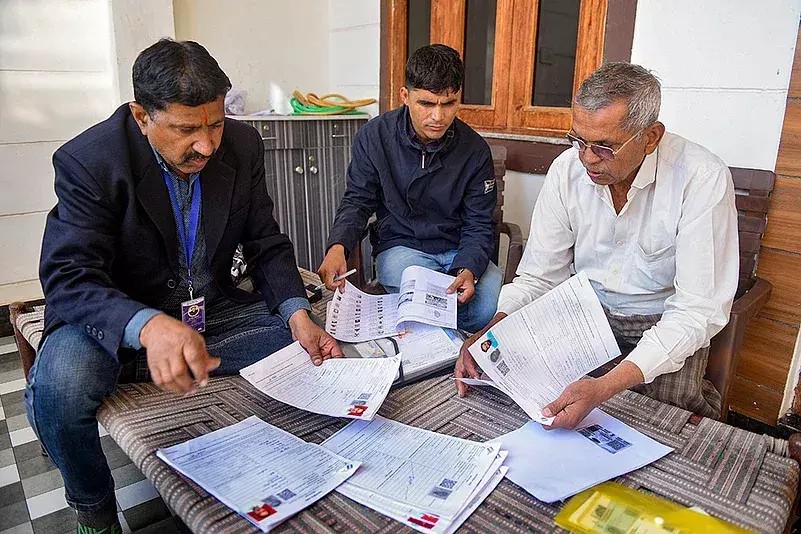
Reports indicate BLOs and officials have faced threats during SIR 2.0 in West Bengal and other states, raising concerns about safety and integrity.
The bench emphasized it would pass orders upon receiving documented cases of hindrance, signaling strict oversight of state conduct.
EC counsel indicated police assistance might be sought if conditions worsen, though the bench noted police remain under state control until the election process formally begins.
The Court’s warning aligns with recent scrutiny of BLO working conditions, including distress incidents that spotlight systemic vulnerabilities during roll revisions.
Tamil Nadu sought an extension of the enumeration forms phase amid live proceedings, reflecting operational complexities during SIR.
Petitioners argued SIR could morph into a mass survey risking statelessness, while the EC maintained constitutional authority to assess citizenship for roll entries.
Implications And Next Steps
The Court’s intervention elevates BLO safety and operational integrity as national priorities during SIR, placing accountability on the EC to document and escalate instances of obstruction for judicial redress. It also frames the balance between administrative rigor and civil liberties, as legal challenges test the contours of EC authority and state cooperation.
Sources: Business Standard, Telegraph India, The Hindu, Times Now