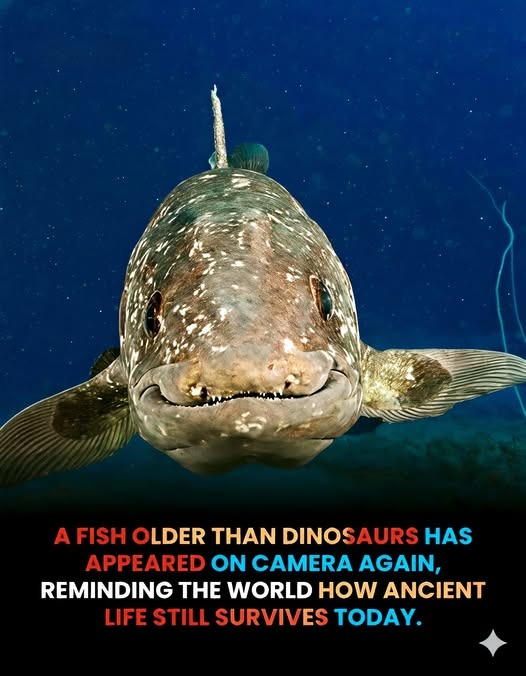







Seven remarkable fish species, often called “living fossils,” have lineages dating back hundreds of millions of years-long before dinosaurs roamed Earth. These ancient survivors, including coelacanths and lungfish, offer rare insights into evolution, resilience, and the enduring mysteries of life beneath the waves.
Life in Earth’s oceans predates the age of dinosaurs by hundreds of millions of years. Among the most fascinating survivors are fish species that have remained largely unchanged, enduring mass extinctions and dramatic shifts in climate. These “living fossils” are not only biological marvels but also evolutionary storytellers, revealing how early vertebrates adapted and thrived.
The coelacanth, once thought extinct until rediscovered in 1938, dates back nearly 400 million years. Lungfish, with their ability to breathe air, represent a crucial evolutionary bridge between aquatic and terrestrial life. Other species, such as sturgeons and bichirs, continue to thrive in rivers and lakes, showcasing resilience across epochs.
Scientists emphasize that these fish are more than curiosities; they are vital to understanding evolutionary history. Their survival highlights adaptability and ecological importance, reminding us that the oceans still hold secrets from Earth’s distant past.
Key Highlights
-
Coelacanth rediscovered in 1938, lineage over 400 million years old
-
Lungfish breathe air, bridging aquatic and terrestrial evolution
-
Sturgeons date back to the Jurassic period, prized for caviar
-
Bichirs retain primitive features resembling early vertebrates
-
Bowfin, a North American species, has survived since the Triassic
-
Hagfish, jawless and ancient, represent early vertebrate forms
-
Gar fish, armored predators, trace lineage to over 100 million years ago
Sources: Times of India, Earth.com, Wikipedia