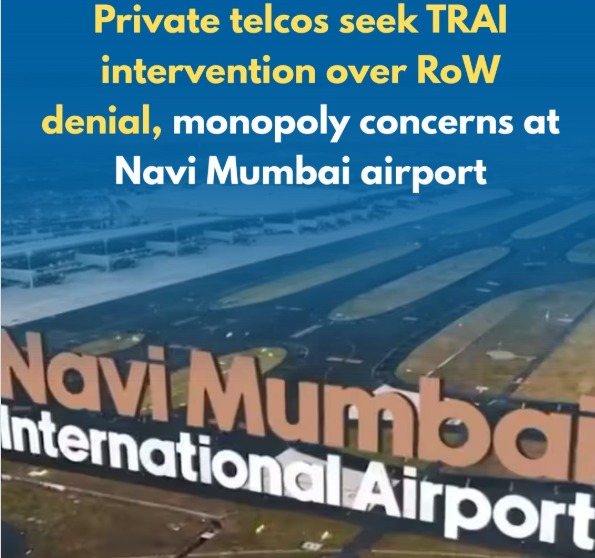







India’s leading telecom operators have approached the Telecom Regulatory Authority of India (Trai) over poor connectivity at Navi Mumbai International Airport. They allege denial of Right of Way permissions and monopolistic practices by the airport operator, forcing them into costly infrastructure arrangements. The regulator’s intervention is now being sought urgently.
Connectivity Concerns At New Airport
The newly operational Navi Mumbai International Airport has become the center of a regulatory tussle between telecom operators and the airport management. Bharti Airtel, Reliance Jio, and Vodafone Idea, represented by the Cellular Operators Association of India (COAI), have lodged complaints with Trai, citing denial of Right of Way (RoW) permissions and exclusionary practices.
Monopoly Allegations Against Airport Operator
According to COAI, the airport operator Navi Mumbai International Airport Limited (NMIAL), backed by the Adani Group, has positioned itself as the sole provider of in-building telecom infrastructure. This arrangement allegedly prevents licensed operators from deploying their own equipment, leaving them dependent on NMIAL’s vendor at steep costs. Reports suggest charges of nearly Rs 92 lakh per month per operator, translating to over Rs 44 crore annually if multiple operators are involved.
Telcos Demand Regulatory Intervention
The telcos argue that such monopolistic practices not only inflate costs but also compromise service quality for passengers, who have already reported connectivity issues since the airport began operations. They have urged Trai to enforce a cost-based pricing framework and ensure non-discriminatory access to public infrastructure.
Key Highlights
-
Telcos allege denial of Right of Way permissions at Navi Mumbai Airport
-
COAI claims NMIAL has created a monopolistic telecom infrastructure model
-
Reported charges of Rs 92 lakh per month per operator
-
Passengers face poor connectivity since airport operations began
-
Telcos demand Trai intervention for fair pricing and access
-
Concerns raised about replication of such practices in other public projects
Impact And Reflection
The dispute underscores the growing importance of digital infrastructure in public spaces. Airports are critical hubs where seamless connectivity is expected, and the absence of fair competition could set a worrying precedent. Industry experts warn that unchecked monopolistic practices may discourage investment and innovation in telecom services. Trai’s response will be pivotal in balancing commercial interests with consumer rights, ensuring that passengers at Navi Mumbai Airport enjoy reliable connectivity without operators being burdened by excessive costs.
Final Takeaway
The Navi Mumbai Airport connectivity row highlights the intersection of infrastructure control and consumer experience. As telcos push for regulatory clarity, Trai’s intervention will determine whether India’s telecom sector can maintain fair competition while meeting the growing demand for seamless digital access in public spaces.
Sources: The Economic Times, The Hindu BusinessLine, Financial Express