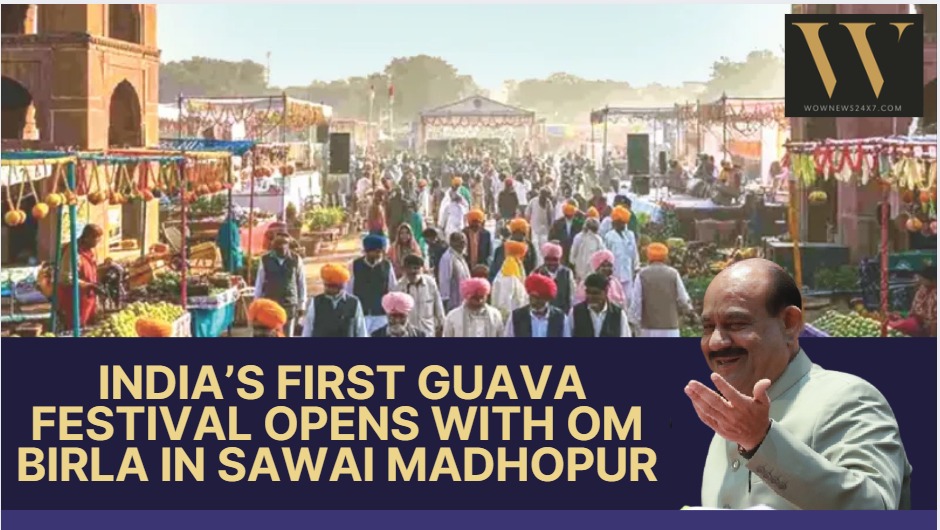
On January 18, 2026, Lok Sabha Speaker Om Birla inaugurated India’s first-ever Guava Festival in Sawai Madhopur, Rajasthan, coinciding with the district’s 263rd Foundation Day. The event, combined with a Tiger Festival, showcases 15,000 hectares of guava cultivation, 4 lakh metric tonnes of annual production, and aims to connect farmers with markets, technology, and exports.
A Historic Day for Sawai Madhopur
Sawai Madhopur, known globally for its Ranathambore Tiger Reserve, added another feather to its cap today by hosting India’s first National Guava Festival. Lok Sabha Speaker Om Birla inaugurated the event, marking a milestone in India’s agricultural and horticultural calendar. The festival coincides with the district’s 263rd Foundation Day, blending cultural pride with economic opportunity.
The Guava Festival is not just a celebration of fruit—it is a strategic platform to highlight Sawai Madhopur’s agricultural strength, empower farmers, and position the district as a hub for guava production and exports.
Key Highlights of the Festival
-
Historic Inauguration: Lok Sabha Speaker Om Birla inaugurated the festival at 11 a.m. on January 18, 2026.
-
Foundation Day Link: The event coincides with Sawai Madhopur’s 263rd Foundation Day, adding cultural significance.
-
Tiger + Guava Festival: This year’s celebrations combine the Tiger Festival (honoring the district’s wildlife heritage) with the Guava Festival (celebrating its horticultural prowess).
-
Agricultural Strength: Sawai Madhopur boasts 15,000 hectares of guava cultivation and produces 4 lakh metric tonnes annually.
-
Farmer Empowerment: The festival aims to connect farmers with markets, technology, and innovation, offering a national platform for guava growers.
-
Exhibitions & Stalls: Over 200 stalls showcase horticulture, modern farming techniques, and value-added guava products like jams, juices, and candies.
-
Government Support: Agriculture and Horticulture Minister Dr. Kirodi Lal Meena hailed the festival as a moment of pride for Rajasthan and India.
Why This Festival Matters
-
Economic Impact: Guava cultivation in Sawai Madhopur is worth billions annually. By promoting exports and value-added products, the festival could significantly boost farmer incomes.
-
Cultural Identity: Combining the Tiger Festival with the Guava Festival reflects the district’s dual heritage—wildlife and agriculture.
-
Innovation Hub: Demonstrations of modern farming techniques and agri-tech solutions aim to modernize guava cultivation and improve yields.
-
National Platform: For the first time, guava farmers across India have a dedicated festival to showcase their produce and connect with buyers.
Broader Context
India has long celebrated mangoes as the “king of fruits,” but guava is emerging as a nutritional powerhouse and export-worthy crop. Rich in Vitamin C, fiber, and antioxidants, guava is increasingly popular among health-conscious consumers.
By organizing a national festival, Sawai Madhopur positions itself as the epicenter of guava innovation, much like Nagpur is for oranges or Malihabad for mangoes. The event also underscores India’s shift toward diversified horticulture, reducing dependence on traditional crops and expanding global market reach.
Takeaways for Farmers and Consumers
Farmers gain exposure to modern farming methods, market linkages, and export opportunities.
Consumers discover value-added guava products beyond the fresh fruit, expanding culinary possibilities.
Policymakers see the festival as a model for crop-specific events, potentially replicable for other fruits and vegetables.
The Tiger Connection
The decision to combine the Guava Festival with the Tiger Festival is symbolic. Sawai Madhopur is home to the Ranathambore Tiger Reserve, one of India’s most famous wildlife sanctuaries. By blending agriculture and wildlife, the district showcases its unique identity—a land where biodiversity and farming coexist.
Looking Ahead
The Guava Festival is expected to become an annual event, attracting farmers, entrepreneurs, researchers, and tourists. With government backing and farmer participation, Sawai Madhopur could soon be recognized as India’s Guava Capital, driving both local prosperity and national pride.
Sources: NewKerala