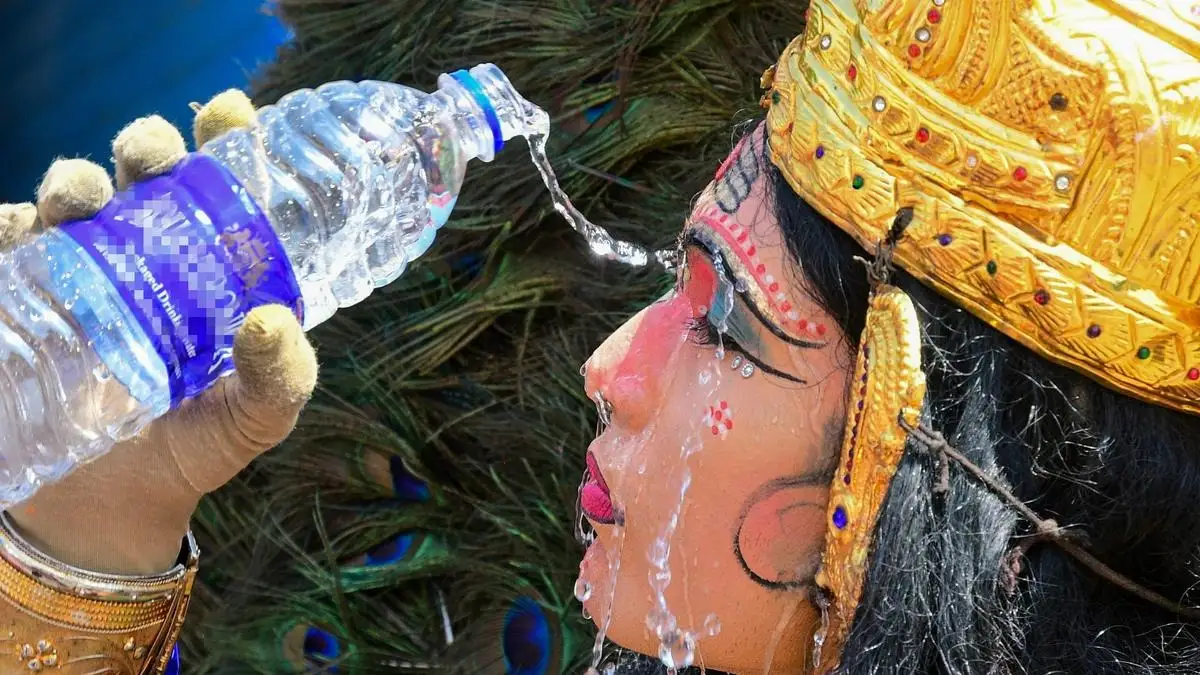






Rising summer heat in Tamil Nadu is taking a toll on folk artistes performing at temple festivals. Gruelling schedules under tin roofs, heavy costumes, and long rehearsals in open grounds have turned cultural celebrations into endurance tests, highlighting the immediate impact of climate change on traditional art forms.
Temple festivals across Tamil Nadu, especially during the months of Chithirai and Vaikasi (April to June), are central to the state’s cultural identity. However, increasing summer temperatures are making it harder for folk artistes to sustain their performances.
Performers often spend hours rehearsing under tin roofs and waiting in open grounds before donning heavy costumes for shows. The rising heat not only affects their health but also threatens the continuity of these age-old traditions. Many artistes report fatigue, dehydration, and declining participation, raising concerns about the sustainability of temple festivals in the face of climate change.
Experts argue that the situation underscores the urgent need for better infrastructure, including shaded rehearsal spaces, improved scheduling, and health support for performers. Without such measures, Tamil Nadu risks losing a vital part of its cultural heritage to environmental stress.
Key Highlights
-
Temple festivals peak during April to June in Tamil Nadu
-
Folk artistes struggle with heat during rehearsals and performances
-
Heavy costumes and tin-roof venues worsen conditions
-
Climate change directly impacts health and sustainability of performers
-
Urgent need for infrastructure and support to preserve traditions
Sources: The Hindu