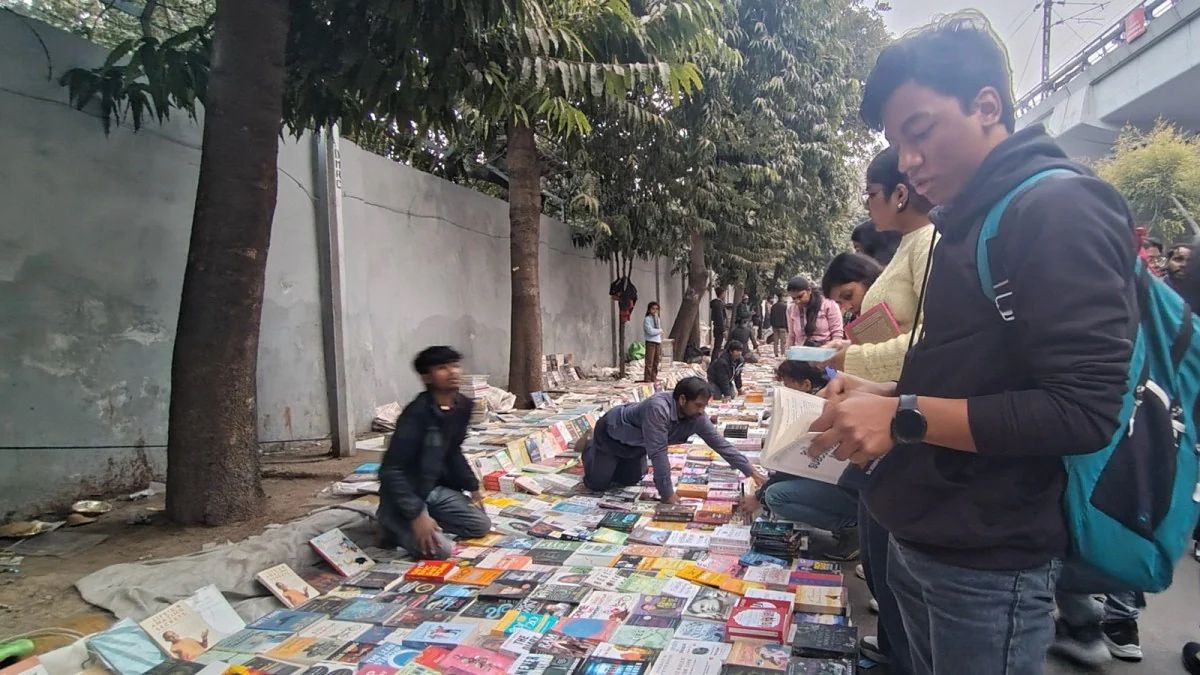

As thousands flocked to the World Book Fair 2026 in New Delhi, an equally vibrant, unofficial book market sprang up just outside Bharat Mandapam. Pavement sellers offered popular titles at steep discounts, drawing crowds with loud calls, bargains, and stacked tarpaulin displays—creating a bustling, alternative literary ecosystem alongside the main event.
While the World Book Fair drew massive footfall inside Bharat Mandapam, an unexpected literary spectacle unfolded just beyond its gates. Along the pavements leading to the Pragati Maidan Metro station, a parallel book market thrived—unofficial, unstructured, yet irresistibly energetic.
Vendors spread books across tarpaulin sheets, their glossy covers catching the eye of passersby. Prices were shouted out like auction calls—“Just for hundred-fifty!”—as sellers competed for attention. The atmosphere felt more like a bustling street bazaar than a curated book fair, yet it attracted readers of all ages who crouched, flipped pages, and bargained enthusiastically.
This informal marketplace showcased the duality of India’s reading culture: the polished, publisher-driven fair inside and the raw, accessible, people-powered bazaar outside. Together, they painted a vivid picture of how deeply books continue to resonate across economic and social boundaries.
Key Highlights / Notable Updates
-
A cheaper, louder, unofficial book bazaar emerged outside the World Book Fair
-
Pavement stalls displayed popular titles on tarpaulin sheets
-
Sellers used auction-style calls to attract buyers
-
Readers browsed, bargained, and bought books at steep discounts
-
The scene reflected India’s diverse, democratic reading culture
Sources: The Indian Express, World Book Fair On-Ground Reports