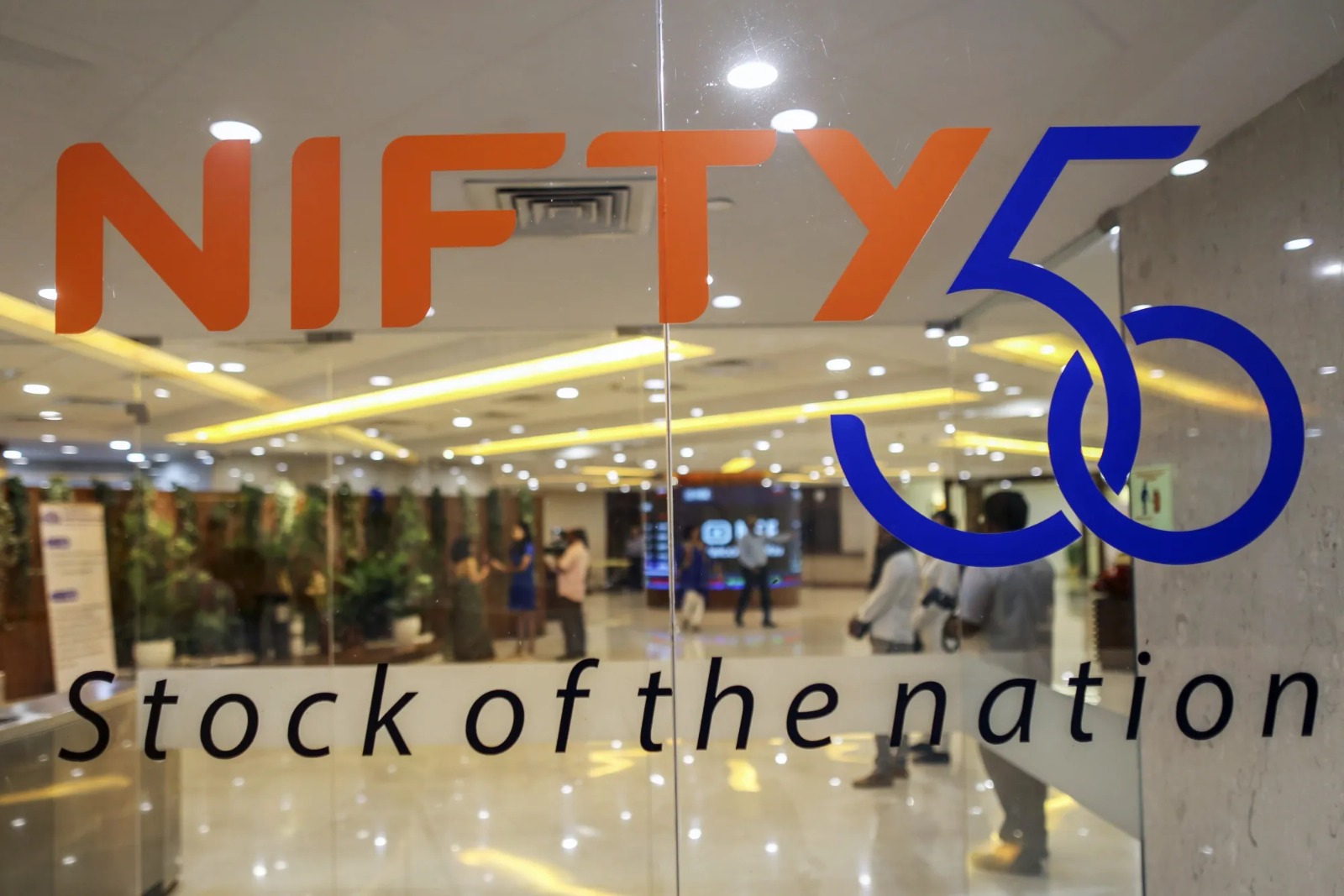
India’s benchmark Nifty 50 Index dropped 0.5% in Mumbai as Brent crude surging past $100 per barrel unnerved equities. Rising energy costs pose fresh inflationary risks for the import-dependent economy, sparking profit-taking across banking and industrial shares while a weaker rupee kept foreign institutional buyers on the sidelines.
MUMBAI — India’s benchmark Nifty 50 Index declined 0.5% in Friday trading at the National Stock Exchange (NSE) in Mumbai, as surging crude oil prices and continued foreign portfolio capital outflows weighed on market sentiment. The retreat in the Nifty 50 Index extends a broader consolidation phase across domestic equities, driven by mounting geopolitical uncertainties in West Asia and a softer Indian rupee. Financial analysts noted that elevated energy prices have heightened concerns over domestic inflation and corporate margin compression, prompting institutional investors to trim exposure across banking, auto, and IT shares.
Middle East Friction and Energy Volatility Drag Equities
The primary catalyst for the session's decline was a renewed rally in international crude oil prices. Brent crude futures climbed past the psychologically important $100 per barrel mark following escalated military actions and shipping disruptions near key maritime transit routes in the Red Sea.
Because India imports approximately 85% of its crude oil requirements, persistent elevated energy costs directly expand the nation's current account deficit, exacerbate import-driven inflation, and put pressure on corporate operating margins.
Domestic equity trading reflected these macroeconomic headwinds as investors engaged in tactical profit-taking. Selling was particularly pronounced in heavyweights across the banking and financial services sectors. The Indian rupee also hovered near historically weak levels against the U.S. dollar, further discouraging immediate foreign institutional inflows.
Corporate Earnings Season Delivers Mixed Signals
The ongoing quarterly earnings cycle for the first quarter of financial year 2026–2027 has produced divergent corporate performances, contributing to stock-specific volatility. While select consumer discretionary and technology firms delivered resilient operating revenues, several manufacturing, pharmaceutical, and financial enterprises reported margin compression due to higher input costs.
Market participants reported that cautious forward guidance from blue-chip companies has restrained broad-based buying. Additionally, foreign portfolio investors (FPIs) remained net sellers in cash equity market segments, balancing their domestic allocations against attractive fixed-income yields in Western markets.
Sectoral Performance and Market Breadth
Market breadth favored declines during the session, with market decliners outnumbering gainers across the NSE mainboard.
Banking & Financials: Leading private and public sector lenders saw profit booking, dragging the index lower.
Energy & Industrials: Higher feedstock costs created selling pressure across industrial manufacturers and downstream oil refining businesses.
Defensive Sectors: Fast-moving consumer goods (FMCG) and pharmaceutical stocks displayed relative resilience as investors sought shelter in non-cyclical equity assets.
Official Sources Section
According to official market data published by the National Stock Exchange of India (NSE) and regulatory disclosures filed with the Securities and Exchange Board of India (SEBI), institutional clearing operations maintained normal settlement functions during the session.
Quote Section
"According to officials and market analysts, elevated energy prices approaching $100 per barrel continue to pose short-term risks to corporate margins and inflation expectations, dampening overall risk appetite across domestic equity markets."
Why It Matters
The short-term movement of the Nifty 50 Index serves as a direct barometer for domestic equity capital health and broader economic sentiment in South Asia. For retail investors and pension fund subscribers, sustained market corrections alter portfolio valuations and asset allocation strategies.
For domestic corporations, equity weakness elevates the cost of capital for equity-based fundraising, corporate debt issuances, and strategic capital expenditure expansions. For policymakers at the Reserve Bank of India (RBI) and the Ministry of Finance, crude-driven market volatility highlights persistent external vulnerabilities that complicate interest rate recalibration decisions.
Key Facts at a Glance
Index Movement: The Nifty 50 Index dropped 0.5% during trading at the National Stock Exchange in Mumbai.
Primary Driver: Brent crude oil prices breached $100 per barrel amid escalating Middle East geopolitical risks.
Currency Pressure: The Indian rupee traded under pressure against the U.S. dollar, compounding foreign capital outflow pressures.
Institutional Activity: Foreign portfolio investors maintained net-selling positions, while domestic institutional investors provided selective support.
Frequently Asked Questions
What caused the decline in the Nifty 50 Index today?
The primary triggers were soaring crude oil prices above $100 per barrel, heightened geopolitical conflict in the Middle East, a weaker rupee, and cautious institutional selling across banking and industrial shares.
How does higher crude oil affect Indian stock markets?
As India imports the vast majority of its crude oil, higher prices increase inflation, widen the current account deficit, and pressure corporate profit margins, frequently leading to market corrections.
What is the Nifty 50 Index?
The Nifty 50 is the flagship benchmark index of the National Stock Exchange of India (NSE), tracking the performance of 50 large-cap, highly liquid Indian companies across major economic sectors.
Are foreign investors pulling capital out of Indian markets?
Yes, foreign portfolio investors (FPIs) have maintained a cautious stance and reduced net equity positions due to rising global bond yields, currency volatility, and geopolitical risks.
Source: Official market disclosures and trading data from the National Stock Exchange of India (NSE), BSE Limited, and macroeconomic updates from the Reserve Bank of India (RBI).