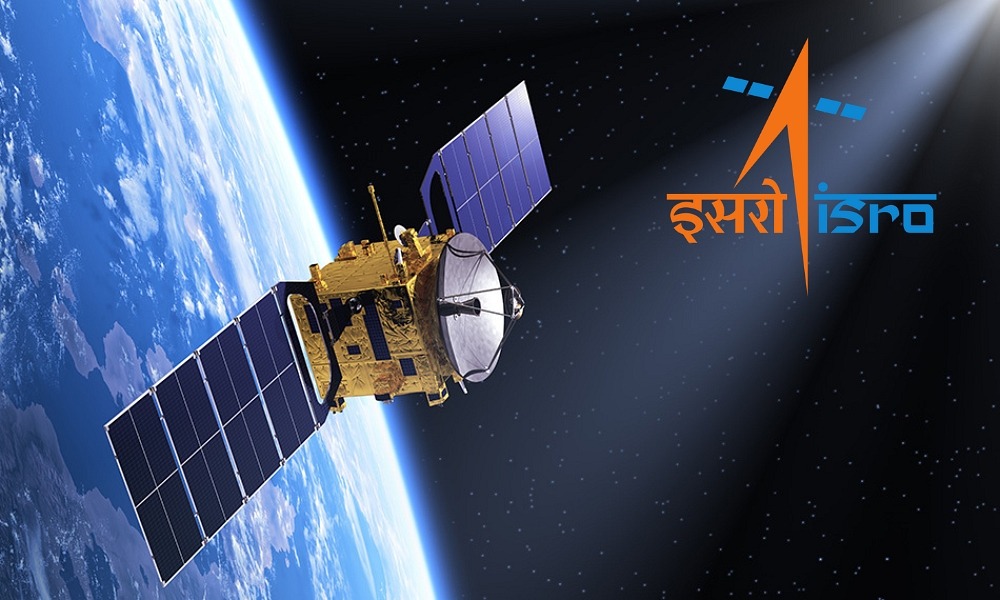
The Indian Space Research Organisation (ISRO) confirmed strategic timelines for placing the Bharatiya Antariksha Station in orbit by 2035 and achieving a crewed lunar landing by 2040 on August 1, 2026. The phased roadmap builds upon Gaganyaan human spaceflight trials and heavy-lift Next Generation Launch Vehicle development.
BENGALURU — The Indian Space Research Organisation (ISRO) reaffirmed its long-term human spaceflight trajectory on Saturday, August 1, 2026, confirming targeted milestones to construct the Bharatiya Antariksha Station (BAS) by 2035 and execute a crewed lunar landing by 2040. Outlined during technical briefings at ISRO headquarters, the strategic roadmap integrates orbital station assembly, heavy-lift rocket architecture development, and automated planetary surface missions into a unified space exploration framework.
The timeline establishes India as an emerging superpower in long-duration space habitation and deep-space transportation. The initiative supports national technological sovereignty while creating commercial opportunities for private aerospace supply chains across India's domestic industrial base.
Phased Development Strategy for Bharatiya Antariksha Station
To meet the 2035 orbital station mandate, ISRO is executing a modular deployment strategy. The initial phase centers on deploying the BAS-1 base module into low Earth orbit by 2028, laying the foundation for subsequent living quarters, research laboratories, and docking nodes.
The ISRO aims for space station by 2035, Moon Mission by 2040 strategy relies directly on the Gaganyaan program, which serves as the primary technical proving ground. Uncrewed and crewed low Earth orbit flights scheduled under Gaganyaan validate environmental control and life support systems (ECLSS), crew escape protocols, re-entry thermal shielding, and automated docking technologies essential for space station operations.
Heavy-Lift Rocket Architecture and NGLV Infrastructure
Executing long-duration space station resupply and deep-space lunar trajectories requires launch capacities exceeding current operational vehicles like the LVM3. Consequently, ISRO has initiated development of the Next Generation Launch Vehicle (NGLV), codenamed "Soorya."
Designed as a three-stage, partially reusable rocket utilizing liquid oxygen-methane propulsion systems, the NGLV will carry up to 30 metric tons into low Earth orbit and higher payloads into lunar transfer orbits. Development plans include building dedicated launch pad complexes at the Satish Dhawan Space Centre in Sriharikota, alongside expanding cryogenic engine testing facilities across ISRO propulsion centers.
Robotic Precursor Missions Leading to the 2040 Lunar Landing
As part of the ISRO aims for space station by 2035, Moon Mission by 2040 roadmap, robotic precursor missions will conduct initial surface analysis. Building on Chandrayaan-3’s lunar south pole landing, the upcoming Chandrayaan-4 mission will execute automated lunar sample returns to test precision ascent stage navigation.
Subsequent joint projects, including the Lunar Polar Exploration (LUPEX) mission with the Japan Aerospace Exploration Agency (JAXA), will study water ice distribution in permanently shadowed craters. These findings will guide site selection for future crewed habitats and resource utilization activities leading up to the 2040 crewed landing target.
Impact on Domestic Aerospace Supply Chains and Scientific Research
The scale of the multi-decade exploration program is driving structural changes in India's commercial space sector. Under national space economy reforms, private aerospace manufacturers, startup incubators, and engineering firms are taking on larger roles in subsystem fabrication, payload integration, and ground station maintenance.
For academic and research institutions, a permanent microgravity laboratory in Earth orbit offers dedicated facilities for materials science research, pharmaceutical testing, biological experimentation, and satellite servicing technologies.
Official Sources
According to official briefings and strategic releases published by space authorities:
Indian Space Research Organisation (ISRO): Confirmed operational milestones targeting 2035 for full assembly of the Bharatiya Antariksha Station and 2040 for a crewed lunar landing.
Department of Space (DoS): Outlined budget allocations and infrastructure development plans for the Next Generation Launch Vehicle (NGLV) and Satish Dhawan Space Centre expansion.
IN-SPACe (Indian National Space Promotion and Authorization Centre): Highlighted private industry participation frameworks supporting structural manufacturing for upcoming space station and lunar missions.
Quotes
"According to officials, establishing a modular space station by 2035 forms the core stepping stone for India's long-term deep space exploration, enabling sustained scientific research in low Earth orbit before launching human missions to the Moon."
"Organizers stated that developing heavy-lift reusable launch vehicles and expanding domestic private aerospace manufacturing are critical pillars to support the 2040 lunar landing goal."
Why It Matters
For the Indian Space Sector: Transitions the national space agency from orbital satellite launches to permanent human space habitation and deep-space exploration.
For Private Aerospace Companies: Opens long-term commercial procurement contracts for rocket manufacturing, life support systems, and ground infrastructure.
For Students and Researchers: Provides access to an indigenous orbital microgravity laboratory for cutting-edge scientific research in physics, chemistry, and medicine.
Key Facts at a Glance
Space Station Milestone: ISRO targets complete operational assembly of the Bharatiya Antariksha Station by 2035.
Crewed Moon Mission: The Indian space agency sets a target for a crewed lunar landing by 2040.
Precursor Module: BAS-1 base module deployment planned in Low Earth Orbit by 2028.
Next-Gen Launchers: Development of the Next Generation Launch Vehicle (NGLV) underway to handle heavy-lift payloads.
Robotic Precursors: Chandrayaan-4 and LUPEX missions will gather critical data prior to crewed lunar surface exploration.
Frequently Asked Questions
When does ISRO plan to launch its first space station module?
ISRO plans to deploy the initial base module (BAS-1) of the Bharatiya Antariksha Station by 2028, aiming for full station completion by 2035.
What launch vehicle will ISRO use for space station and Moon missions?
ISRO is developing the Next Generation Launch Vehicle (NGLV), a heavy-lift partially reusable rocket using liquid oxygen-methane engines designed to handle heavy space station and lunar payloads.
How does the Gaganyaan mission support the 2035 and 2040 goals?
Gaganyaan validates foundational technologies needed for human spaceflight, including life support systems, crew escape mechanisms, re-entry thermal shields, and orbital docking protocols.
What is the role of private industry in these space missions?
Through IN-SPACe guidelines, private Indian aerospace companies are manufacturing hardware, building rocket components, providing satellite technology, and supporting ground infrastructure development.
Source: Indian Space Research Organisation (ISRO), Department of Space, Government of India, IN-SPACe India