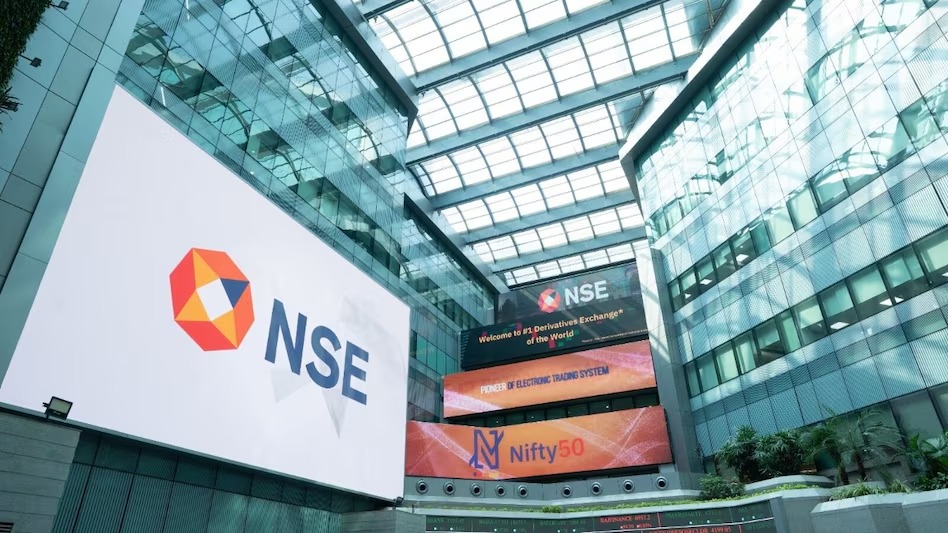
The National Stock Exchange of India (NSE) has filed draft papers with SEBI for a historic ₹30,000 crore IPO. Structured entirely as an offer for sale of 14.89 crore shares, the mega-issue features partial exits by five PSU banks, strong FY26 net profits of ₹10,302 crore, and an implied unlisted valuation of ₹5 lakh crore.
MUMBAI — The National Stock Exchange of India Limited (NSE) has officially advanced its historic stock market journey by submitting its Draft Red Herring Prospectus (DRHP). Filed with the market regulator, the Securities and Exchange Board of India (SEBI), on June 17, 2026, the long-awaited mega-initial public offering (IPO) is estimated to be worth approximately ₹30,000 crore ($3.6 billion).
This landmark regulatory filing marks the end of a decade-long wait for the country's primary financial bourse. The development comes after the exchange successfully resolved past compliance hurdles. If cleared at its projected volume, the NSE IPO will become the largest public issue in the history of Indian capital markets, surpassing previous milestone listings.
1. Pure Offer for Sale Structure
According to the official draft prospectus, the initial public offering is structured entirely as an Offer for Sale (OFS) of up to 14,89,05,525 equity shares with a face value of ₹1 each. Because the offering consists of 100% secondary share liquidation, the National Stock Exchange of India Limited will not receive any capital proceeds from the transaction. All funds will flow directly to the participating selling shareholders.
2. Participation of Five Key PSU Shareholders
The DRHP reveals that five government-owned public sector undertakings (PSUs) are collectively offloading 2.37 crore shares through the OFS pool. IDBI Bank leads this group by offering up to 74.15 lakh shares, followed closely by the State Bank of India (SBI) with 64.28 lakh shares. Other selling state entities include SBI Capital Markets (53.62 lakh shares), IFCI Limited (34.32 lakh shares), and Bank of Baroda (10.98 lakh shares).
3. Marquee Backers Retaining Full Equity Stakes
While various global private equity funds like Tiger Global and Temasek's Aranda Investments are opting to trim their stakes, several key institutional holders are retaining their full positions. The Life Insurance Corporation of India (LIC)—which stands as the exchange's single largest external institutional holder with a 10.72% stake—is not participating in the share sale. Prominent private investors Premji Invest (2.35%) and billionaire investor Radhakishan Damani (1.58%) have also chosen not to dilute their holdings.
4. Financial Trajectory and Profit Realignment
The NSE remains a highly profitable cornerstone of India's economy. Its revenue from operations grew to ₹16,601 crore for the fiscal year ended March 31, 2026, up from ₹14,780 crore in FY24. However, consolidated net profit for FY26 stood at ₹10,302 crore, down 15.5% compared to the record ₹12,188 crore posted in FY25. This dip primarily reflects higher exceptional items and a moderation in transaction fees following tighter regulatory changes on retail equity derivatives trading.
5. Consistent Shareholder Dividend Track Record
Despite ongoing capital expenditures into cybersecurity and market infrastructure, the exchange maintains strong free cash generation. This operational stability is highlighted by its robust dividend track record. The NSE declared and distributed a consistent final dividend of ₹35 per share for both FY25 and FY26, following a bonus-adjusted payout of ₹18 per share in FY24.
6. Global Leadership in Derivative Volumes
According to data maintained by the World Federation of Exchanges, the NSE successfully retained its position as the world's largest equity derivatives exchange by total contract volume in Fiscal 2026, handling over 36.99 billion contracts. Locally, the exchange commands a near-monopoly across cash equities, equity options, and currency derivatives segments.
7. Rapid Expansion of the Registered Investor Base
The exchange's financial footprint has scaled alongside a massive surge in retail participation across India. The total number of unique registered investors using the platform expanded from 31 million in March 2020 to over 129 million by March 2026. The digital trading platform now processes transactions originating across more than 99% of India's postal PIN codes.
8. High-Capacity Technical Infrastructure
To support this massive retail influx, the exchange operates one of the most sophisticated high-throughput electronic matching engines globally. The technical infrastructure processes an average of 12 billion to 14 billion data messages every single day. It reached a historic operational milestone on June 4, 2024, handling a record 293.85 million trades across all segments in a single session.
9. Cross-Listing on Competitor Exchanges
Due to clear regulatory policies established by the financial regulator, a domestic stock exchange cannot list its own shares on its own trading platform. Consequently, the NSE has proposed to list its shares exclusively on its primary competitor platform, BSE Limited, mirroring the system where BSE's own equity shares are traded on the NSE.
10. Estimated Gray Market Valuation Metrics
In the unlisted gray market, shares of the exchange have seen high demand ahead of the formal public listing. Private transactions are clearing between ₹1,950 and ₹2,170 per share, giving the exchange operator an implied initial market valuation of over ₹5 lakh crore ($60 billion). At this tier, the firm trades at roughly 45 times its FY26 earnings, positioned competitively against listed peer multiples.
Official Sources Section
The operational statistics, balance sheets, corporate actions, and transaction frameworks detailed in this article are sourced directly from the official Draft Red Herring Prospectus (DRHP) submitted by the exchange to the Securities and Exchange Board of India (SEBI), alongside regulatory statements published by BSE Limited and the World Federation of Exchanges.
Quote Section
"According to officials close to the underwriting process, assembling a record-breaking group of 20 book-running lead managers ensures that the global institutional book will have optimal coverage. Organizers stated that the recent resolution of legacy regulatory files has removed the final structural hurdle, clearing the path to proceed with the historic listing before the end of the 2026 calendar year."
Why It Matters
For retail day traders, pension fund managers, and international asset allocators, the NSE IPO offers a direct investment route into a highly scalable, asset-light utility business that serves as the foundation of India's financial system. The company's transition to a public entity introduces a new layer of corporate governance and transparency to the country's primary trading ecosystem, aligning it with major global exchange operators.
Key Facts at a Glance
Issue Valuation: Estimated at roughly ₹30,000 crore, making it India's largest-ever public share offering.
Share Breakdown: Comprises up to 14.89 crore existing equity shares offered via a 100% OFS model.
Profit Footprint: Generated ₹10,302 crore in net profits for FY26 on revenues of ₹16,601 crore.
Dividend Delivery: Paid a consistent dividend of ₹35 per share across both FY25 and FY26.
Transaction Lead: Managed by 20 appointed merchant banks, with MUFG Intime India acting as registrar.
FAQ Section
Why isn't the National Stock Exchange issuing any fresh shares in this IPO?
Because the NSE operates a highly profitable, cash-generative business model with minimal capital expenditure requirements, it does not require fresh funding for expansion. The offering is structured purely as an Offer for Sale (OFS) to provide an exit route for long-term institutional investors.
Can retail public investors buy NSE shares and trade them on the Nifty platform?
No. Under SEBI rules, an exchange cannot list its own stock on its own platform. Investors will buy, sell, and trade NSE shares exclusively through BSE Limited.
When is the public bidding window expected to officially open?
Following the DRHP submission, SEBI will review the disclosures and issue its feedback. Based on typical regulatory timelines, the public subscription window is expected to open in late 2026.
Source: Securities and Exchange Board of India (SEBI) Filing Portals, BSE Limited Listing Compliance Portals, and the National Stock Exchange of India Limited Investor Relations Desk.