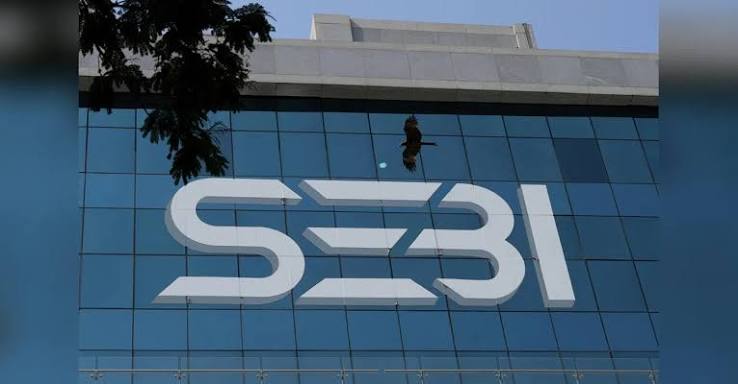
The Securities and Exchange Board of India (SEBI) has agreed to settle long-standing co-location and dark fibre proceedings with the National Stock Exchange (NSE) for Rs 1,491.21 crore. After NSE remitted the final Rs 714.74 crore, the resolution removed the primary regulatory barrier delaying the exchange’s planned initial public offering.
MUMBAI — The Securities and Exchange Board of India (SEBI) has given in-principle approval to settle all long-pending regulatory proceedings against the National Stock Exchange of India (NSE) for a total amount of Rs 1,491.21 crore. Communicated by the capital markets regulator via official notification on July 30, 2026, the decision resolves the notorious co-location and dark fibre cases that have stalled the exchange’s public listing plans since 2016. The resolution marks a major turning point for the domestic capital markets, eliminating the primary legal overhang confronting the exchange as it prepares to launch its anticipated initial public offering (IPO).
Breakdown of Settlement Terms and Financial Impact
Under the agreed terms, SEBI directed NSE to make a final cash payment of Rs 714.74 crore. This fresh disbursement supplements an existing deposit of Rs 776.47 crore previously transferred to the regulator, which is now adjusted to fulfill the complete settlement requirement of Rs 1,491.21 crore.
In regulatory disclosures submitted to stock exchanges, NSE confirmed that the remaining Rs 714.74 crore payment was fully remitted on July 31, 2026. The exchange noted that the entire financial impact had already been accounted for in its financial statements for the fiscal year ended March 31, 2026, comprising a recent provision of Rs 1,391.21 crore alongside an earlier allocation of Rs 100 crore. Consequently, officials confirmed that the cash outflow will carry no adverse impact on ongoing exchange operations or future profitability.
Decades-Long Dispute: Co-Location and Dark Fibre Explained
The regulatory controversy dates back to 2009, when NSE introduced its co-location facility, allowing institutional trading firms and high-frequency traders to rent rack space directly inside the exchange’s data center. Allegations surfaced in 2015 that certain stockbrokers received preferential secondary server access, enabling them to obtain market data milliseconds faster than standard market participants.
SEBI subsequently expanded its investigation into the "dark fibre" case, examining allegations that unapproved internet service providers laid dedicated high-speed fibre-optic lines to provide select trading desks with ultra-low latency connectivity. Following years of investigation, forensic audits, disgorgement orders, and appeals before the Securities Appellate Tribunal (SAT) and the Supreme Court of India, the settlement effectively ends all pending administrative and enforcement actions.
Path Ahead for the Long-Awaited NSE IPO
With the regulatory settlement finalized, SEBI and NSE will jointly move to withdraw pending appeals before the Supreme Court of India. Once formal judicial approval is recorded, the primary legal impediment delaying the NSE IPO will be officially cleared.
Market participants expect the exchange to update its Draft Red Herring Prospectus (DRHP). The proposed public offering is anticipated to comprise an Offer for Sale (OFS) of approximately 149 million shares by existing institutional investors, including State Bank of India, Morgan Stanley, and Canada Pension Plan Investment Board (CPPIB). At estimated market valuations exceeding Rs 5 trillion, the NSE IPO is positioned to become one of the largest equity market listings in Indian history.
Official Sources Section
According to regulatory filings submitted by the exchange to BSE Limited and the National Stock Exchange of India, the settlement was executed under the Securities and Exchange Board of India (Settlement Proceedings) Regulations. Official confirmation was communicated through SEBI’s formal directive on July 30, 2026, and validated via NSE's corporate disclosure on July 31, 2026.
Quote Section
"According to officials from the National Stock Exchange of India, the full settlement sum of Rs 1,491.21 crore has been provided for in the company’s audited books, ensuring that day-to-day operational liquidity remains unaffected. Regulators and legal teams are currently preparing the necessary joint applications for submission before the Supreme Court to formally close all outstanding litigation."
Why It Matters
For retail and institutional investors, the resolution of the co-location & dark fibre case restores regulatory certainty surrounding India’s dominant stock exchange. By establishing transparent settlement terms, SEBI reinforces governance standards across market infrastructure institutions. Furthermore, for pre-IPO shareholders and potential retail applicants, the prospective listing offers enhanced liquidity and direct participation in the growth of India's capital market infrastructure.
Key Facts at a Glance
Total Settlement Amount: Rs 1,491.21 crore agreed between SEBI and NSE to resolve all co-location and dark fibre proceedings.
Cash Outflow: NSE paid the remaining Rs 714.74 crore on July 31, 2026, adjusting Rs 776.47 crore already held by SEBI.
Financial Provisioning: Full accounting provisions were completed in FY 2025–26, insulating current operations from financial strain.
IPO Impact: Paves the way for the NSE IPO, expected to be one of India's largest initial public offerings.
Legal Next Steps: SEBI and NSE will jointly file for the withdrawal of pending appeals in the Supreme Court.
Frequently Asked Questions
What was the SEBI co-location and dark fibre case about?
The cases involved allegations that certain stockbrokers were granted preferential, low-latency access to NSE's trading servers and dedicated fiber-optic networks, allowing them faster access to market data than other trading entities.
How much did NSE pay to settle the case with SEBI?
NSE settled the matter for Rs 1,491.21 crore. The exchange made a final payment of Rs 714.74 crore after adjusting Rs 776.47 crore previously deposited with SEBI.
Will this settlement impact NSE's financial results?
No. NSE had already provisioned the entire settlement amount in its financial statements for the fiscal year ended March 31, 2026, meaning no new operational earnings drag will occur.
What does this settlement mean for the upcoming NSE IPO?
Resolving these long-standing legal proceedings removes the single largest regulatory hurdle for the NSE IPO, allowing the exchange to move forward with updating its public offer documents and seeking final listing approvals.
Source: Securities and Exchange Board of India (SEBI) | National Stock Exchange of India (NSE)