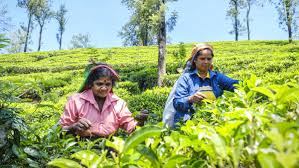
Sri Lanka's iconic Ceylon tea industry continues to adapt to global market challenges while preserving its rich 150-year heritage. Driven by traditional orthodox methods and strategic export initiatives, the legendary brew remains a cornerstone of the nation's agricultural identity and global trade presence
COLOMBO — For more than a century, Ceylon tea has remained synonymous with global quality, representing the heartbeat of Sri Lanka's agricultural heritage. Yet, behind every familiar cup enjoyed across the world lies a remarkable historical journey shaped by colonial transformation, agricultural resilience, and modern economic adaptation.
Originally pioneered as a coffee plantation economy before a devastating fungal blight wiped out the island's coffee crops in the 1870s, Sri Lanka's highland estates transitioned rapidly to tea under visionary planters like James Taylor. Today, as the nation navigates shifting international trade corridors and rising global competition, the legendary export continues to anchor rural livelihoods and foreign exchange earnings.
Navigating Global Market Shifts and Production Dynamics
Recent trade data released by the Sri Lanka Export Development Board and the Sri Lanka Tea Board highlights both the enduring global demand for pure Ceylon tea and the structural shifts facing producers. While traditional markets across the Middle East, Europe, and Asia continue to absorb millions of kilograms of high-grown and low-grown orthodox blends, local producers are increasingly investing in sustainable cultivation and value-added packaging.
According to official trade disclosures, agricultural updates, and export statistics:
Production Elevation Impact: Tea cultivation spans high, medium, and low-grown elevations across the island, with low-grown varieties accounting for the largest share of national output.
Global Export Footprint: Key international destinations, including Iraq, Turkey, and Russia, remain primary importers, though changing geopolitical and currency landscapes influence annual shipment volumes.
Value Addition Focus: Industry stakeholders are expanding value-added product lines, such as specialty tea bags, green teas, and organic infusions, to capture higher margins in competitive consumer markets.
Strategic Trade Initiatives: Trade bodies actively participate in global expositions, such as recent showcases in China and Southeast Asia, to reinforce the premium branding of pure Ceylon tea.
Official Sources Section
Quote Section
According to statements released by agricultural authorities and tea exporters regarding global trade performance:
"The enduring global reputation of Ceylon tea rests on our unique agro-climatic conditions and traditional orthodox processing methods, which continue to command loyalty among discerning consumers worldwide."
Why It Matters
For millions of plantation workers, local cooperatives, and international consumers, the tea industry is far more than a commodity market—it is a vital pillar of social and economic stability in Sri Lanka. Preserving the heritage and quality standards of Ceylon tea ensures sustainable rural employment while maintaining the nation's historic position as a premier global supplier.
Key Facts at a Glance
Product Origin: Sri Lanka (historically known as Ceylon).
Primary Governing Body: Sri Lanka Tea Board.
Processing Heritage: Renowned worldwide for traditional orthodox manufacturing techniques.
Core Economic Role: A foundational agricultural export supporting rural employment and foreign exchange.
FAQ Section
What makes Ceylon tea unique compared to other origins?
Ceylon tea is celebrated for its diverse flavor profiles, which vary significantly depending on the elevation and soil composition of the estate, paired with traditional orthodox manufacturing methods.
Which countries are the largest importers of Sri Lankan tea?
Traditional top export destinations include Iraq, Turkey, Russia, and various markets across the Middle East and Europe.
How has the Sri Lankan tea industry evolved in recent years?
Producers have increasingly focused on sustainable farming practices, biodiversity conservation, and higher-value packaging to enhance global competitiveness.
Where can stakeholders review official tea production and export statistics?
Detailed monthly and quarterly trade reports are published directly on the official Sri Lanka Tea Board and Export Development Board web portals.
Source: Sri Lanka Tea Board, Sri Lanka Export Development Board, History of Ceylon Tea