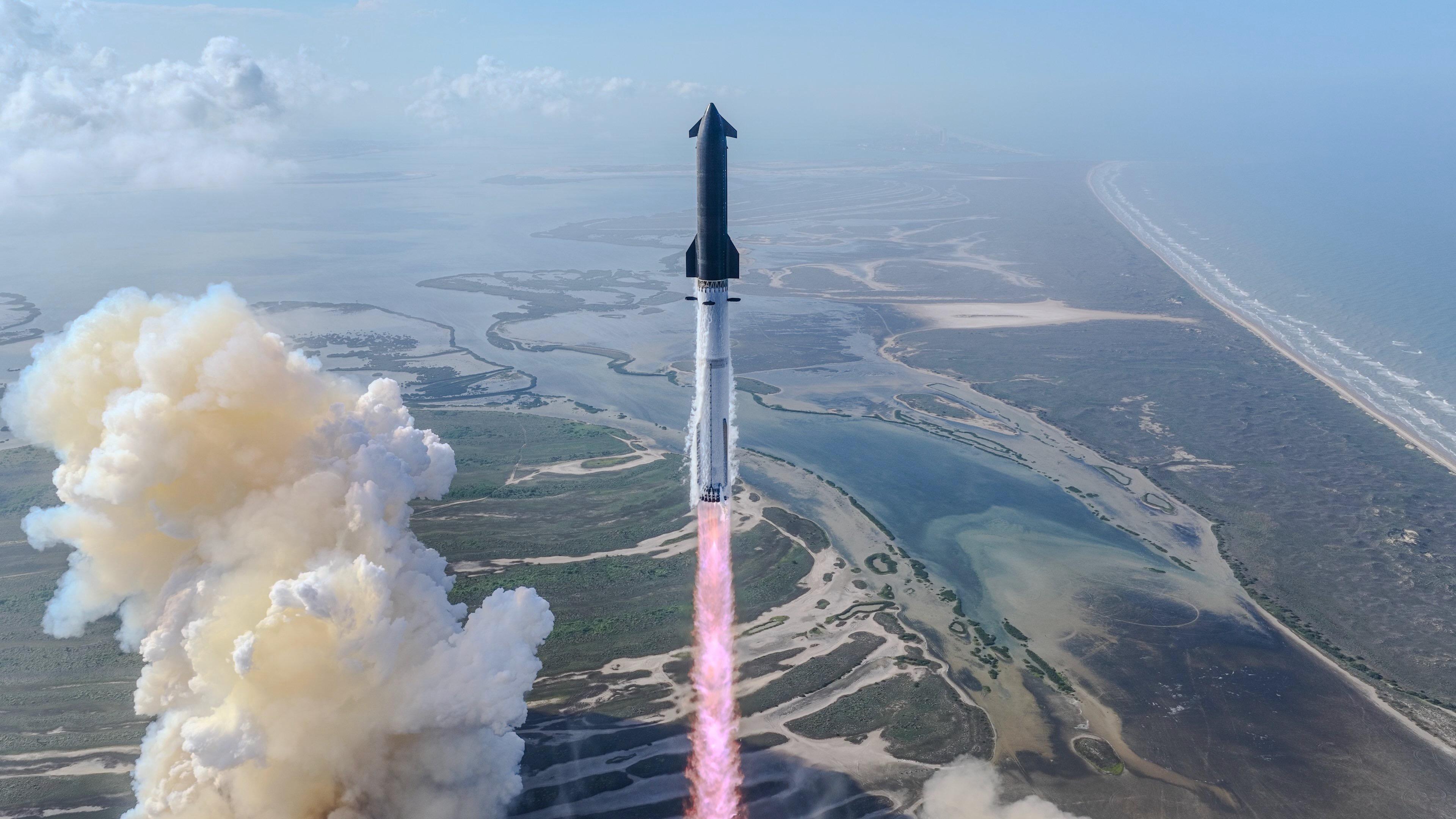
Elon Musk's SpaceX has filed updated SEC prospectuses setting a fixed $135 share price for its upcoming Nasdaq listing. Targetting a historic $1.77 trillion valuation and raising $74.4 billion, the tech powerhouse is set to debut as the seventh-most valuable American company, driven by its satellite and AI operations.
NEW YORK — In a regulatory development that has re-calibrated global capital markets, Space Exploration Technologies Corp. (SpaceX) has finalized structural parameters for an initial public offering (IPO) that positions the aerospace giant at a historic $1.77 trillion valuation. According to an amended prospectus filed with the U.S. Securities and Exchange Commission (SEC), the company has sidestepped traditional financial bookbuilding methods by declaring a fixed offering price of $135 per share.
The historic market debut, projected by underwriting consortiums to commence trading on the Nasdaq exchange under the ticker symbol SPCX on Friday, June 12, 2026, is structured to raise $74.4 billion through the primary issuance of 555.6 million shares. If successful, the transaction will easily eclipse the $29 billion raised by energy titan Saudi Aramco in 2019, rewriting the record books as the largest single corporate capital raise in global financial history.
Rockets, Satellites, and Artificial Intelligence Drive the Valuation
According to official registration logs analyzed by financial strategists at Bloomberg and Renaissance Capital, the company’s implied post-offering valuation represents an escalation of more than 40% from the internal $1.25 trillion valuation mark recorded in February, following its formal structural merger with the artificial intelligence startup xAI.
Wall Street analysts note that the $1.77 trillion premium is highly unique when contrasted against traditional trailing fundamentals. Financial disclosures included in the public S-1 documentation revealed that the company brought in total revenues of $18.67 billion across the full year of 2025.
Instead of near-term earnings, investors are aggressively pricing in a multi-industry monopoly spanning planetary heavy-launch infrastructure, telecom networks, and high-performance computation clusters.
Deep Financial Capital Burn Underpins Aggressive Infrastructure Scaling
The financial filings reveal that while the enterprise generates significant operating cash flow from its Starlink satellite broadband division—which accounted for $11.4 billion, or roughly 61%, of all 2025 sales—overall operations remain intensely capital-intensive. The entity disclosed a GAAP net loss of $4.94 billion for 2025, which accelerated into a $4.28 billion net loss in the first quarter of 2026 alone.
This heavy capital expenditure is primarily driven by massive investments into artificial intelligence infrastructure. According to the prospectus, joint xAI operations posted losses exceeding $6 billion over the last year, burning through roughly $2.5 billion per quarter to support deep learning and autonomous systems.
This infrastructure push is anchored by projects like the 300-megawatt Colossus data center, which secured a high-profile contract with Anthropic worth $1.25 billion per month through mid-2029.
Voting Control Stays Firmly Locked Under Musk's Management
Despite opening up a significant percentage of its equity to the public, the corporate voting apparatus will remain heavily centralized. According to corporate governance filings, Chief Executive Officer Elon Musk will maintain absolute directional oversight of the entity via a multi-class share structure.
Musk's voting rights are primarily driven by his complete ownership of 5.22 billion Class B shares, which grant the holder 10 votes per share, compared to the single vote allocated to public Class A shares.
Upon completion of the public float, Musk will control 82.4% of the combined voting power. Furthermore, the SEC registration details show a strict one-year lock-up period on the founder's stock, preventing any near-term liquidations as markets adjust to the float.
Official Sources Section
The financial disclosures, equity values, share metrics, and data center contract parameters outlined in this market dispatch are compiled directly from public S-1 registration prospectuses filed with the U.S. Securities and Exchange Commission, independent market research notes published by Renaissance Capital, and corporate data sheets from Goldman Sachs' underwriting desk.
Why It Matters
The public conversion of SpaceX marks a monumental shift for retail investors, global aerospace industries, and the broader tech landscape. For the first time, everyday retail investors can bypass complex pre-IPO funds to gain direct, liquid exposure to the commercial space economy, satellite telecom grids, and heavy AI data center operations within a single asset. For the tech sector, a successful $1.77 trillion listing establishes a new market valuation baseline for capital-intensive artificial intelligence integrations, which could directly influence the upcoming public roadmaps of other AI pioneers like OpenAI and Anthropic.
Key Facts at a Glance
Record-Breaking Scale: SpaceX is targeting a $1.77 trillion valuation, aiming to debut as the seventh-most valuable company in America.
Fixed Offering Price: The aerospace company bypassed a standard variable pricing range, setting a fixed price of $135 per share.
Massive Capital Infusion: The primary Nasdaq offering is calibrated to raise $74.4 billion across 555.6 million shares, shattering previous global IPO records.
Starlink Sales Dominance: Internal financial disclosures indicate that the Starlink satellite internet network generated 61% of the company's $18.67 billion revenue in 2025.
Absolute Founder Control: CEO Elon Musk retains 82.4% of the total corporate voting power through high-vote Class B shares, alongside a one-year share lock-up rule.
Frequently Asked Questions
When is SpaceX expected to officially begin trading on the public stock market?
Underwriters expect the shares to officially list and begin active trading on the Nasdaq exchange on Friday, June 12, 2026, under the ticker symbol SPCX.
How can a company with a $4.94 billion net loss claim a $1.77 trillion valuation?
Markets are pricing the company based on its functional monopolies in space launch systems and global satellite internet, alongside its massive data center partnerships, rather than standard short-term accounting profits.
Can public shareholders outvote Elon Musk on major corporate decisions?
No. Because Elon Musk retains the vast majority of Class B shares—which carry 10 votes per share—he retains an 82.4% voting majority, giving him absolute control over corporate governance.
How does the merger with xAI alter the company's core operations?
The integration with xAI provides the advanced computing infrastructure and automated processing capabilities required to manage autonomous rocket guidance, automated satellite arrays, and massive cloud defense contracts.
Source: U.S. Securities and Exchange Commission (SEC) EDGAR Database, Nasdaq Market Intelligence Desk, and financial underwriting advisories distributed by Goldman Sachs & Co.