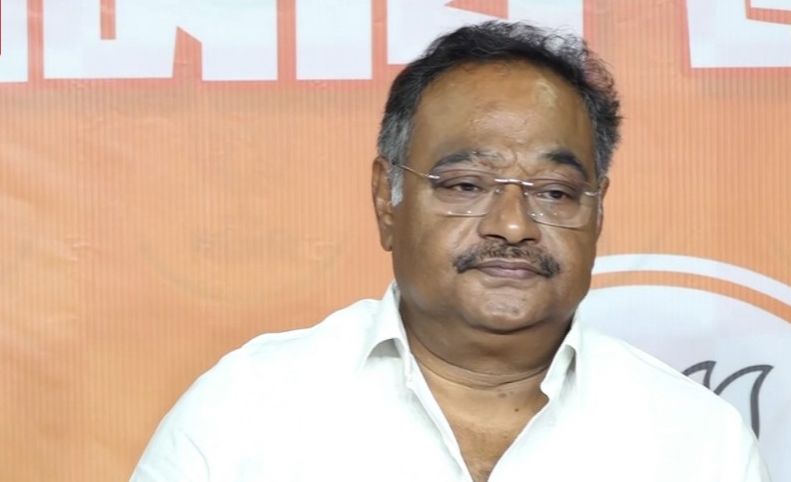
West Bengal BJP Chief Samik Bhattacharya announced that the central government will secure the passage of the Delimitation Bill "anyhow," despite a unified opposition strategy by the INDIA bloc to vote down the legislation. The ongoing confrontation threatens to significantly redraw India’s parliamentary map ahead of the 2029 general elections.
KOLKATA — The Bharatiya Janata Party (BJP) leadership has reinforced its absolute commitment to executing national constituency redrawing, declaring that the central government will secure the passage of the Delimitation Bill irrespective of regional parliamentary resistance. Speaking at a political briefing in Kolkata, West Bengal BJP Chief Samik Bhattacharya dismissed the legislative objections raised by regional satraps and the unified opposition bloc, asserting that constitutional mandates will be fulfilled by the administration.
This declaration follows escalating tension in Parliament after the principal opposition alliance, the INDIA bloc, announced a unanimous decision to vote against the delimitation provisions embedded within the Constitution (131st) Amendment Bill, 2026. The geopolitical and electoral ramifications of redrawing regional boundaries remain a focal point of intense political maneuvering between the ruling party and regional factions like the All India Trinamool Congress (TMC).
Direct Legislative Push Dismisses Opposition Objections
Addressing party workers and media personnel, West Bengal BJP Chief Samik Bhattacharya emphasized that the central administration remains unfazed by parliamentary deadlocks or boycotts orchestrated by opposition groups. His remarks directly target the collective stance of the INDIA bloc, which has mobilized to block the Delimitation Bill over concerns of structural changes to seat allocations across states.
"The government will do it anyhow," Bhattacharya stated during the conference, underlining that the legislative trajectory of the Delimitation Bill is non-negotiable. He suggested that defensive strategies deployed by regional opposition parties are designed to stall inevitable demographic and constitutional updates, rather than protect genuine state interests.
The state chief's assertion highlights a widening ideological rift in West Bengal, where the BJP has aggressively sought to position itself against the TMC following significant regional political shifts.
National Bloc Unites Against Constituency Redrawing
The political friction surrounding the Delimitation Bill intensified following a high-level summit of the INDIA bloc in New Delhi. Led by Congress President Mallikarjun Kharge, the alliance formulated a strict strategy to resist the constitutional amendment, arguing that the Delimitation Commission's current framework risks distorting proportional representation.
Opposition leaders have pointed to recent constituency alterations in northeastern states and Jammu & Kashmir as primary examples of what they characterize as institutional gerrymandering. The bloc argues that updating constituency seats based on upcoming census metrics could penalize states that have successfully managed population stabilization, significantly shifting the balance of parliamentary power.
Official Sources Section
According to statements released by the national secretariat of the Bharatiya Janata Party, the delimitation exercise is a standardized constitutional process required to normalize voting populations across expanding urban and rural boundaries. The party maintains that democratic equity demands an updated census-driven structural overhaul.
Conversely, formal briefings recorded by the Indian National Congress and parliamentary reports from the All India Trinamool Congress emphasize that any unilateral redrawing of lines violates cooperative federalism. They insist that the implementation of legislative reforms, including women's reservations, should proceed within the existing framework of 543 Lok Sabha seats to ensure stability for the 2029 general elections.
"Organizers stated that the unified opposition will not allow the delimitation provisions to pass in their current form, calling the strategy politically motivated to suppress regional legislative majorities."
Why It Matters
The absolute passage of the Delimitation Bill carries deep structural consequences for Indian citizens, regional businesses, and political investors. If implemented successfully by the central government, the redistribution of parliamentary seats will directly alter the electoral weight of individual states inside the Lok Sabha.
For residents of West Bengal and southern border states, this restructuring could change local representation dynamics, influencing how central funds, infrastructure development projects, and industrial resources are allocated. Corporate entities tracking policy predictability closely monitor these legislative shifts, as a volatile political map often alters regional regulatory environments and localized economic incentives.
Key Facts at a Glance
Defiant Stance: West Bengal BJP Chief Samik Bhattacharya states the central government will pass the Delimitation Bill "anyhow," ruling out compromises with regional dissenters.
Opposition Blockade: The INDIA bloc has resolved to vote unanimously against the delimitation provisions embedded in the Constitution (131st) Amendment Bill, 2026.
Gerrymandering Claims: Opposing factions argue that redrawing boundaries could systematically reduce the legislative influence of specific states.
Structural Deadline: The ruling administration intends to utilize upcoming census data to realign voter concentrations before the next major general election cycle.
FAQ Section
What is the core objective of the Delimitation Bill?
The Delimitation Bill seeks to redraw the boundaries of various assembly and parliamentary constituencies across India to ensure each seat represents an approximately equal number of voters, based on updated demographic data.
Why is West Bengal BJP Chief Samik Bhattacharya insisting on its passage?
Bhattacharya reflects the central leadership's view that delimitation is a mandatory constitutional procedure that cannot be indefinitely delayed by political opposition or parliamentary boycotts.
Why are opposition parties like the TMC and Congress opposing the bill?
Opposition parties fear that using recent population metrics will disproportionately favor more populous regions, thereby diluting the parliamentary representation and political leverage of states that successfully implemented population control measures.
Will this affect the upcoming 2029 general elections?
Yes. If passed and executed by the Delimitation Commission, the newly drawn boundaries and altered seat distributions will dictate the structural layout of constituencies for the 2029 general elections.
Source: The Hindu National Coverage, Bharatiya Janata Party Official Portal, Indian National Congress Press Releases.