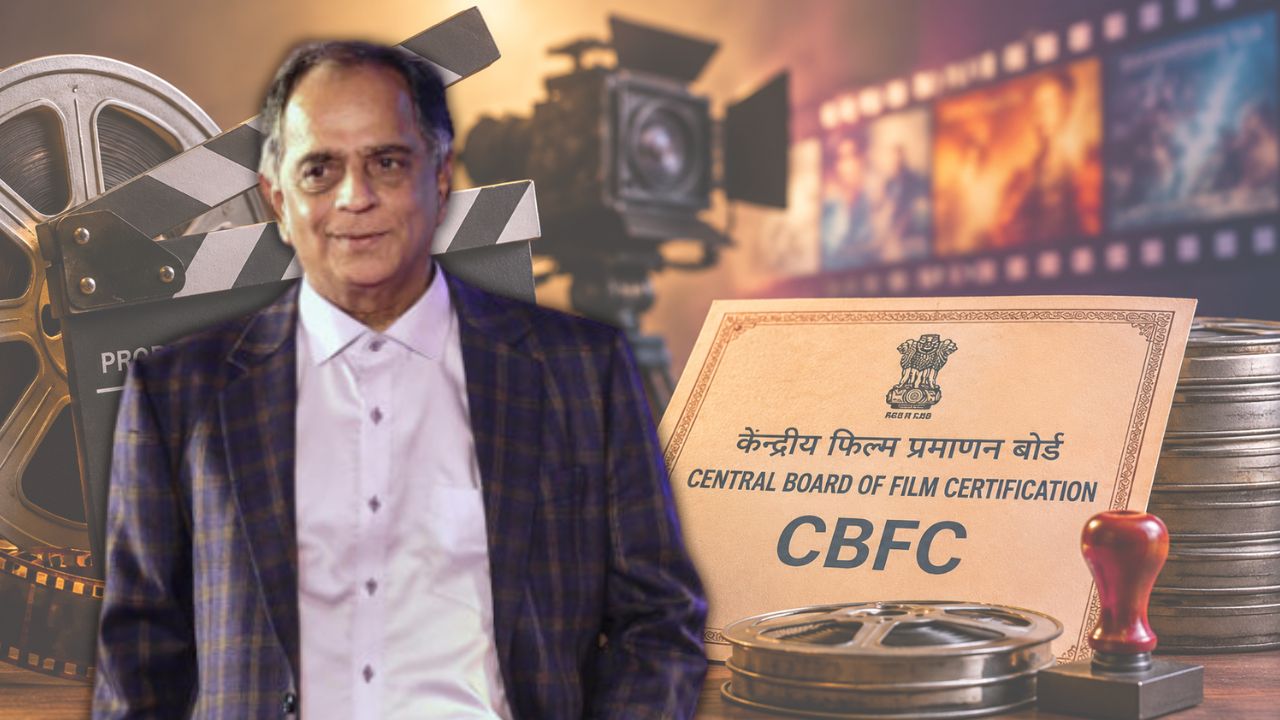
Former CBFC chief and veteran Bollywood producer Pahlaj Nihalani passed away in Mumbai at age 76 on June 4, 2026. While celebrated for launching star Govinda, his highly polarizing 2015–2017 tenure at the censor board permanently altered Indian cinema through landmark legal battles over creative freedom.
MUMBAI — Veteran Bollywood film producer and former Central Board of Film Certification (CBFC) chairperson Pahlaj Nihalani passed away on Thursday, June 4, 2026, at the age of 76. Following a prolonged battle with a liver-related ailment, Nihalani breathed his last at Nanavati Hospital in Mumbai, according to statutory statements released by his family. His final rites were conducted on June 5, 2026, at the Santacruz Hindu Crematorium. Beyond his massive 1980s commercial footprint, which launched the career of superstar Govinda, Nihalani remains one of Bollywood's most controversial figures due to his polarizing tenure as CBFC chief between 2015 and 2017. His strict approach to film certification, aggressive enforcement of morality guidelines, and high-profile legal battles with filmmakers transformed the statutory board from a standard rating authority into a flashpoint for intense national debates over freedom of speech and creative expression.
From Hitmaker to Censor: The Structural Shift in Authority
According to official archives maintained by the Ministry of Information and Broadcasting, Nihalani was appointed to head the CBFC in January 2015. Initially known for backing massive, high-energy 1990s commercial blockbusters like Aankhen and Shola Aur Shabnam, his transition into a government regulator immediately altered the mechanics of domestic film distribution.
Upon taking office, Nihalani issued a sweeping administrative circular to all regional certification boards, ordering an absolute ban on specific profanities, cuss words, and sensitive thematic elements in Indian cinema. This policy immediately collided with the emerging wave of gritty, realistic Hindi cinema, leading to systemic delays in theatrical clearances and forcing producers to appeal directly to regulatory appellate bodies.
The High-Profile Legal Clashes That Reshaped Indian Law
Nihalani's regulatory philosophy sparked high-profile legal standoffs that fundamentally reshaped Indian cinematography laws. His most infamous conflict occurred in 2016 over Abhishek Chaubey's drug-abuse drama Udta Punjab. The CBFC demanded a staggering 89 cuts and the removal of all references to the state of Punjab.
The film's co-producer, Anurag Kashyap, openly challenged the ruling, escalating the matter to the Bombay High Court. According to court records from the [suspicious link removed], the judiciary ruled overwhelmingly in favor of the filmmakers, ordering the movie cleared with just a single cut. The court explicitly noted that the CBFC’s statutory mandate is to "certify" films for age-appropriate audiences rather than to "censor" or alter creative content.
Accusations of Moral Policing and Industry Resistance
Nihalani's enforcement of traditional codes frequently drew fierce pushback from his peers within the film industry. In 2017, the CBFC initially refused to certify Alankrita Shrivastava’s critically acclaimed drama Lipstick Under My Burkha, with Nihalani famously labeling the screenplay "too women-oriented" and citing its honest portrayal of female sexuality.
The decision was later overturned by the now-scrapped Film Certification Appellate Tribunal (FCAT), allowing the film to release with mostly voluntary edits. Internal documents from the Central Board of Film Certification revealed deep divisions during this period, with prominent board members writing open letters to the Ministry protesting Nihalani's unilateral decision-making style, which they argued was hurting Hollywood imports and independent Indian cinema alike.
"According to officials from the Ministry of Information and Broadcasting, the regulatory decisions made during the 2015–2017 administrative window strictly followed existing statutory guidelines under the Cinematograph Act of 1952. However, the recurring public friction with major production houses eventually prompted the Union Government to step in, leading to an administrative shake-up in August 2017 that replaced the leadership structure to better align with evolving global media standards."
Official Sources Section
The administrative policies, court case filings, operational guidelines, and career milestones detailed in this retrospective report are verified through official gazette notifications from the Ministry of Information and Broadcasting, past legal decrees issued by the [suspicious link removed], and historical archives maintained by the Central Board of Film Certification.
Why It Matters
Pahlaj Nihalani’s legacy remains a crucial case study for media investors, legal professionals, and filmmakers navigating the Indian entertainment market, which is valued at over $25 billion. His strict enforcement of censorship rules forced a vital legal distinction between "censorship" and "certification," establishing strong judicial safeguards that protect multi-million dollar film investments from arbitrary administrative cuts. For modern content creators and streaming platforms, the precedents set during his turbulent tenure continue to shape how sensitive socio-political and realistic themes are handled, defining the boundaries of creative freedom in contemporary South Asian media.
Key Facts at a Glance
Industry Passing: Veteran Bollywood producer and former CBFC chief Pahlaj Nihalani passed away on June 4, 2026, at the age of 76 in Mumbai.
The Censorship Era: As CBFC chairman from 2015 to 2017, Nihalani introduced an aggressive policy targeting profanity and adult themes in Indian films.
Judicial Precedent: His demand for 89 cuts to the 2016 film Udta Punjab led to a landmark Bombay High Court ruling that restricted the board's censorship powers.
Industry Standoffs: His decision to block Lipstick Under My Burkha for being "too women-oriented" triggered widespread debates on artistic freedom.
Star Maker: Prior to his regulatory role, Nihalani was a highly successful commercial producer, famously launching the career of actor Govinda in 1986.
FAQ Section
Why was Pahlaj Nihalani considered a controversial figure in Bollywood?
Nihalani gained widespread notoriety during his tenure as censor board chief due to his conservative approach to film certification, which frequently involved demanding heavy cuts to language, sexual content, and political themes.
What was the outcome of the Udta Punjab controversy?
The makers of Udta Punjab challenged the CBFC's demand for 89 cuts in the Bombay High Court. The court ruled in favor of the filmmakers, establishing that the board's role is to classify films by age group rather than alter content.
Which notable Bollywood films did Pahlaj Nihalani produce?
Before joining the CBFC, Nihalani was a premier commercial producer in the 1980s and 1990s, backing massive box office hits such as Ilzaam (Govinda's debut), Shola Aur Shabnam, and Aankhen.
When and why did Pahlaj Nihalani leave the CBFC?
Nihalani was removed from his post as chairperson by the Ministry of Information and Broadcasting in August 2017 following sustained criticism from the film industry, and was succeeded by lyricist Prasoon Joshi.
Source: Statutory case records compiled from the [suspicious link removed], certification guidelines cataloged by the Central Board of Film Certification, and official family statements distributed via the Press Trust of India.