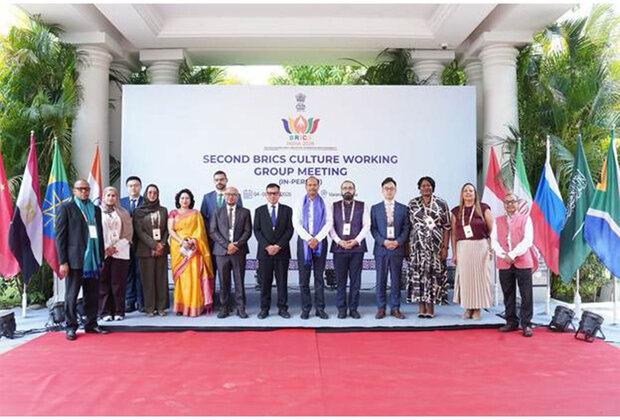
The Second BRICS Culture Working Group meeting commenced in Varanasi on June 4, 2026, under India's chairship. Bringing together delegates from the expanded 11-nation bloc, the summit addresses critical global policies on ethical AI, copyright protection, and antiquities repatriation, while showcasing local GI-tagged handicrafts to international markets.
VARANASI — The Second BRICS Culture Working Group (CWG) Meeting officially commenced on Thursday, June 4, 2026, in the ancient city of Varanasi, Uttar Pradesh. Organised by the Ministry of Culture, Government of India, the two-day international conference marks a significant advancement in multilateral diplomacy for the newly expanded 11-member bloc. Chaired by Indian Culture Secretary Vivek Aggarwal, the opening sessions brought together delegates from Brazil, China, Indonesia, Iran, South Africa, and the United Arab Emirates in person, while representatives from Egypt, Ethiopia, and the Russian Federation participated via secure digital links. Running through June 5, 2026, the diplomatic summit focuses directly on formulating unified global policies surrounding copyright protections, the ethical application of artificial intelligence (AI) within creative industries, and the repatriation of lost cultural property.
Aligning the Creative Economy with Ethical Artificial Intelligence
According to official briefings released by the Press Information Bureau, the inaugural day of the Varanasi conference centered heavily on balancing rapid technological transformation with artistic integrity. Under India's overarching 2026 BRICS chairship theme, "Building for Resilience, Innovation, Cooperation and Sustainability," the working group conducted a high-level panel focused on copyright protections in the digital era.
The session, moderated by Dr. Sachchidanand Joshi, Member Secretary of the Indira Gandhi National Centre for the Arts (IGNCA), mapped out joint strategies to combat digital piracy across member borders. Delegates debated the establishment of standardized licensing frameworks to protect human creators from uncompensated data scraping by generative AI models, marking a unified global south approach to intellectual property management.
Global Expansion Context and Geopolitical Significance
The Varanasi convention holds exceptional geopolitical weight, representing the first major cultural track meeting since the formal expansion of the BRICS alliance. Following the inclusion of Egypt, Ethiopia, Iran, Saudi Arabia, and the UAE in 2024, and Indonesia in January 2025, the bloc now represents over 45 percent of the global population.
Administrative reports filed by the Ministry of Culture indicate that this expanded footprint has fundamentally altered the group’s cultural priorities. The inclusion of new West Asian and Southeast Asian economies has introduced vastly diverse perspectives on historical conservation, creating a unified legislative front at international bodies like UNESCO to demand the swift return of historically looted antiquities.
Showcasing Kashi's Artisanal Heritage to International Markets
Beyond high-level policy text deliberations, the Uttar Pradesh state administration utilized the international event to inject immediate economic value into the regional handicraft sector. In coordination with local trade guilds, the state government launched a specialized exhibition at the venue spotlighting Varanasi's Geographical Indication (GI) and One District One Product (ODOP) crafts.
Six master craftsmen were selected to demonstrate traditional manufacturing techniques live for the visiting diplomats. The trade exhibition showcased signature regional creations, including Banaras Gulabi Meenakari (pink enamel work), fine Banaras Brocade sarees, intricate wooden lacquerware, and hand-carved soft stone jali work, opening up direct pathways to premium international retail markets.
"The creative economy is an essential driver for inclusive social development and digital innovation across our nations. This Varanasi meeting allows us to build structured dialogue around copyright and ethical AI, ensuring that our rich cultural diversity is protected while utilizing emerging technologies. The consensus built over these two days will directly inform the upcoming Ministers' declaration in Bhopal."
Official Sources Section
The operational details, panel topics, ministerial statements, and participant logs compiled in this diplomatic brief are drawn directly from official press releases issued by the Press Information Bureau (PIB), statutory cultural track agendas published by the Ministry of Culture, and local development reports distributed by the Government of Uttar Pradesh.
Why It Matters
The Second BRICS Culture Working Group meeting establishes a vital institutional baseline for how the world's fastest-growing economies manage the intersection of ancient history and cutting-edge technology. For software developers, digital publishers, and media investors across the BRICS alliance, the copyright and AI frameworks discussed in Varanasi will directly influence future intellectual property legislation, shifting how algorithmic models handle localized cultural content. Furthermore, for regional craft communities and small businesses in Uttar Pradesh, the visibility gained from showcasing GI-tagged products directly to foreign diplomats strengthens export pipelines, translating global multilateral diplomacy into sustainable economic growth for local grassroots artisans.
Key Facts at a Glance
Summit Commencement: The Second BRICS Culture Working Group meeting began its official two-day session in Varanasi on June 4, 2026.
Expanded Participation: The event features diplomats from the expanded 11-member alliance, including newly integrated members like the UAE, Iran, and Indonesia.
Core Technological Focus: High-level panels targeted the creation of legal safeguards regarding copyright and the ethical use of AI in creative sectors.
Antiquities Restitution: Member nations aligned their strategies to promote international cooperation for the return of illicitly trafficked cultural property.
Economic Showcase: A live exhibition of Varanasi’s world-famous GI-tagged and ODOP crafts was hosted to introduce local artisans to global markets.
FAQ Section
What is the primary purpose of the BRICS Culture Working Group meeting in Varanasi?
The meeting provides a structured platform for senior diplomats and cultural experts to collaborate on global cultural policies, specifically focusing on the creative economy, ethical AI usage, copyright protection, and heritage preservation.
Which countries are participating in the Varanasi cultural summit?
The conference features delegates from Brazil, China, Indonesia, Iran, South Africa, and the UAE attending in person, alongside representatives from Egypt, Ethiopia, and Russia joining via virtual links.
What are the main thematic priorities for the BRICS culture track in 2026?
The 2026 deliberations are structured around three main pillars: Creative Economy and Ethical AI; Protection of Cultural Heritage and Return of Cultural Property; and the integration of Culture with Climate Change for sustainable development.
What local products are being showcased to the international delegates?
Varanasi's administration is hosting a specialized exhibition featuring six distinct GI-tagged and ODOP products, including Banaras Gulabi Meenakari craft, Banaras Brocade sarees, wooden lacquerware, and soft stone jali work.
Source: Official conference minutes released by the Press Information Bureau, international track updates published by Asian News International (ANI), and regional development archives from the Ministry of Culture, New Delhi.