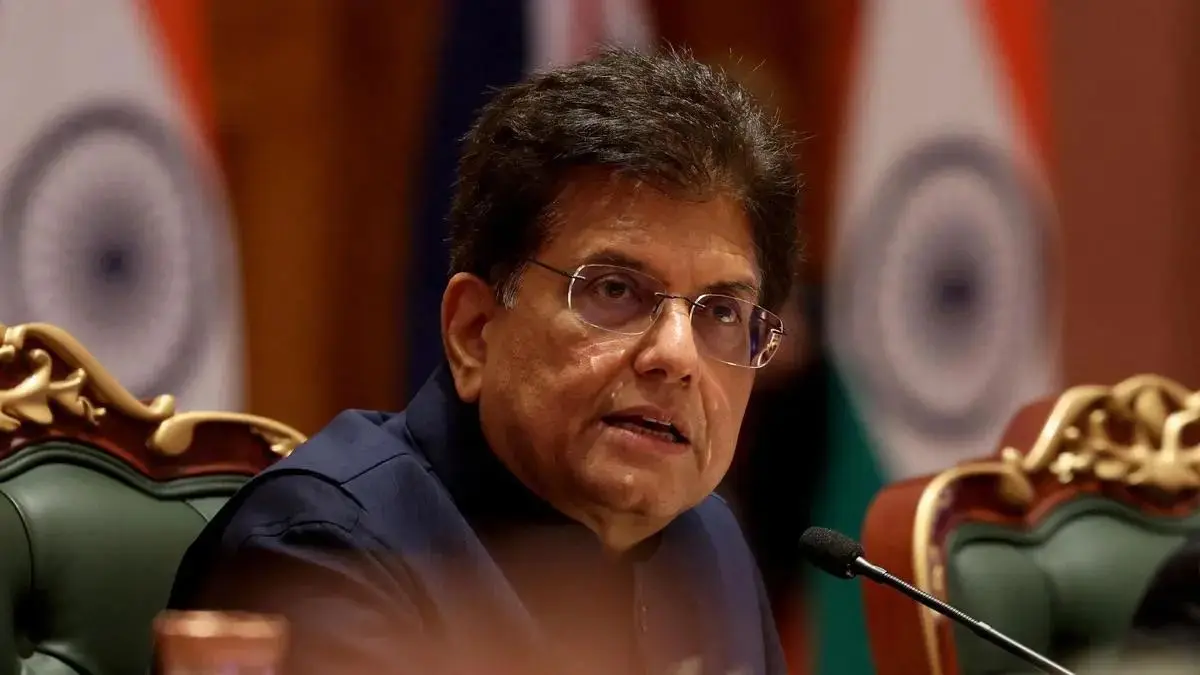
ISRO Chairman V. Narayanan announced on June 4, 2026, that India’s complete space ecosystem and private startups are being systematically mobilized to help the country achieve developed nation status by 2047. Partnering with regional agencies, the initiative deploys commercial space tech for vital infrastructure mapping, climate tracking, and disaster mitigation.
SHILLONG — In a major policy alignment aimed at securing India’s long-term economic and scientific self-reliance, the Indian Space Research Organisation (ISRO) has declared that the country's expanding private space ecosystem and startup network are critical to transforming India into a developed nation by 2047. Speaking at an official high-level convention in Shillong, Meghalaya, on Thursday, June 4, 2026, ISRO Chairman V. Narayanan confirmed that public-private integration across the aerospace industry is no longer supplementary but a core national directive. The announcement, made during the North East Space Application Centre (NESAC) meeting, underscores a calculated shift by the central space agency to utilize commercial satellite data, low-cost launch providers, and localized geospatial software to catalyze infrastructure growth, resource tracking, and disaster mitigation strategies across historically underserved regional territories.
Regional Border Mapping Drives Grassroots Commercial Space Growth
According to official administrative briefs published by the Press Information Bureau, the NESAC conference was chaired by the Union Minister for Development of North Eastern Region (DoNER), Jyotiraditya M. Scindia, alongside senior space scientists and state administrators.
During the working sessions, Narayanan explicitly tasked ISRO and localized space technology entities with finalizing a comprehensive regional roadmap. This blueprint mandates immediate startup involvement in structural assignments, including village-level resource mapping, land-use zoning, and real-time border infrastructure monitoring. By delegating high-resolution imaging and software tasks to private enterprises, the government aims to expand public capability while actively injecting public capital directly into domestic deep-tech firms.
AI Analytics Tackle Regional Climate and Carbon Disruption
A vital segment of the newly authorized space technology protocol involves using private sector artificial intelligence (AI) and machine learning algorithms to process raw Earth-observation data. The North Eastern region, characterized by complex terrain and volatile weather patterns, is serving as the primary testbed for these new commercial space systems.
Data frameworks reviewed during the meeting show that commercial enterprises are already working alongside state environmental boards to monitor carbon dioxide ($CO_2$) absorption levels across regional forests. This specialized satellite monitoring is integrated into an automated, multi-tiered disaster management network, providing local civil bodies with advanced warning systems for landslides, monsoonal flash floods, and cloudburst events.
Fostering Scientific Temper to Sustain the Local Space Economy
The economic transition toward a self-sustaining space economy depends on building a robust local workforce. Addressing this educational requirement, the ISRO leadership highlighted expanding academic outreach programs explicitly structured to develop a strong "scientific temper" among university and secondary school students.
By utilizing interactive exhibits, mobile space laboratories, and direct grant initiatives funded by the Department of Space, ISRO aims to bridge the gap between rural classrooms and high-tech industrial hubs. This educational push ensures a steady pipeline of specialized software engineers, hardware technicians, and data scientists required to sustain the country’s high-tech manufacturing targets over the next two decades.
"The entire space ecosystem, including start-ups, is working together to make India a developed nation by 2047. Inclusive growth is important for the country and the space ecosystem is growing in a big way and contributing towards the country's development. Disaster mitigation is one of the key areas together with resource monitoring, and work on carbon dioxide absorption in the region is also underway."
Official Sources Section
The program directives, ministerial assignments, and administrative metrics detailed in this national development brief are derived from official executive registers published by the [suspicious link removed], operational space policy frameworks managed by the Department of Space, and organizational bulletins archived by the North East Space Application Centre.
Why It Matters
The structural evolution of the Indian space ecosystem signals a fundamental change in how space technology generates tangible economic value for everyday citizens. For deep-tech entrepreneurs and international venture capitalists, ISRO's explicit commitment to integrating startups into civil infrastructure projects provides a reliable, state-backed revenue runway. Practically, using localized satellite mapping helps local municipal offices optimize agricultural supply chains and secure infrastructure investments against natural disasters. By lowering the regulatory barriers for private rocket and satellite builders, India is shifting from a state-monopolized model to an agile, commercially driven aerospace hub, ensuring the country captures a larger share of the projected $1 trillion global space economy by 2047.
Key Facts at a Glance
Centennial Horizon: ISRO has formally linked the growth of the private space ecosystem to the national "Viksit Bharat" objective of becoming a developed nation by 2047.
Startups at the Core: Over 190 registered domestic space startups are shifting from theoretical research to active execution of public utility contracts.
Decentralized Strategy: The 2026 NESAC roadmap explicitly utilizes private satellite data for localized village resource mapping and environmental monitoring.
Climate Tech Integration: Advanced satellite analytics are actively tracking $CO_2$ absorption and providing real-time data to municipal disaster management boards.
Educational Alignment: ISRO is deploying mobile space laboratories across regional universities to build the next-generation aerospace workforce.
FAQ Section
How are private startups contributing to India's 2047 space targets?
Private space startups are taking over commercial operations such as building small-satellite constellations, providing low-cost launch vehicles, and developing localized geospatial software. This allows ISRO to focus its main resources on deep-space scientific exploration and heavy launch capabilities.
What specific projects were assigned during the Shillong NESAC meeting?
The leadership directed space agencies and private partners to build comprehensive regional data frameworks for village resource mapping, high-resolution infrastructure tracking, and automated disaster management systems.
How does the space ecosystem impact everyday citizens and farmers?
By utilizing precision Earth-observation data provided by space startups, local governments can better monitor crop health, track groundwater levels, and deploy highly accurate weather warning systems to mitigate the impact of floods and landslides on rural communities.
Where can companies apply to collaborate on these national space initiatives?
Commercial firms and research teams can register, access open geospatial data tiers, and apply for public technology transfer programs through the official Indian National Space Promotion and Authorization Centre (IN-SPACe) regulatory portal.
Source: Official meeting transcripts distributed by the United News of India (UNI), policy declarations archived by the Indian Space Research Organisation, and regional development logs managed by the Ministry of DoNER.