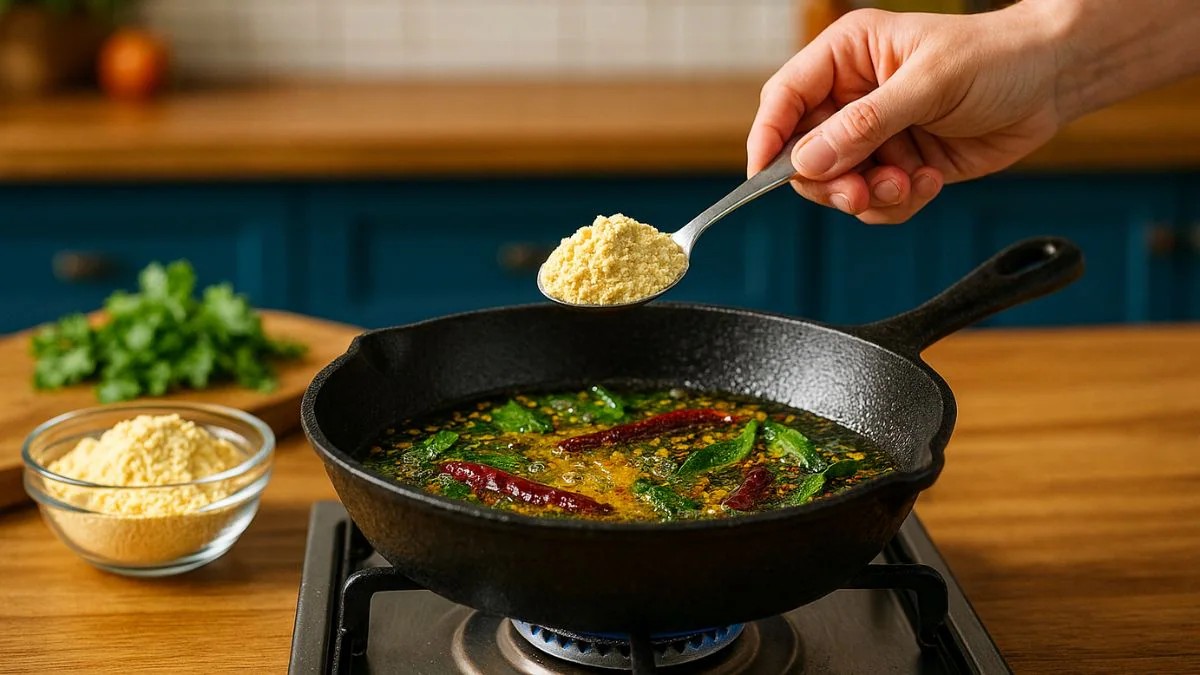
Besan — or gram flour — has quietly held a prized spot in Indian kitchens for generations. When stirred into hot ghee or oil during the tadka, this one humble ingredient transforms texture, aroma, and balance in ways that defy its simplicity. Here's why this age-old technique is finally getting the attention it deserves.
The Unsung Hero Of The Indian Kitchen
In Indian cooking, some of the most powerful techniques are never written down — they are shown once and remembered forever. Adding a spoon of besan to the tadka is exactly that kind of practice: small, quiet, and devastatingly effective. It may look like an afterthought, but this single addition shifts a dish from ordinary to deeply satisfying.
What Happens When Besan Hits Hot Oil
Besan reacts almost instantly to heat and fat. When added to hot ghee or oil, it roasts rapidly, releasing a warm, nutty aroma that subtly reshapes the character of the entire tempering. Unlike spices that demand attention, besan works behind the scenes — binding, softening, and deepening the dish's foundation without ever announcing itself.
The Science Behind The Spoon
- Texture First
Roasted besan absorbs fat and begins to gently thicken any liquid it later encounters. In dals, kadhi, and gravies, this creates a rounded mouthfeel — neither watery nor dense — that feels balanced and intentional. Food made this way simply tastes more complete, even when the ingredient list is minimal. - Anti-Split Agent
For dishes built on curd, buttermilk, or thin dals, splitting is a real risk. Besan — already cooked through the tadka — acts as a stabiliser, binding fat and liquid together and preventing separation later. The result is a cohesive, smooth dish where the tempering integrates rather than floats. - Flavour Balancer
Rather than adding another loud note, roasted besan softens sharp edges — rounding out acidity, mellowing aggressive spice, and creating a sense of warmth. Dishes with besan in the tadka rarely taste harsh; instead, flavours feel woven together rather than competing.
Besan Tadka Highlights
- Every region of India uses this technique differently, but the benefits hold true across cuisines and kitchens
- Adds natural thickening without extra flour or extended cooking
- Prevents curd and buttermilk-based dishes from splitting mid-cook
- Releases a nutty aroma that deepens the overall flavour profile
- Works especially well in dals, vegetable sabzis, and kadhi preparations
- Keeps the dish feeling light despite adding structural body
- Passes down through kitchens as muscle memory, not written recipes
The Bigger Lesson On The Ladle
Indian cooking is filled with small, purposeful decisions that carry enormous weight. The tadka itself is one such tradition — it blooms spices, releases essential oils, and enhances the nutritional uptake of a dish all at once. Adding besan is simply the next layer of that wisdom. It doesn't complicate the process; it completes it. As food writer Rushina Munshaw Ghildiyal notes, the tadka's purpose goes well beyond flavour — every element serves a role, nutritional or textural, often both.
The next time a dish tastes strangely complete at someone else's table, ask about the tadka. Chances are, there was a quiet spoon of besan in there too.
Sources: NDTV Food, The Cook's Cook, Ranveer Brar, Boombay