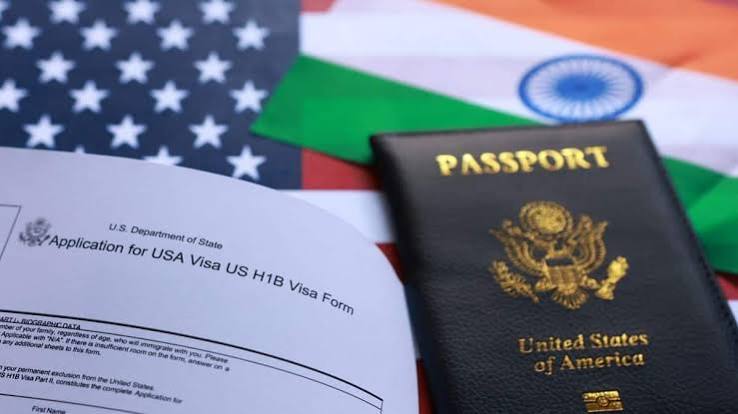
A senior Ministry of External Affairs official clarified that an Indian passport is strictly a travel document rather than a definitive proof of citizenship. The statement has reignited national debates regarding citizenship verification, coming alongside data showing India successfully issued 1.39 crore passports in 2025 across an expanded network of 545 service centers.
NEW DELHI — In a clarification that has ignited widespread civic and political discussion, a senior official from the Ministry of External Affairs (MEA) stated on Wednesday, June 24, 2026, that an Indian passport is strictly a "travel document" and does not constitute conclusive proof of citizenship. The statement was delivered during an official briefing marking the 14th Passport Seva Divas, where authorities sought to separate the legal definition of international transit documents from domestic instruments used to establish absolute citizenship rights.
Clarification Over Legal Definitions of National Identity
The distinction emerged in response to targeted queries regarding whether an Indian passport could be used to legally challenge exclusions from voter registries during the ongoing Special Intensive Revision (SIR) of electoral rolls. Senior ministry officials clarified that while a passport attests to an individual's operational nationality when traveling across international ports and territories, it is structurally distinct from a constitutional document certifying permanent citizenship within domestic borders.
The announcement has surprised the public, given that under Section 6(2)(a) of the Passports Act, 1967, federal authorities are legally obligated to refuse a passport if an applicant is found to be a non-citizen. MEA representatives explained the paradox by noting that passports are granted following rigorous due diligence and relying on data feeds from multiple government agencies, but they remain functional state property on loan to the individual for international mobility purposes rather than a final declaration under the Citizenship Act, 1955.
Rapid Institutional Expansion of Passport Infrastructure
The legal clarification stood alongside a broader disclosure of institutional performance metrics tracking the ongoing modernization of India's passport infrastructure. According to official data compiled for 2025, the ministry processed and delivered 1.5 crore passport and related services, with standalone passports comprising 1.39 crore of the total volume.
The expansion is supported by a six-fold increase in operational facilities over the past decade, with the national network scaling from 77 centers to 545 active Passport Seva Kendras (PSKs) and Post Office Passport Seva Kendras (POPSKs). Officials confirmed that nearly every Lok Sabha constituency across India is now serviced by a localized processing center.
Broader Structural Fallout and the Citizenship Proof Dilemma
The statement has triggered a wave of public scrutiny on digital media platforms, with citizens, civil society groups, and legal experts questioning which documents remain valid for proving citizenship if major state-issued instruments fail to meet the absolute standard.
The development mirrors earlier judicial precedents. In August 2025, a Supreme Court bench comprising Justices Surya Kant and Joymalya Bagchi explicitly ruled that an Aadhaar card functions strictly as a proof of identity and cannot be introduced as evidence of Indian citizenship. Similarly, standard Voter ID cards are legally classified as residency and franchise authorization documents rather than absolute confirmation of a holder's citizenship status under the law.
Legal experts maintain that under existing statutory frameworks, definitive proof of citizenship rests largely on specific historical criteria tied to an individual's birth date, place of birth, and parentage records as specified by successive amendments to the Citizenship Act, 1955.
Official Sources Section
The operational updates, legal distinctions, and programmatic rollouts were presented during official press briefings held at the Ministry of External Affairs to mark the annual anniversary of the Passports Act, 1967. Additional reference benchmarks were pulled from past statutory filings by the Unique Identification Authority of India (UIDAI) and directives issued via the Supreme Court of India.
Quote Section
"Passport is a travel document, not a document of citizenship and theoretically speaking that distinguishes passport from other documents. Even though while travelling abroad, passport attests to your nationality, yet it is not a document of your citizenship," stated a senior official from the Ministry of External Affairs during the Passport Seva Divas panel.
"According to officials, any passport issued remains the formal property of the Government of India and must be surrendered immediately if an authorized agency issues a formal revocation order."
Why It Matters
The MEA's public statement clarifies the operational boundaries between identity tracking and constitutional status. For citizens navigating regulatory audits, it reinforces that everyday identification cards do not substitute for foundational documentation like verified birth registries and genealogical records when proving nationality before statutory boards or immigration tribunals.
Key Facts at a Glance
The Core Ruling: The Ministry of External Affairs has officially designated the Indian passport as a travel document rather than definitive proof of citizenship.
The Legal Precedent: The announcement follows a 2025 Supreme Court ruling confirming that Aadhaar cards are similarly limited to establishing identity alone.
Operational Volumes: India processed 1.5 crore passport-related files in 2025, driven by a national network that has scaled to 545 processing centers.
Modern Security: Approximately 10% of active Indian passport holders now possess upgraded, chip-enabled e-passports conforming to international biometric standards.
FAQ Section
Why is an Indian passport not considered definitive proof of citizenship? The MEA explains that a passport is functionally a travel document issued to facilitate international transit and grant consular protection abroad. Legally, it remains state property and does not serve as a final certificate under domestic citizenship laws.
If passports, Aadhaar, and Voter IDs do not prove citizenship, what does? Under current Indian law, citizenship is definitively established via certified records of birth date, place of birth, and parental citizenship status matching the strict timelines set by the Citizenship Act, 1955.
What is the status of the new e-passports mentioned by the ministry? Upgraded chip-enabled e-passports now make up about 10% of the active documents in circulation. They integrate advanced biometric security layers to align with global border protection standards.
Source: Ministry of External Affairs (MEA), The Hindu, Times of India