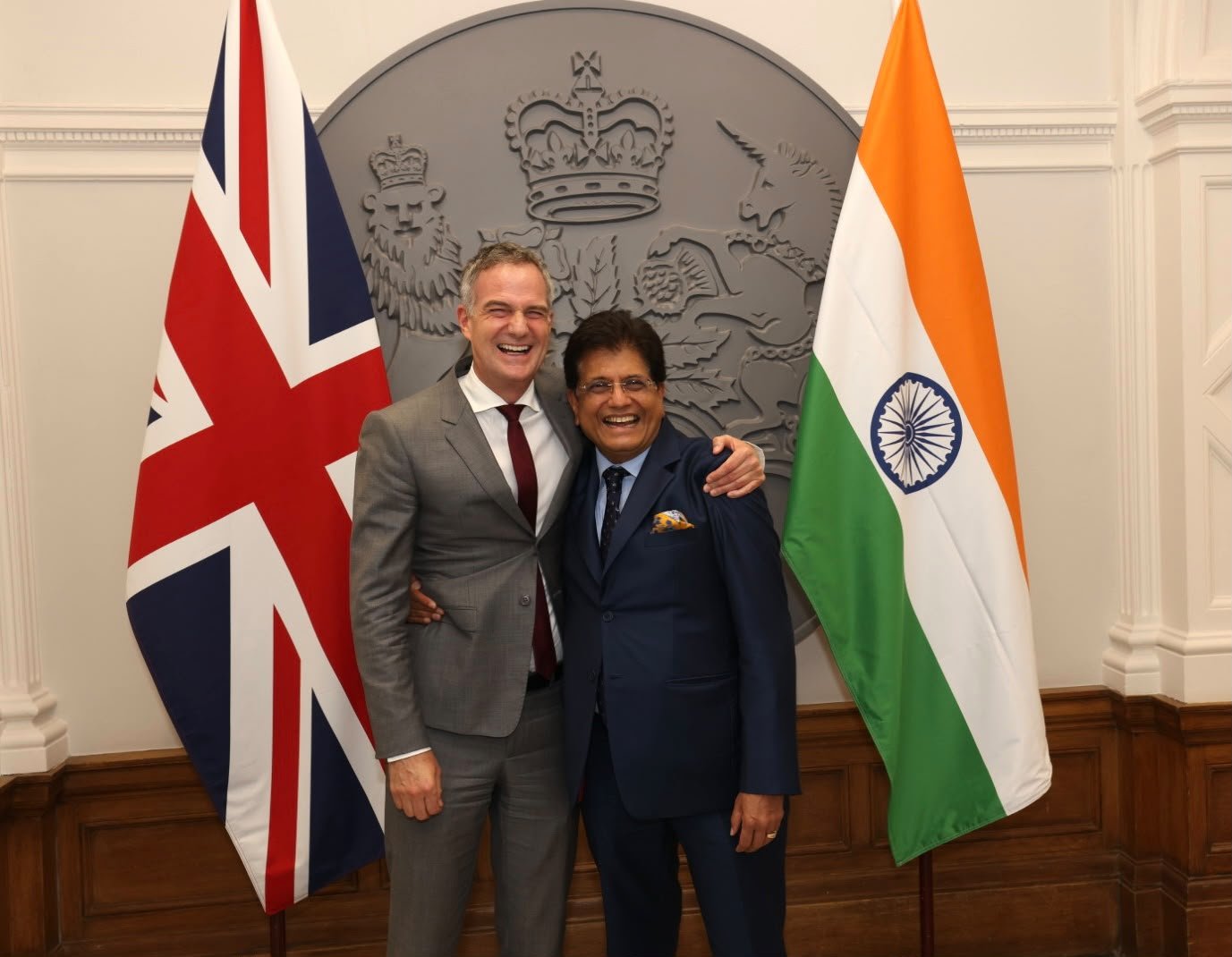
Commerce Minister Piyush Goyal announced at UK-India Week 2026 that the landmark India-UK Free Trade Agreement will commence on July 15, 2026. Described as India's most comprehensive deal yet, the agreement aims to boost bilateral trade to USD 120 billion by 2030 by enhancing cooperation in technology, services, and professional mobility.
During the 10th edition of UK-India Week 2026, Union Minister of Commerce and Industry Piyush Goyal heralded the upcoming India-UK Comprehensive Economic and Trade Agreement (CETA) as the most far-reaching trade pact India has ever signed. Speaking at the India Global Forum's Capital & Future Frontiers event, the Minister confirmed that the agreement is scheduled to officially enter into force on July 15, 2026.
The trade deal is viewed as a "force multiplier" that will integrate the two nations into global value chains, opening significant avenues for growth in sectors ranging from technology and life sciences to green energy and professional services. The visit by Minister Goyal to London served as a final review of the operational preparedness of both governments ahead of the mid-July launch.
A New Framework for Bilateral Prosperity
The India-UK FTA, often referred to as CETA, encompasses more than traditional tariff reductions. It is designed to address non-tariff barriers, streamline customs procedures, and foster deep cooperation in future industries. According to official statements from the Ministry of Commerce and Industry, the agreement aims to facilitate a more transparent, rules-based framework for bilateral commerce.
Beyond trade in goods, the agreement includes a companion Double Contribution Convention (DCC). This mechanism is specifically intended to address dual social security contribution requirements for eligible temporary workers, providing a significant boost to the mobility of professionals between the two nations. For many Indian professionals, this means a five-year exemption from UK social security contributions, with potential savings redirected into provident fund accounts.
Strategic Economic Integration
During the forum, Minister Goyal emphasized that the partnership stands on its own merits, positioning the FTA as a cornerstone of India’s global trade strategy. The agreement is expected to:
Liberalize Trade: Cut tariffs on a vast majority of goods, supporting exports and increasing market access for small and medium-sized enterprises (SMEs).
Boost Innovation: Facilitate collaborative research in Artificial Intelligence (AI), semiconductors, and biotechnology.
Enhance Mobility: Simplify professional movement and eliminate administrative burdens for businesses operating in both jurisdictions.
Rt Hon Peter Kyle, the UK’s Secretary of State for Business and Trade, echoed these sentiments during a fireside chat with Minister Goyal. He noted that the FTA represents a "comprehensive resetting" of the relationship between Britain and India, aimed at breaking down historical barriers to investment and capital flows.
Impact on Business and Investors
For global CEOs and investors, the message from the forum was clear: the FTA is not merely a trade deal, but a platform for the next decade of strategic cooperation. With bilateral trade currently standing at nearly £48 billion, the agreement is projected by industry analysts to significantly enhance long-term economic output.
Companies in sectors such as medical devices, pharmaceuticals, and digital services are expected to see the most immediate benefits as tariff barriers are dismantled. Furthermore, the agreement emphasizes the importance of SMEs, with specific provisions designed to make it easier for smaller firms to navigate international markets through enhanced digital trade support and information sharing.
Key Facts at a Glance
Effective Date: The India-UK FTA and the Double Contribution Convention officially come into force on July 15, 2026.
Comprehensive Scope: Minister Piyush Goyal identifies it as India's most comprehensive trade agreement to date.
Strategic Goal: The deal aims to advance the target of achieving USD 120 billion in bilateral trade by 2030.
Key Provision: Includes a five-year social security exemption for temporary workers to improve professional mobility.
Frequently Asked Questions
1. When will the India-UK FTA begin to impact businesses?
The agreement will officially enter into force on July 15, 2026. From this date, businesses will be able to trade under the new terms, including reduced tariffs and streamlined customs processes.
2. How does the "Double Contribution Convention" help workers?
It eliminates the need for temporary workers to pay social security contributions in both countries simultaneously for a period of five years, allowing those contributions to be saved in Indian provident funds.
3. What does "most comprehensive" mean in this context?
It signifies that the deal goes beyond traditional tariff cuts, covering services, investment, innovation, intellectual property, and regulatory alignment across multiple high-tech and service sectors.
4. Where can businesses find more information?
The Ministry of Commerce and Industry and the UK Department for Business and Trade have released explainers and operational roadmaps regarding the specific implementation of CETA.
Source: Ministry of Commerce and Industry (India), UK Department for Business and Trade, India Global Forum, UK Parliament Research Briefings