Prime Minister Narendra Modi met with 82 National Teachers' Award recipients in New Delhi on Teachers' Day 2026, urging educators to step beyond formal textbooks. He emphasized identifying behavioral changes, countering excessive screen addiction, protecting students from narcotics, and instilling practical life skills aligned with the National Education Policy.
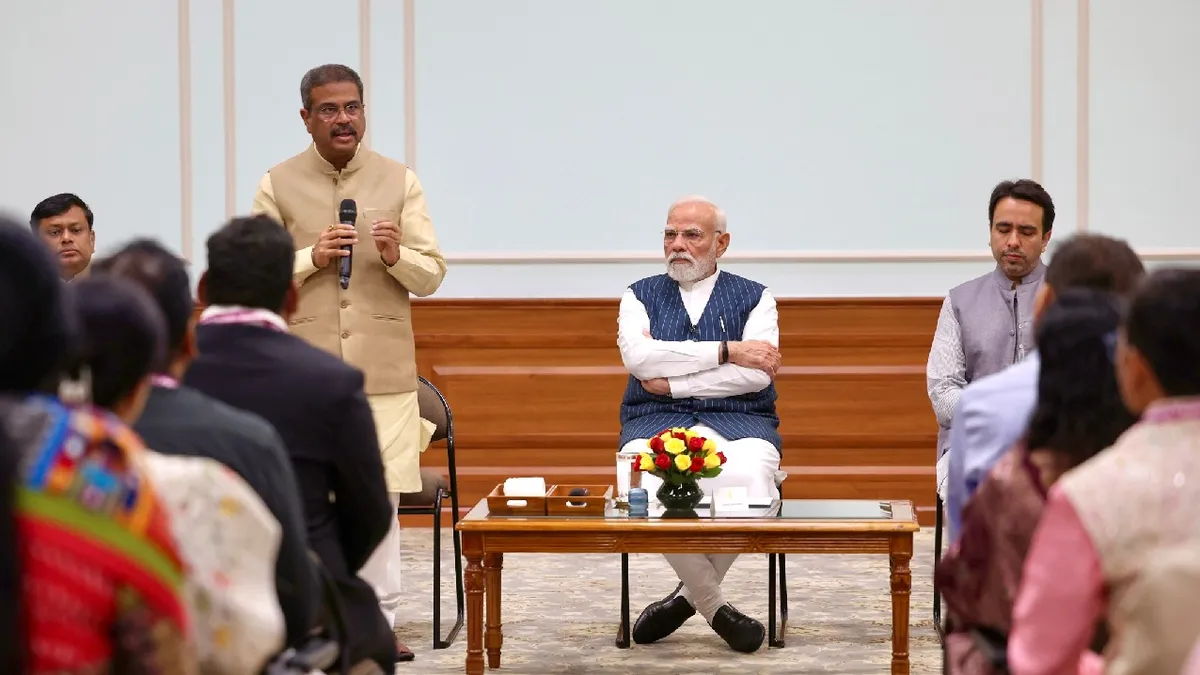
NEW DELHI — Prime Minister Narendra Modi engaged in an extensive interaction with the recipients of the National Teachers’ Award at his official residence at 7, Lok Kalyan Marg in New Delhi, urging educators nationwide to look beyond conventional textbooks and monitor the behavioral well-being of students. Held to commemorate Teachers' Day 2026—marking the 138th birth anniversary of former President Dr. Sarvepalli Radhakrishnan—the interactive gathering brought together 82 educators recognized across elementary, secondary, technical, and skill training streams. The dialogue comes as national education policy directives increasingly mandate school faculties to address rising screen addiction, substance exposure, and social isolation among schoolchildren.
Stepping Beyond Books: Screening for Behavioral Health
During the session, Prime Minister Modi underlined that the changing social landscape—specifically the erosion of traditional joint-family support structures—places an expanded pastoral responsibility on schoolteachers. Emphasizing that pedagogical responsibilities must not terminate at syllabus completion, the prime minister called on educators to remain vigilant regarding subtle psychological shifts in students.
Modi specifically highlighted two escalating modern challenges: excessive digital screen time and the infiltration of narcotics into non-metropolitan secondary schools. Pointing out that children increasingly swap outdoor play for digital devices and video games, he encouraged teachers to speak directly with parents and actively mobilize children toward field sports and structured creative pursuits.
Addressing substance abuse, Modi noted that illicit narcotics are no longer confined to universities or major cities, requiring school administrations to identify early behavioral aberrations and provide timely psychological intervention.
Aligning Classroom Pedagogy with NEP Principles
The interactive meeting reviewed practical classroom innovations deployed by this year's awardees, spanning digital teaching aids, localized science models, and community-engaged projects. The prime minister linked these innovations directly to the core tenets of the National Education Policy (NEP), which advocates experiential education over rote academic memorization.
Modi urged teachers to preserve childhood curiosity and cultivate respect for the "dignity of labour" from an early age. By introducing students to basic trades, vocational crafts, and real-world productive work, schools can dismantle ingrained occupational biases while instilling practical self-reliance.
The delegation of award recipients comprises 82 educators selected through a three-stage district, state, and national screening process. The cohort includes 48 school teachers from 27 states and seven Union Territories, 21 higher educational and polytechnic faculty members, and 13 vocational trainers certified under the Ministry of Skill Development and Entrepreneurship.
Broader Impact on Education Systems and Families
The prime minister's directives to national awardees indicate shifting policy expectations across the primary and secondary education landscape:
For Schoolteachers: Expands the pedagogical mandate to include observational pastoral care, child mental health monitoring, and active parent-teacher communication on digital habits.
For Students: Promotes a learning environment focused on physical activity, emotional security, and practical vocational engagement over rigid exam-centric pressure.
For Parents: Establishes collaborative communication between homes and educators to regulate evening mobile phone exposure and unmonitored screen consumption.
For Vocational Policy: Validates the institutional elevation of skill trainers alongside traditional university faculty, reflecting national priorities for integrated workforce readiness.
Official Sources
According to formal briefings released by the Prime Minister's Office (PMO) and documentation published by the Department of School Education and Literacy, Ministry of Education, the annual interaction precedes the official conferment ceremony. The awards are formally conferred by President Droupadi Murmu at a national event held at Vigyan Bhawan, New Delhi.
Official Statements
"We need to step outside of books and the syllabus much more than before and get into the lives of children," Prime Minister Narendra Modi stated during the interaction. "Childhood shouldn't be allowed to die. And the biggest task of keeping childhood alive can be done by a teacher. It's the teacher's job to ensure the child within remains."
Speaking on digital dependency, Modi added: "Screen time has now become a form of addiction. If a child begins to take a keen interest in sports—and by sports, I don't mean video games, but actually playing on the field—slowly, they can come out of it. We should make it a habit to involve kids as much as possible in creativity."
"According to officials from the Prime Minister's Office, the prime minister emphasized that with the decline of joint families, teachers must provide close personal observation to identify distress and mentor children through developmental challenges."
Why It Matters
Addressing Modern Behavioral Risks: Explicitly brings screen addiction and adolescent drug risks onto the mainstream school leadership agenda.
Operationalizing the NEP: Bridges high-level curriculum policies with ground-level classroom execution by empowering innovative grassroots teachers.
Holistic Education Mandate: Directs institutional attention toward childhood well-being, creative exploration, and vocational respect over narrow academic testing.
Key Facts at a Glance
Event: Prime Minister Narendra Modi interacts with recipients of the National Teachers' Award in New Delhi.
Awardee Breakdown: 82 educators in total—48 school teachers, 21 higher education faculty members, and 13 skill trainers.
Core Themes: Mitigating digital screen addiction, drug awareness, dignity of labour, and nurturing childhood curiosity.
Formal Conferment: President Droupadi Murmu presents the honors during the national ceremony at Vigyan Bhawan.
Frequently Asked Questions
Who did PM Modi meet on Teachers' Day 2026?
Prime Minister Narendra Modi hosted an interactive session at his residence with 82 educators selected for the National Teachers' Award across school education, higher academia, and vocational skill training.
What were the key concerns raised by the Prime Minister?
The prime minister urged teachers to look beyond the written curriculum, spot early behavioral changes in students, address excessive digital screen dependency, and remain alert against adolescent substance abuse.
Who presents the National Teachers' Award?
While the prime minister hosts an informal interaction at 7, Lok Kalyan Marg, the official National Teachers' Awards are formally presented by the President of India, Droupadi Murmu, at Vigyan Bhawan in New Delhi.
How are the award-winning teachers selected?
The Department of School Education and Literacy, alongside the Ministry of Skill Development, selects educators through a transparent three-stage online evaluation process at the district, state, and national levels.
Source: Official press statements from the Prime Minister's Office (PMO), awardee notifications from the Ministry of Education, and national event documentation from the President's Secretariat.