Prime Minister Narendra Modi has endorsed a strategic blueprint leveraging India's 2026 BRICS Chairship to anchor the global energy future around the Global South. Highlighting India's 157 GW solar capacity and early achievement of its climate targets, the policy champions international partnerships to ensure equitable, secure energy access.
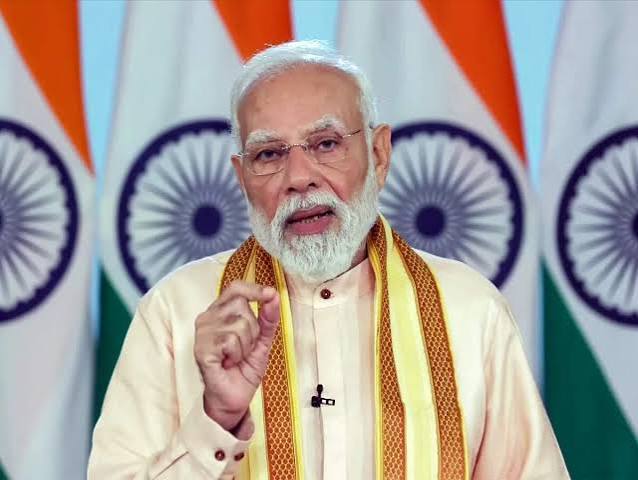
NEW DELHI, India — Prime Minister Narendra Modi publicly endorsed a comprehensive strategic blueprint outlining India's diplomatic objective to place the Global South at the center of the global energy future. The policy announcement, shared by the Prime Minister's Office (PMO) on Saturday, comes as India formally assumes the BRICS Chairship for 2026. The framework emphasizes that sustainable international energy networks cannot rely solely on insular domestic policies, requiring instead deeply integrated, cross-border partnerships among emerging economies.
The development marks a critical shift in international energy diplomacy, as developing nations seek to balance aggressive economic growth with climate-related disruptions and intensifying geopolitical uncertainties. By positioning the energy requirements of nearly half of humanity at the forefront of the 18th BRICS Summit agenda, India intends to challenge traditional Western-led resource distribution models and advocate for structural equity in clean energy technology transfers.
Leveraging the BRICS Chairship for Systemic Energy Reform
The strategy, articulated by Union Minister of Power Manohar Lal, outlines how India's domestic successes in achieving universal electrification and expanding renewable infrastructure will serve as a scalable blueprint for other developing nations. Hosting the BRICS alliance under the core theme, “Building for Resilience, Innovation, Cooperation and Sustainability,” India is utilizing its platform to drive the "Energy for All" framework.
According to public dispatches from the Press Information Bureau, India’s policy pushes for a significant diversification of energy baskets across the Global South. The strategy balances immediate fossil-fuel optimization, such as India's National Coal Gasification Mission targeting 100 million tonnes by 2030, with rapid clean energy scaling. This approach is intended to provide developing countries with a realistic transition pathway that prevents economic stagnation while reducing long-term carbon outputs.
Scalable Domestic Milestones as a Global Model
Central to India's leadership claim is its rapid domestic energy transformation over the past decade. Official data reveals that India has more than doubled its total installed power generation capacity to over 540 GW, successfully managing a historic peak demand of 270.8 GW during the high-heat summer season.
Crucially, the country has crossed the threshold of generating 50% of its total installed electricity capacity from non-fossil fuel sources. This milestone was reached more than five years ahead of India's formal Nationally Determined Contribution (NDC) commitments under the Paris Agreement. Minister Lal noted that India’s solar capacity alone now stands at 157 GW—a 54-fold increase compared to fiscal year 2014–15—and is projected to exceed 500 GW over the coming decade, making India the third-largest solar market globally.
Impact on Global Markets, Investors, and Consumers
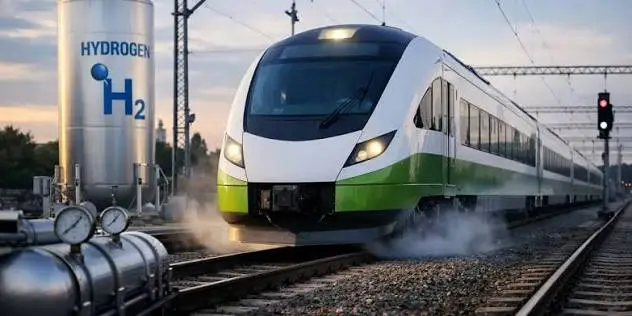
For international investors and industrial developers, New Delhi’s policy focus signals massive capital deployment opportunities within the Global South's renewable ecosystem. India's emphasis on local manufacturing for solar components, green hydrogen, and electric vehicle (EV) supply chains provides a direct alternative to single-source dependencies, notably softening supply chain vulnerabilities exposed during recent European and Middle Eastern geopolitical conflicts.
For everyday consumers and businesses across emerging markets, the collaborative framework aims to stabilize highly volatile global oil and gas prices. By standardizing long-term capacity procurement and establishing regional cross-border electrical grids, the initiative seeks to lower per-unit energy costs, foster manufacturing self-reliance, and prevent localized blackouts.
Official Sources Section
The administrative assertions, statistical milestones, and diplomatic objectives cited in this report are based entirely on official government releases. Operational metrics and international policy frameworks have been verified through official updates issued by the Prime Minister's Office of India. Additional energy infrastructure data and policy goals are sourced from the ministerial briefs published via the Ministry of Power and Press Information Bureau.
Quote Section
"India has always believed that resilient energy systems are built not only through strong domestic policies but also through stronger international partnerships," stated Prime Minister Narendra Modi in an official communication shared by the PMO.
According to officials from the Ministry of Power, "The true strength of the expanded BRICS bloc lies in its economic complementarity. As India takes up the BRICS Chairship, our objective is to ensure that the vulnerable populations of the Global South are not left behind in the transition to a sustainable global energy future."
Why It Matters
The global energy transition has historically faced criticism for ignoring the acute financial constraints of developing countries. India's strategy to anchor the global energy future within the Global South offers a pragmatic, multi-tier transition plan. By utilizing existing domestic resources while scaling non-fossil alternatives, the framework allows developing nations to protect their energy security without succumbing to prohibitive external green premiums or debt-driven technology dependencies.
Key Facts at a Glance
Diplomatic Platform: India is utilizing its 2026 BRICS Chairship to position developing nations at the center of international energy policy.
Renewable Milestone: India achieved 50% of its power capacity from non-fossil sources five years ahead of its international NDC target.
Solar Expansion: India’s domestic solar footprint has grown 54-fold since 2014, reaching 157 GW, with a long-term target of 500 GW.
Universal Access: The country’s Saubhagya scheme successfully extended electricity access to a record 286 million households, driving a 52% increase in per-capita consumption.
Industrial Strategy: The policy combines clean energy expansion with the National Coal Gasification Mission, aiming for 100 million tonnes by 2030 to ensure baseline security.
Frequently Asked Questions
What does the term 'Global South' mean in the context of energy policy?
The Global South generally refers to developing, emerging, or lower-income nations primarily located in Asia, Africa, and Latin America. In energy terms, these countries face the dual challenge of rapidly expanding electricity access to fuel economic growth while transitioning away from carbon-heavy fuels.
How does India’s domestic strategy impact other BRICS member states?
India serves as an operational blueprint. Programs like the Saubhagya scheme for rural electrification and massive solar microgrid deployments offer scalable, cost-effective methodologies that can be replicated across African, South American, and Asian partner states.
Will India completely abandon fossil fuels under this new global energy future framework?
No. The strategy prioritizes realistic transition pathways. India continues to utilize domestic coal reserves to ensure industrial reliability while simultaneously scaling renewable capacity, aiming to achieve net-zero emissions by 2070.
Source: Prime Minister's Office (PMO) India, Press Information Bureau (PIB) New Delhi.