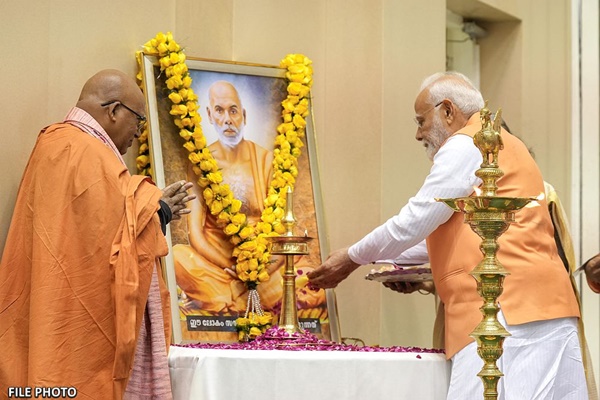
Prime Minister Narendra Modi paid tributes to social reformer Sree Narayana Guru on his birth anniversary, praising his focus on equality, education, and women empowerment. The Ministry of Tourism continues to develop spiritual heritage infrastructure across key sites like Sivagiri Mutt to promote cultural tourism and preserve his legacy.
NEW DELHI — Prime Minister Narendra Modi paid homage to revered philosopher, spiritual leader, and social reformer Sree Narayana Guru on his birth anniversary, commending his transformative contributions toward caste eradication, universal education, and social equality. In an official communication highlighted across national cultural platforms and the Ministry of Tourism, the Prime Minister emphasized that Sree Narayana Guru’s foundational teachings of unity, gender empowerment, and self-reliance remain central to India's social reform and developmental vision. The annual tribute is significant today as the Union Government deepens investments into spiritual and heritage tourism circuits that celebrate India’s social reform history.
Life, Teachings, and Legacy of Sree Narayana Guru
Born in Chempazhanthy near Thiruvananthapuram, Kerala, in 1856, Sree Narayana Guru led an egalitarian movement against rigid caste hierarchies and social exclusion across southern India. His historic 1888 Aruvippuram installation of a Shiva idol challenged conventional priestly monopolies, signaling that spiritual access belonged equally to all individuals regardless of birth or social standing.
The spiritual leader's core philosophy—summarized in the aphorism "One Caste, One Religion, One God for All"—championed ethical humanism, modern scientific education, and industrial skill development alongside spiritual growth. His establishment of Sivagiri Mutt at Varkala transformed the coastal town into a central hub of spiritual discourse, universal fellowship, and non-violent social reform.
Cultural Tourism Circuits and Spiritual Heritage Promotion
The Ministry of Tourism of the Republic of India has integrated key locations associated with Sree Narayana Guru's life into national heritage and spiritual tourism itineraries. Central programs such as the Pilgrimage Rejuvenation and Spiritual, Heritage Augmentation Drive (PRASHAD) and the Swadesh Darshan scheme continue to channel infrastructure funding into prominent spiritual centers, including Sivagiri Mutt in Varkala and Aruvippuram.
These initiatives focus on upgrading visitor amenities, developing multi-lingual interpretation centers, improving last-mile roadway connectivity, and establishing clean civic infrastructure for international travelers and domestic pilgrims. By highlighting reformist spiritual circuits, the government seeks to foster inclusive cultural tourism that highlights India’s historical traditions of progressive thought and community development.
Impact on Citizens, Tourism Sector, and Social Cohesion
The national remembrance and associated tourism development initiatives generate wide benefits across social and economic fronts:
Cultural Tourism Expansion: Upgraded pilgrimage infrastructure in Kerala and neighboring states drives steady footfalls for hospitality operators, transport providers, and small businesses in the Varkala tourism corridor.
Preservation of Social Heritage: Integrating Narayana Guru’s philosophy into public cultural programming educates younger generations on secularism, human dignity, and historical anti-caste movements.
Local Economy and Livelihoods: Enhanced pilgrimage infrastructure promotes year-round cultural travel, reducing seasonal tourism vulnerabilities for local communities.
Official Sources Section
This report is compiled using official communiqués, press releases, and cultural policy guidelines issued by:
Quote Section
"I bow to Sree Narayana Guru on his Jayanti. His teachings provide strength to millions. His emphasis on learning, social reform and equality continue to motivate us. He gave immense importance to women empowerment as well as harnessing youth power for social change," stated Prime Minister Narendra Modi in an official message released by the Prime Minister's Office.
Why It Matters
Sree Narayana Guru's philosophy provides the moral and ideological blueprint for inclusive governance, social justice, and universal education. Promoting his historical legacy through national tributes and focused spiritual tourism infrastructure highlights the role of progressive social movements in shaping modern India's cultural identity and regional economic growth.
Key Facts at a Glance
Occasion: Birth anniversary (Jayanti) of social reformer and philosopher Sree Narayana Guru.
Core Philosophy: "One Caste, One Religion, One God for All."
Key Historical Sites: Sivagiri Mutt (Varkala), Chempazhanthy, and Aruvippuram in Kerala.
Tourism Integration: Spiritual infrastructure enhancement under the PRASHAD and Swadesh Darshan schemes by the Ministry of Tourism.
Frequently Asked Questions (FAQ)
Who was Sree Narayana Guru?
Sree Narayana Guru (1856–1928) was a prominent Indian saint, philosopher, and social reformer who led major anti-caste movements and promoted universal education and equality in Kerala.
What is the famous motto of Sree Narayana Guru?
His most celebrated teaching is "One Caste, One Religion, One God for All" (Oru Jathi, Oru Matham, Oru Daivam Manushyanu).
How is the Ministry of Tourism promoting his legacy?
The Ministry of Tourism incorporates major sites like Sivagiri Mutt and Aruvippuram into national spiritual tourism circuits, funding visitor amenities, accessibility projects, and cultural preservation.
Where is the central institution established by Sree Narayana Guru located?
Sivagiri Mutt, the spiritual headquarters founded by Sree Narayana Guru, is located in Varkala, Thiruvananthapuram district, Kerala.
Source: