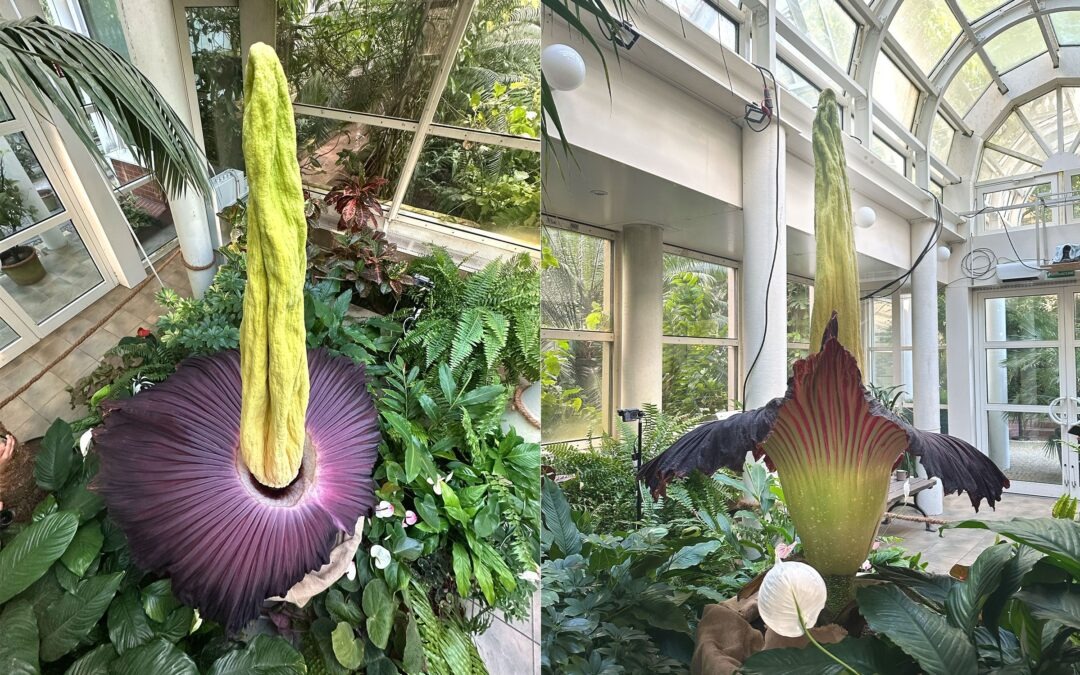
The University of Warsaw Botanical Garden is currently hosting a once-in-a-lifetime event as the rare and enigmatic titan arum, also known as the “corpse flower” (Amorphophallus titanum), has begun to bloom. Renowned as one of the world’s rarest and largest flowers, this extraor...
The University of Warsaw Botanical Garden is currently hosting a once-in-a-lifetime event as the rare and enigmatic titan arum, also known as the “corpse flower” (Amorphophallus titanum), has begun to bloom. Renowned as one of the world’s rarest and largest flowers, this extraordinary plant captivates nature lovers and scientists alike with its massive size, unique flowering process, and distinct smell reminiscent of rotting meat. The bloom has attracted crowds eager to witness nature’s awe-inspiring spectacle up close.
Key Highlights Of The Titan Arum Bloom
The titan arum began flowering around 1 a.m. on August 5th, marking the second time in recent years that this botanical wonder has bloomed at the University of Warsaw.
The plant’s inflorescence reached an impressive height of over 180 centimeters (nearly 6 feet), with the vegetative leaf spreading over 122 centimeters.
During blooming, the titan arum undergoes thermogenesis, where the flower heats up to about 68 degrees Celsius, aiding in dispersing its powerful odor.
The smell, resembling that of decaying flesh, is a natural mechanism to attract specific pollinators such as carrion flies and beetles, which are vital for the flower’s reproduction.
This rare bloom lasts only one to two days, making it a fleeting phenomenon that creates immense excitement among visitors and botanical enthusiasts.
What Makes The Titan Arum So Unique?
The titan arum holds several fascinating characteristics that set it apart in the plant kingdom:
It possesses the largest unbranched inflorescence globally, sometimes exceeding three meters in height in its natural habitat.
The flower is energetically expensive to bloom, investing significant biomass and metabolic energy to emit its distinct odor and heat.
Its reproductive strategy includes male and female flowers blooming sequentially to avoid self-pollination, facilitated by floral trapping mechanisms.
Endemic to the rainforests of Sumatra, Indonesia, the titan arum is considered endangered due to habitat loss and environmental threats.
Conservation And Scientific Importance
The blooming event at the University of Warsaw not only draws public curiosity but also aids scientific study:
Botanists observe the inflorescence’s growth patterns, temperature fluctuations, and odor emission to better understand plant-pollinator interactions.
Conservationists emphasize awareness of the titan arum’s endangered status and the critical need to preserve rainforests that support such rare flora.
Botanical gardens worldwide participate in propagating the plant to secure its survival and educate the public on biodiversity.
Visitor Experience And Viewing Opportunities
The University of Warsaw Botanical Garden has extended its opening hours till late evening to accommodate the influx of visitors.
For those unable to visit in person, a live stream of the flowering process has been set up online, drawing global audiences.
Sightseers experience a sensory journey, witnessing the bloom’s dramatic unfurling alongside the powerful scent and increasing warmth emitted from the spadix.
Final Thoughts
The titan arum’s rare bloom is a stunning reminder of nature’s incredible diversity and adaptive ingenuity. This giant “corpse flower” continues to fascinate and educate, leaving an unforgettable impression while highlighting broader conservation challenges. For a short span, it allows all who witness it to appreciate the splendor and mystery hidden within the botanical world.
Sources: Times of India, Moneycontrol, Notes from Poland, PAP, University of Warsaw Botanical Garden