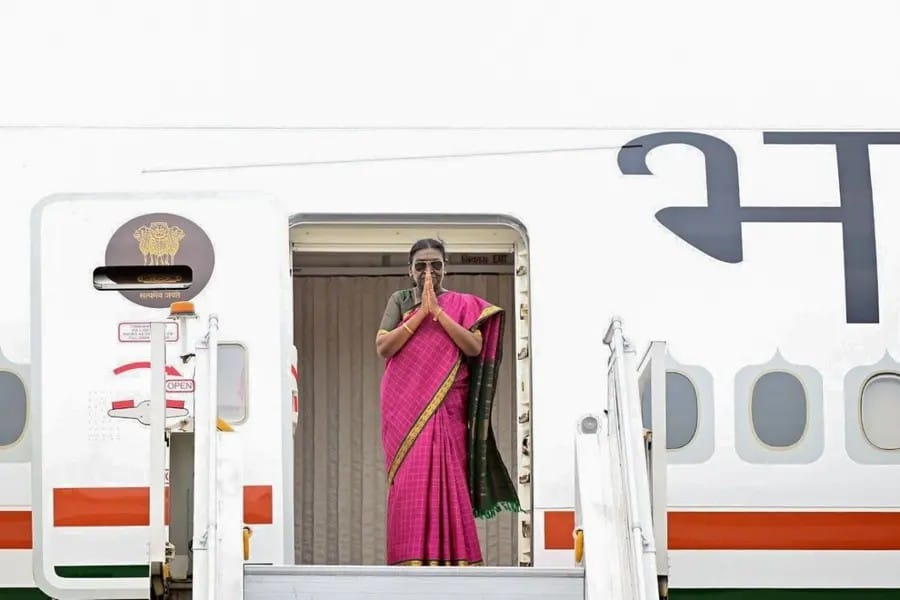
President Droupadi Murmu has embarked on a historic six-day state tour to Moldova, North Macedonia, and Romania to deepen India's economic, technological, and educational ties in Eastern Europe. Marking the first presidential visits to Chisinau and Skopje, the mission focuses on creating market gateways for Indian enterprises.
NEW DELHI — Indian President Droupadi Murmu on Sunday departed for a high-profile, six-day state visit to Moldova, North Macedonia, and Romania. Running from July 19 to July 25, 2026, the diplomatic mission represents a major geopolitical shift toward strengthening India's bilateral partnerships with Eastern Europe while complementing its wider engagement with the European Union. Today's departure marks a series of milestones, including two historic first-ever presidential visits and India's first presidential outreach to Romania in over three decades.
Direct Diplomatic Milestones in Moldova and North Macedonia
President Murmu's tour begins in Moldova on Monday, July 20, at the official invitation of Moldovan President Maia Sandu. According to the Ministry of External Affairs (MEA), this marks the first time an Indian head of state has visited the Republic of Moldova since diplomatic relations were established. The itinerary focuses on elevating existing political goodwill into a broad-based economic partnership.
The President will lead high-level delegation talks with President Sandu, confer with Parliament President Igor Grosu, and interact with the Moldova-India Parliamentary Friendship Group. Discussions are slated to expand cooperation across medical education, healthcare infrastructure, pharmaceuticals, and agricultural trade.
Following her engagement in Chisinau, President Murmu will travel to North Macedonia for a state visit on July 21 and 22. This visit is another historic first for an Indian president. At the invitation of President Gordana Siljanovska-Davkova, President Murmu will address the Assembly of North Macedonia and engage with Prime Minister Hristijan Mickoski. Authorities noted that North Macedonia aims to position itself as a strategic regional gateway for Indian enterprises entering broader European commercial markets.
Renewing Over Three Decades of Ties with Romania
The final leg of the three-nation Europe visit takes place in Romania from July 23 to 25. This marks the first state visit by an Indian president to Romania since 1994, breaking a 32-year diplomatic lull at the head-of-state level.
President Murmu is scheduled to hold extensive talks with Romanian President Nicusor Dan and interim Prime Minister Ilie Bolojan. Because Romania functions as an influential European Union member state, Indian trade officials view this leg as critical for aligning long-term commercial goals with the upcoming India-EU Free Trade Agreement. Bilateral economic forums in Bucharest will address supply chain diversification, technology transfers, and joint ventures in renewable energy.
Official Sources Section
According to official briefings from the Ministry of External Affairs (MEA) India, the multi-nation visit is structured around the "Three Ts" framework: Trade, Technology, and Tourism. Regulatory updates indicate that foreign policy experts and trade bodies have organized dedicated business forums in all three capital cities to secure direct investments and foster innovation sharing. Furthermore, defense and security coordination remain central, with the MEA highlighting shared solidarity against cross-border terrorism.
Quote Section
Briefing reporters ahead of the state departure, MEA Secretary (West) Sibi George stated:
"The three-nation visit is of considerable historic significance, as it marks the first-ever bilateral visits by an Indian president to the Republic of Moldova and the Republic of North Macedonia. The state visit reflects the importance India attaches to strengthening its bilateral ties with these countries along with India's engagement with the wider Eastern European region."
Regarding the economic integration with EU frameworks, the Ministry of External Affairs added in an official press release:
"Romania is a valuable partner in the European Union and with the conclusion of India-EU Free Trade Agreement, bilateral economic partnership would strengthen further in the coming years."
Why It Matters
The strategic expansion into Eastern Europe delivers immediate and practical benefits for diverse sectors. For Indian medical students, the tour secures educational safety frameworks, particularly in Moldova, which has emerged as an important hub for Indian medical scholars. For global investors and businesses, the creation of trade pathways through North Macedonia and Romania provides easier entry points into European markets, cutting down bureaucratic friction. This helps secure supply chain resilience for vital Indian exports like pharmaceuticals and information technology.
Key Facts at a Glance
Historical Precedent: President Murmu achieves two historic firsts with the maiden visits of an Indian President to Moldova and North Macedonia.
Bilateral Intermission Ended: The stop in Romania ends a 32-year gap since the last Indian presidential visit to Bucharest in 1994.
Core Commercial Framework: Diplomatic and economic strategies are centered heavily around the "Three Ts"—Trade, Technology, and Tourism.
Sectors of Interest: Priority engagement areas include agriculture, pharmaceuticals, software services (IT/ITeS), and renewable energy.
FAQ Section
Why is President Murmu visiting Moldova, North Macedonia, and Romania now?
The tour is designed to reinforce India's geopolitical presence in Eastern Europe, diversify trade networks, and open new economic routes ahead of the wider India-EU Free Trade Agreement negotiations.
What are the main economic goals of this three-nation Europe visit?
India seeks to expand market access for its IT, agricultural, and pharmaceutical sectors, while positioning North Macedonia and Romania as physical gateways for Indian goods into Western Europe.
How does this state tour benefit Indian citizens and students?
Education has become a key pillar of India-Moldova relations, housing thousands of Indian medical students. The visit strengthens institutional recognition, academic safety, and people-to-people exchange programs.
Source: Ministry of External Affairs (MEA) India, Prasar Bharati Newsonair, The Hindu Diplomatic Bureau